Select Completed Projects Portfolio
A sample of our premier and award-winning architectural projects.
Ancora Mail Processing Facility
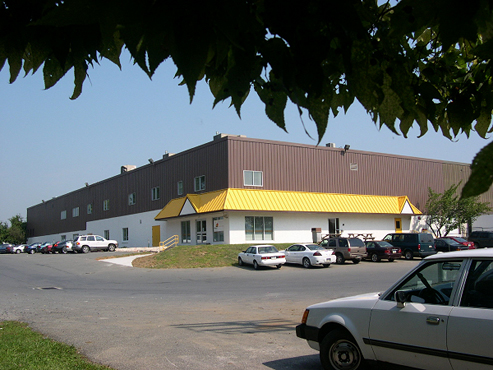
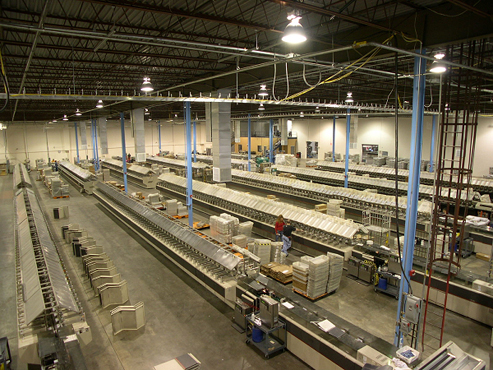
Muhlenberg Greene was hired to assist with the planning and design to create the company’s largest mail processing facility on the east coast. Work included major renovations to 55,000 square feet of leased space, once occupied by a major battery producer. Approximately 11,000 square feet were designed to contain Ancora’s regional corporate headquarters for the east coast, with the remaining 44,000 square feet for production.
The project included “phased construction” which allowed for the occupation of the production area while construction on the corporate office and employee common areas continued. One design feature of this project was the creation of an area for the supervisors located between their existing production floor area and the new production floor area. This area now serves as a central command post/teaming area.
Vertis Warehouse and Shipping Dock Addition
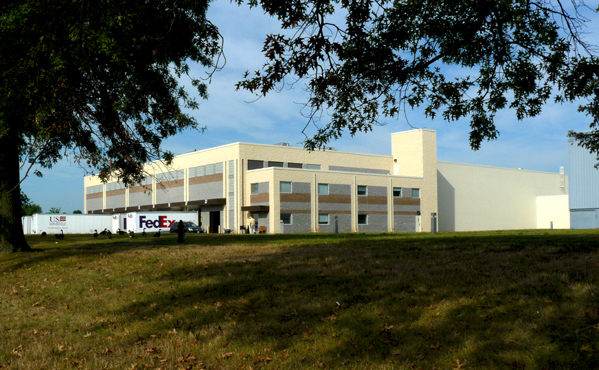
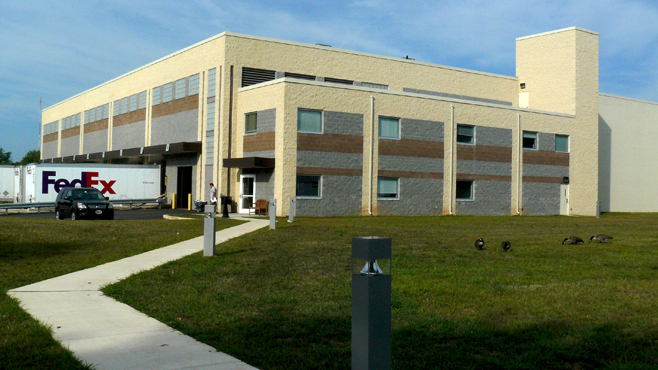
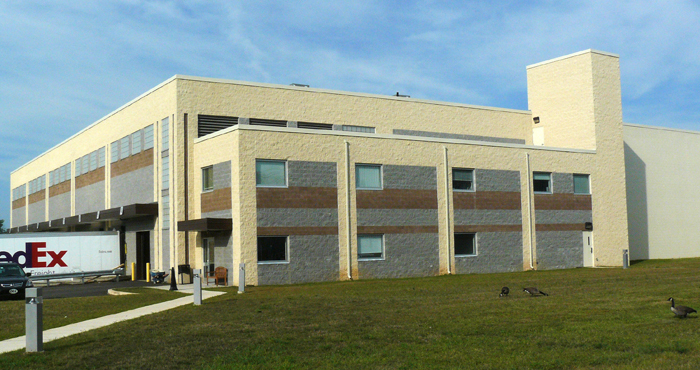
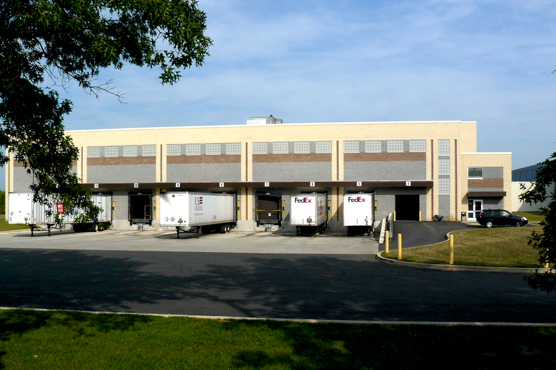
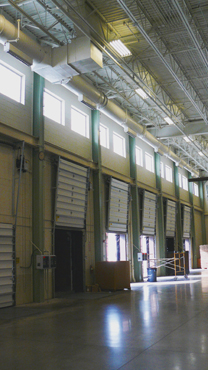
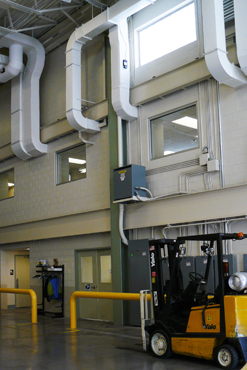
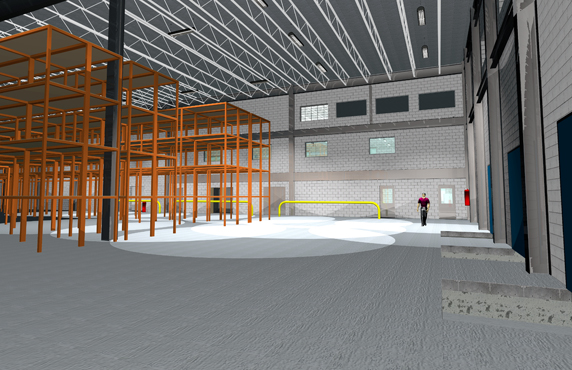
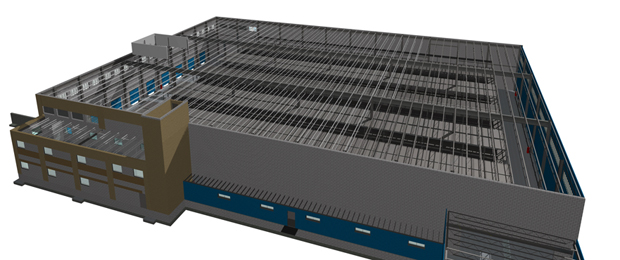
Due to growth, a large United States producer of advertising inserts needed to expand their warehouse space. Muhlenberg Greene Architects provided planning and design services for a 48,000 square foot high-bay storage warehouse addition to the company’s existing plant. The project included the construction of new truck docks, mezzanine office space, the design of a new circulation pattern for their existing parking lots, additional trailer storage areas, and air conditioning of the existing plant area.
Angelica Park Environmental Center
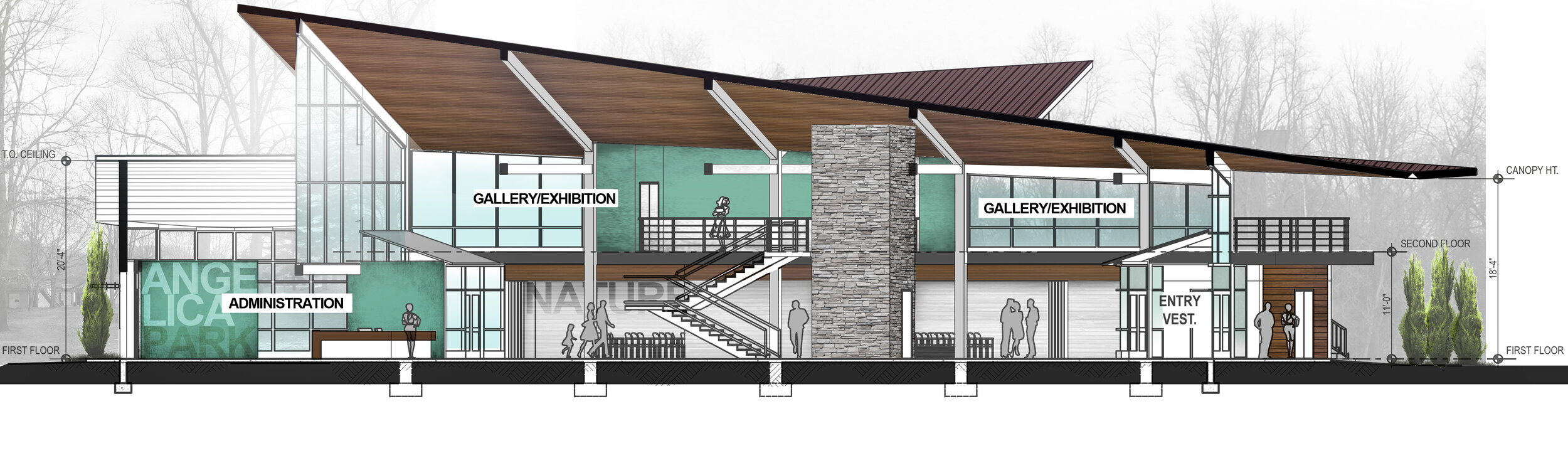
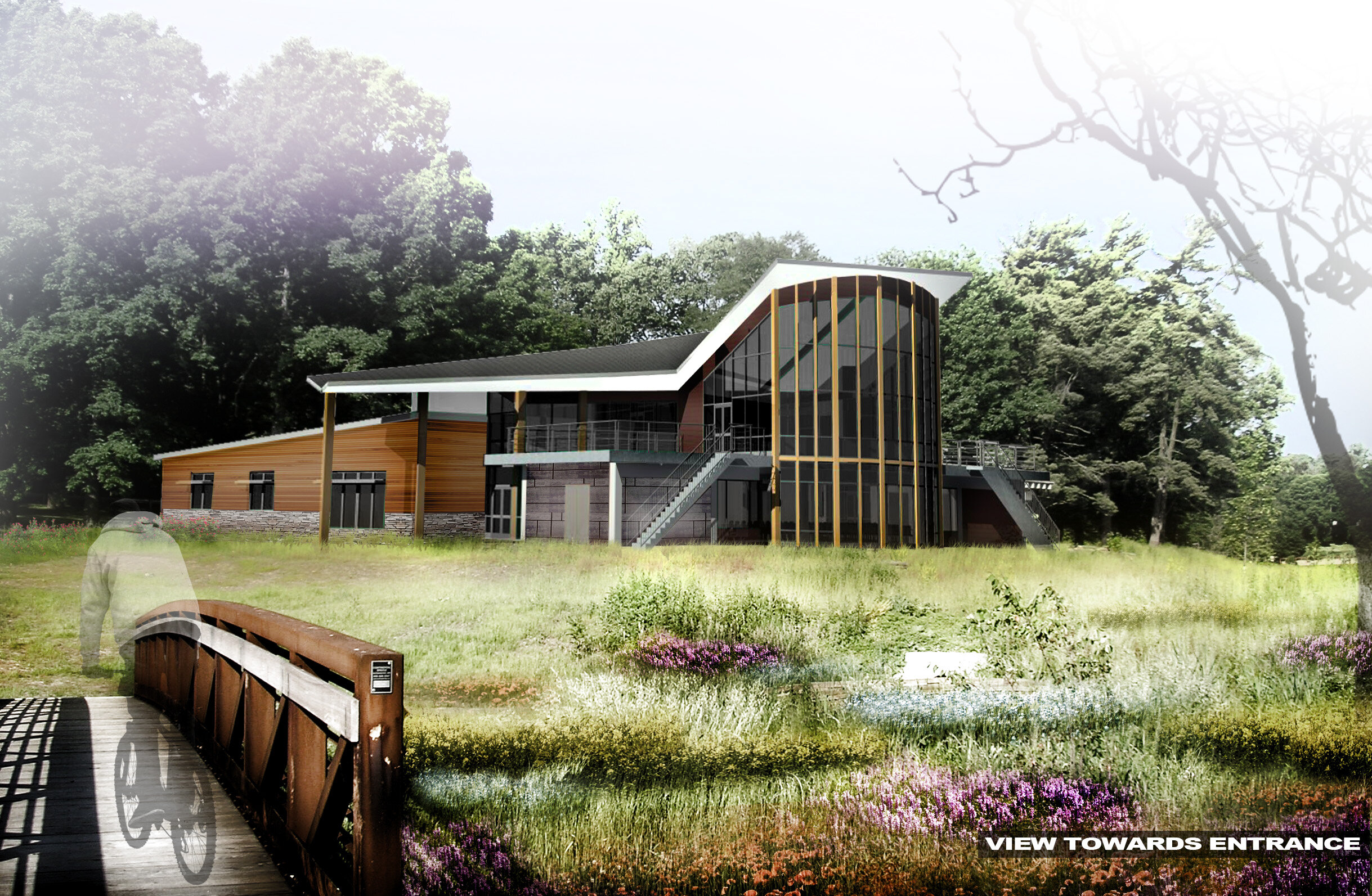
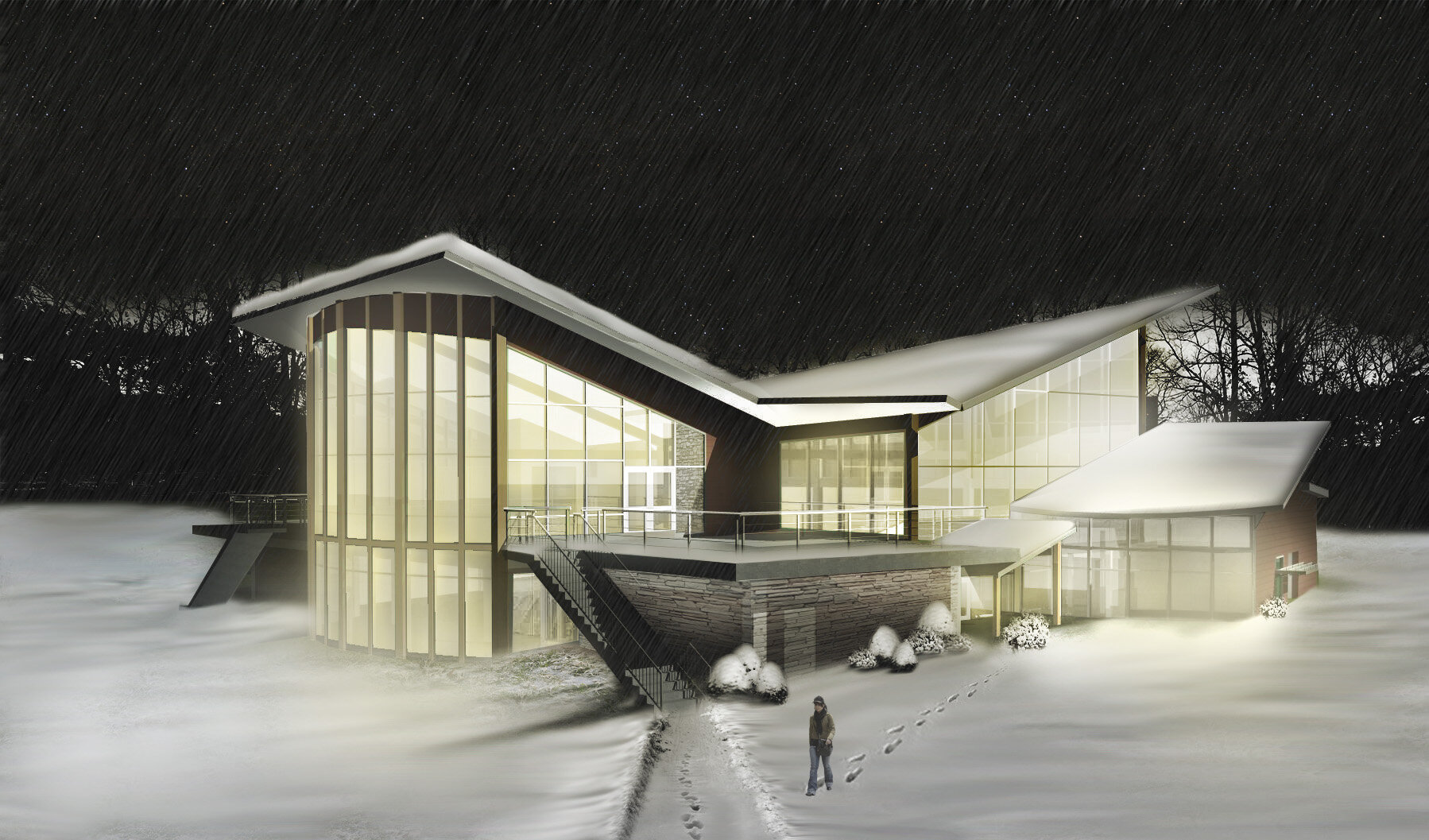
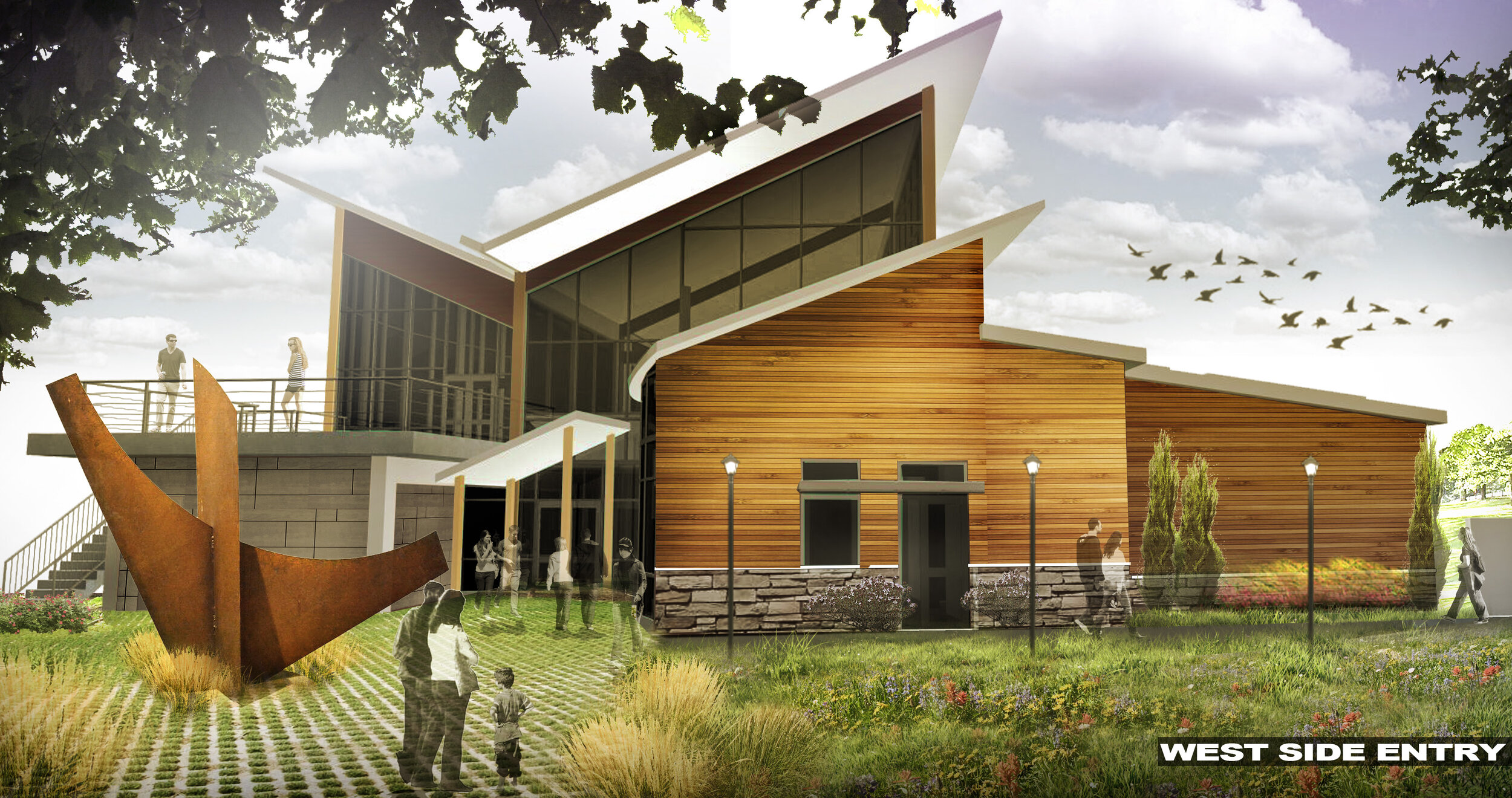
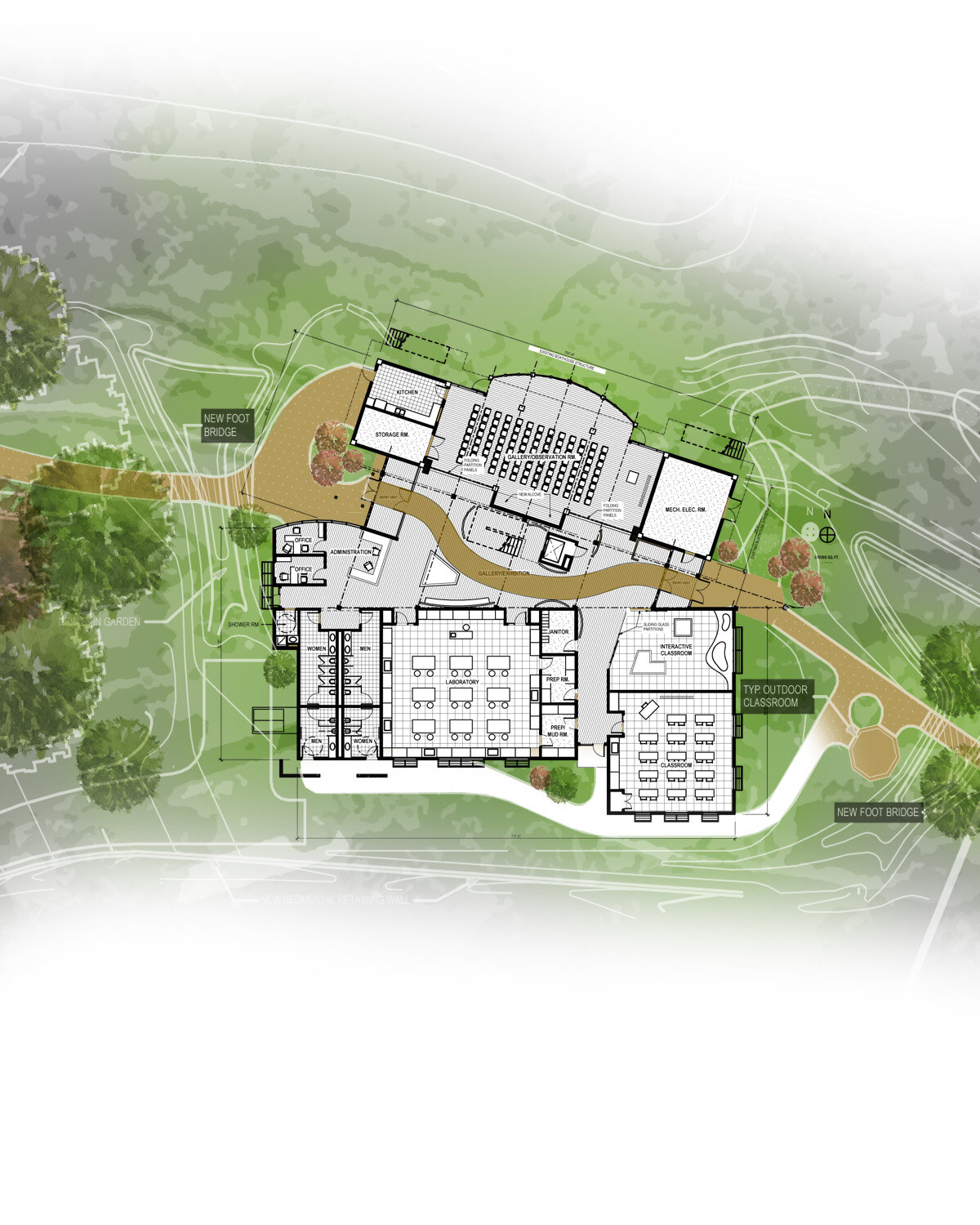
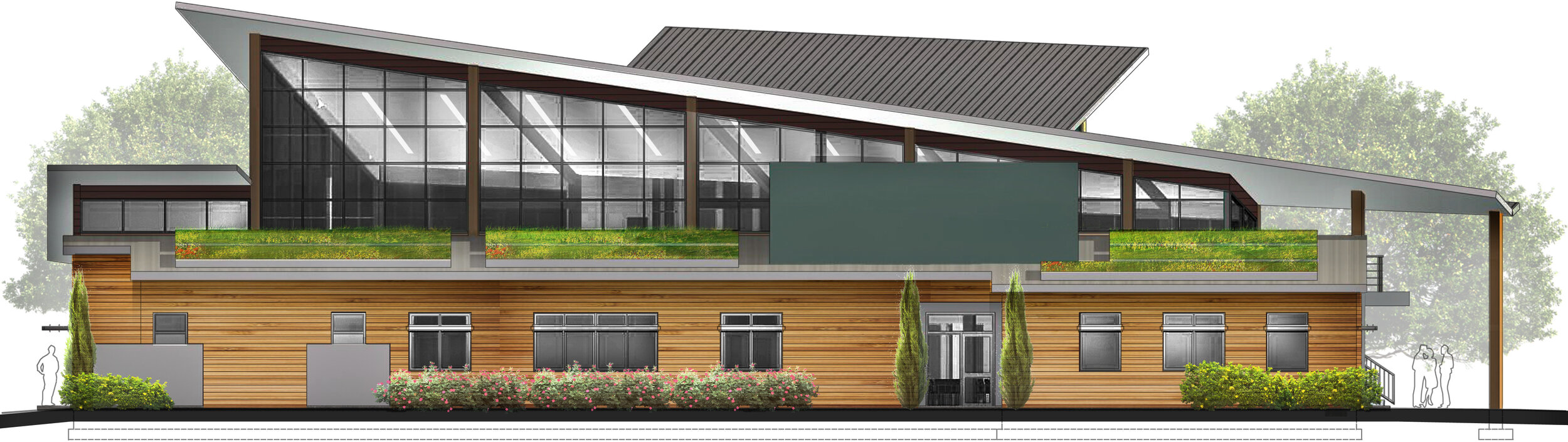
The Angelica Park Environmental Center is an extension of the wetlands restoration. A Preliminary Design and Study were generated for a 12,500-square-foot building with classrooms, a teaching lab, administrative offices, lecture space, an exhibit gallery, and upper-level observation. deck for indoor/outdoor gatherings for Phase 1 of this project.
Designed to achieve LEED certification, sustainable design features included a geothermal HVAC system, natural stormwater management via rain gardens, a pervious pavement access drive, photovoltaic panels to provide electric power, and a solar shade system.
A team consisting of representatives from the local colleges, the school district, the state park system, and the City of Reading was established to collaborate with Muhlenberg Greene Architects on the planning, programming, and design for a building that would embody environmental sustainability and energy efficiency while providing space for a broad range of activities. The first phase of the project modified the existing boat house structure.
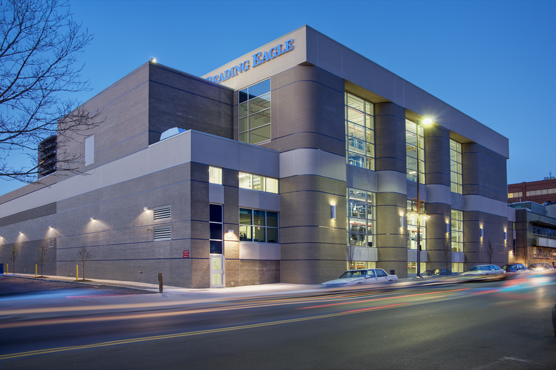
Press Hall and Mail Room Addition to the Reading Eagle Company
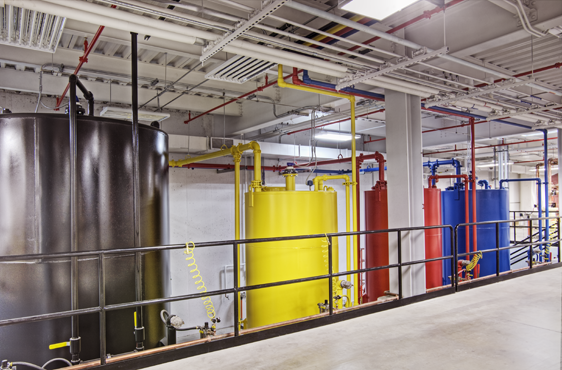
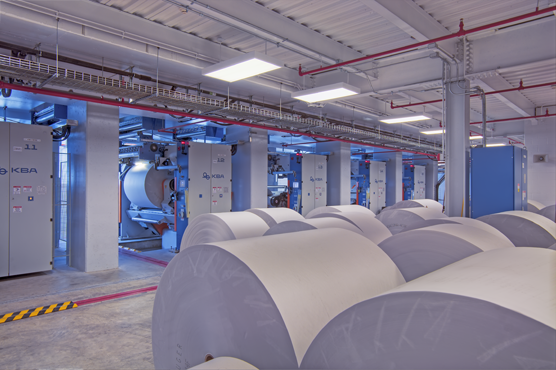
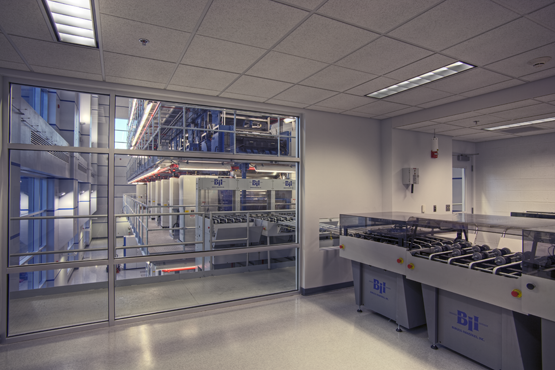
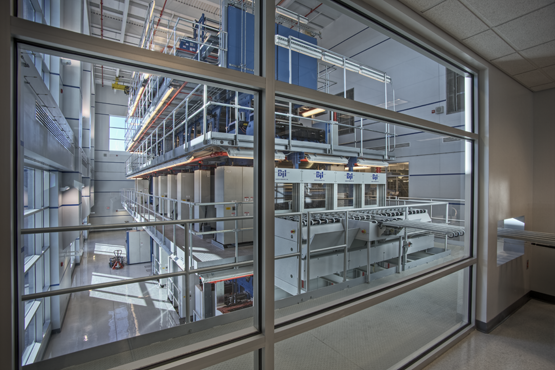
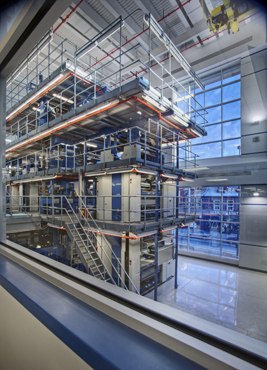
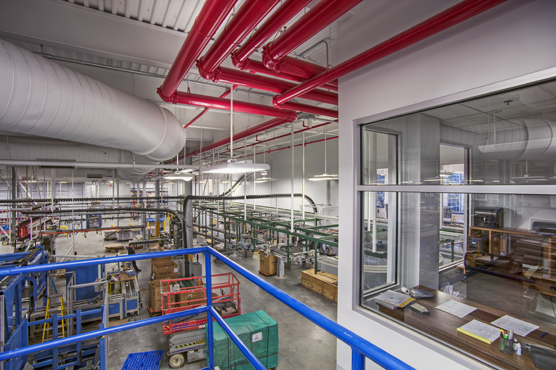
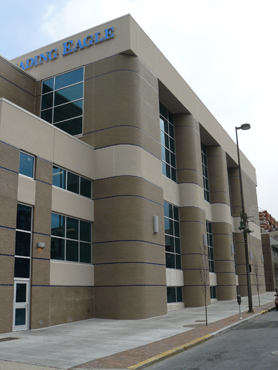
Reading Eagle Company planning and design for the expansion of an existing building to house a new state-of-the-art press. The project required the demolition of several existing structures and the new construction of a 77,000-square-foot addition. The expansion included a new mail room and ancillary spaces for the control room, maintenance shops, mechanical/electrical equipment, three truck docks, and four shipping docks.
A basement level was constructed for ink storage, paper deliveries, and the reel room for the new press. The ground floor provides space for the mail room and houses the inserter and palletizer equipment as well as the main floor of the press hall. The 2nd floor consists of a mezzanine level for the press hall and provides space for the control room, computer-to-plate room, and electrical equipment for the press operation.
The 3rd floor was designed for mechanical equipment surrounding the press hall. The press hall was an open space extending 56 feet above the ground floor level to house a new press. A critical aspect of the planning and management of the construction process for this project was the requirement to maintain the daily operation of printing and shipping the newspaper.
Gateway Ticketing Systems Global Headquarters
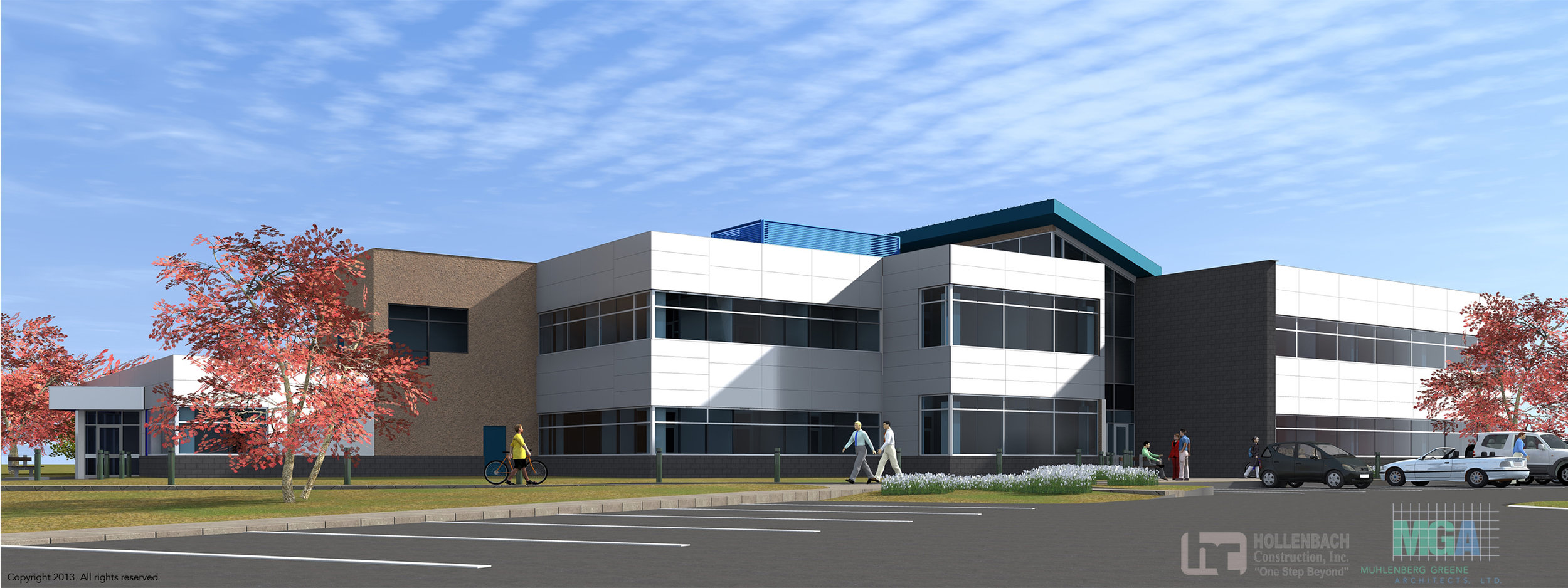
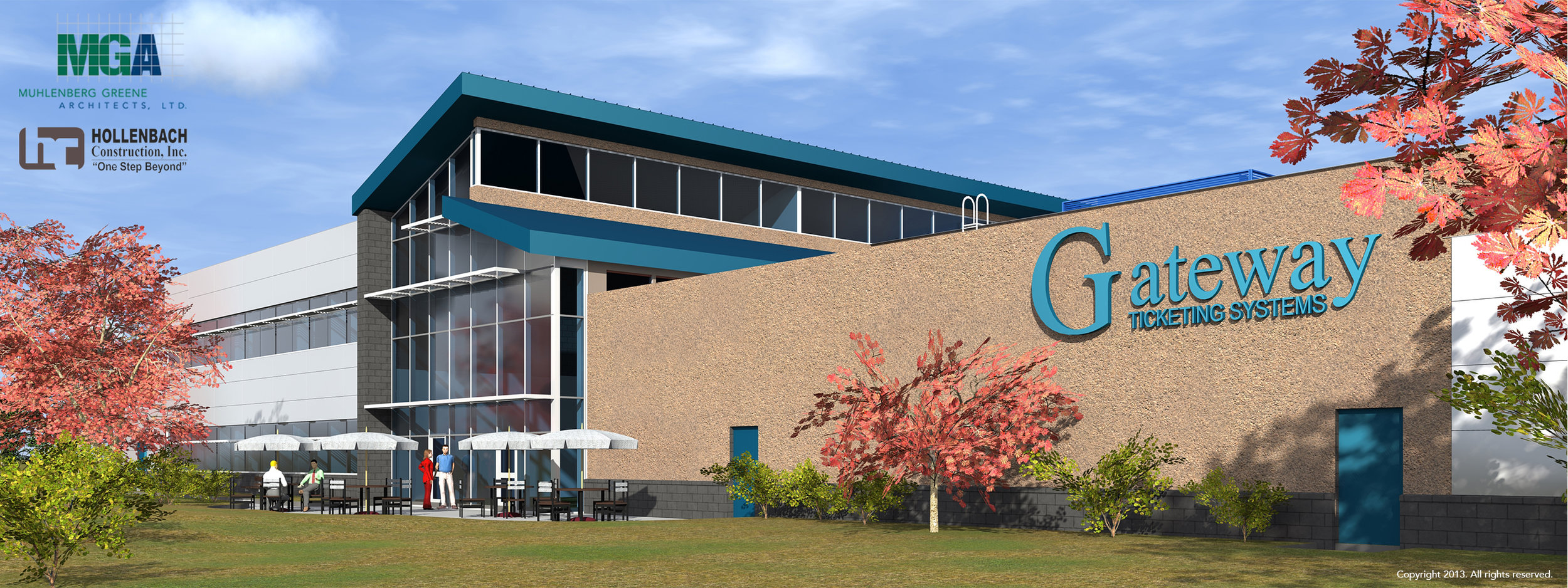
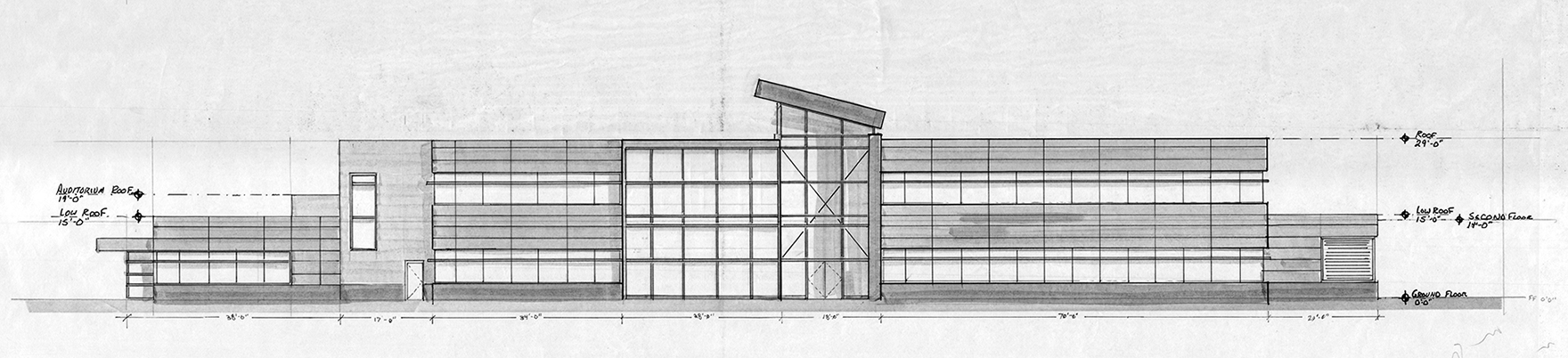
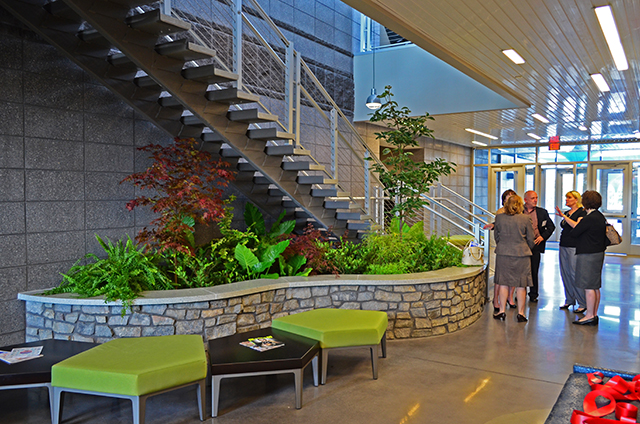
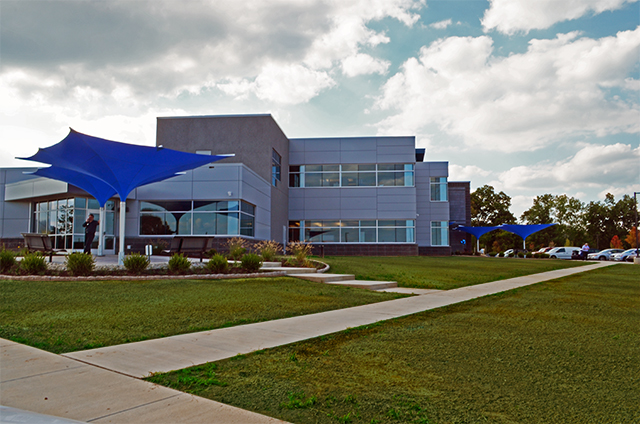
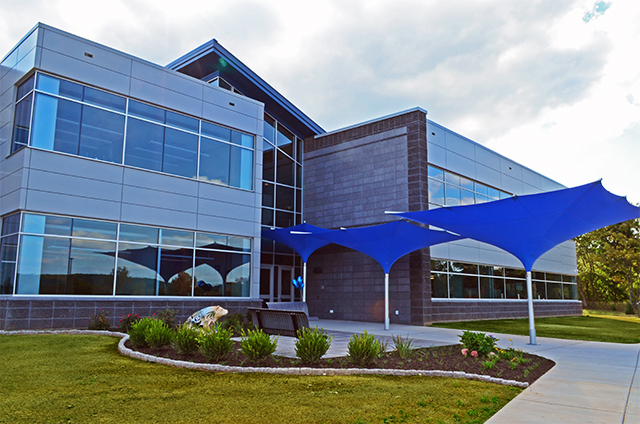
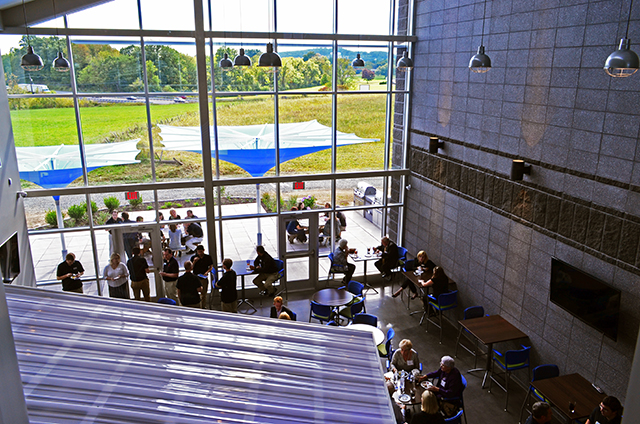
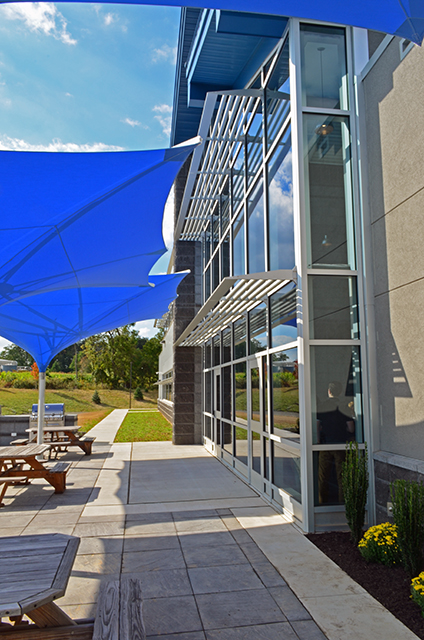
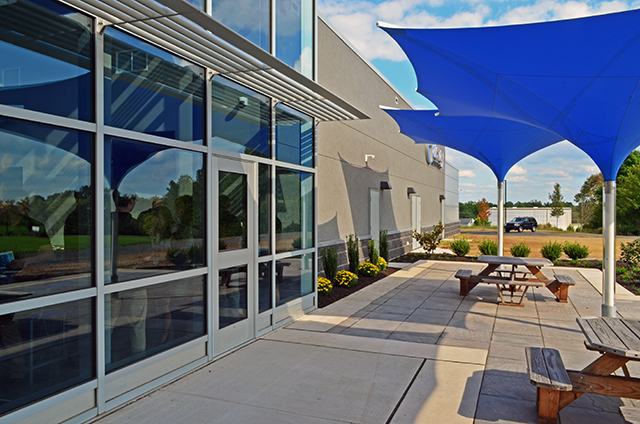
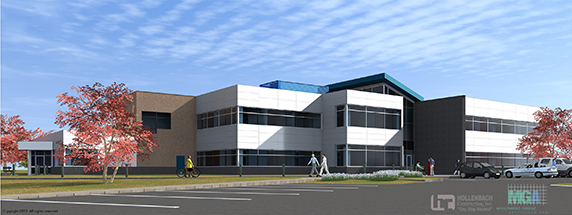
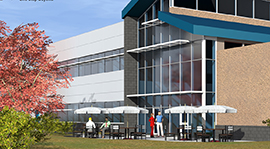
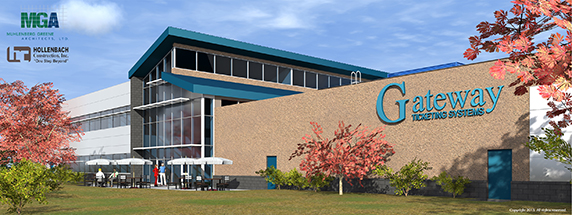
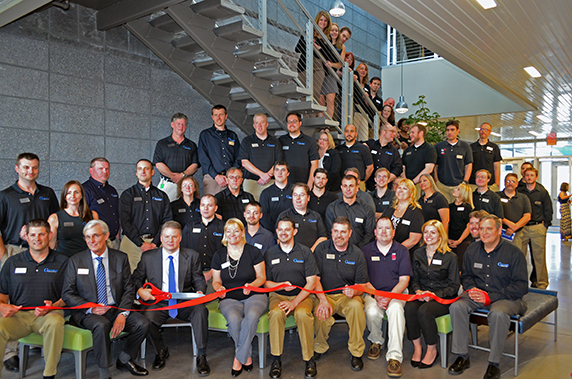
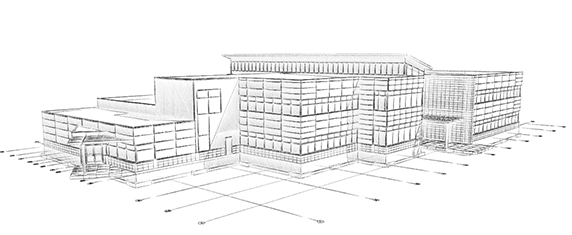
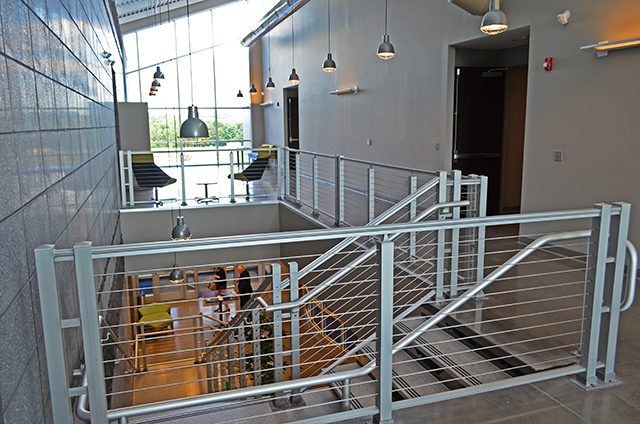
The new 42,000 square foot Gateway Ticketing Systems Global Headquarters opened in August 2014 for its 86 employees, offering expansive views and ample amenities.
The “Main Street” of the building is flooded with light from the south facing clerestory, which is carefully designed to allow plentiful warming light in the cooler months, but also blocks harsh mid-summer sun. More importantly, the central space provides a convenient circulation path, specifically designed to provide proximity and access between groups that have regular interaction. A large lunch room will provide ample seating for everyone in the company and serve as a gathering location for the frequent potlucks, barbecues and other team-building events.
Spring Township Municipal Building Addition and Alterations
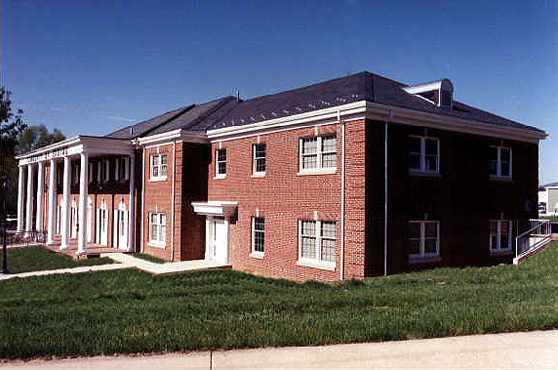
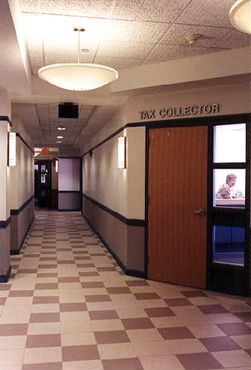
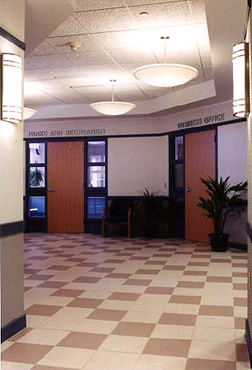
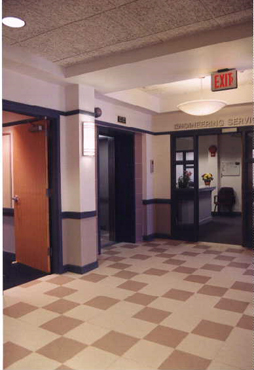
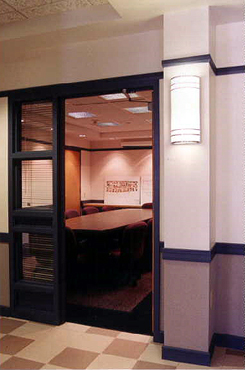
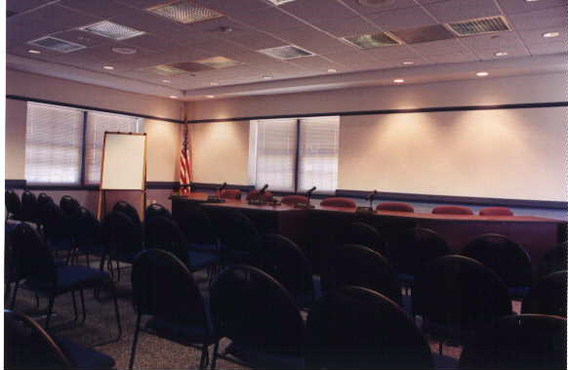
Muhlenberg Greene Architects prepared a feasibility study to review the Spring Township municipal departments’ current and projected needs and to analyze the functions and interactions of the various operations. The Master Plan study resulted in a project which included expanding the existing building to create a new meeting room for public gatherings and municipal functions, as well as creating additional office space.
The project also included renovating the existing office areas with a focus on creating flexible workspaces for the various departments, enabling them to adapt to future changes. The alterations were designed to complement the existing facade and bring daylight into the building beyond the perimeter offices, which had previously limited the natural lighting in the building. Construction activities were carefully phased to allow the Township to maintain its operations.
Keystone Villa at Ephrata
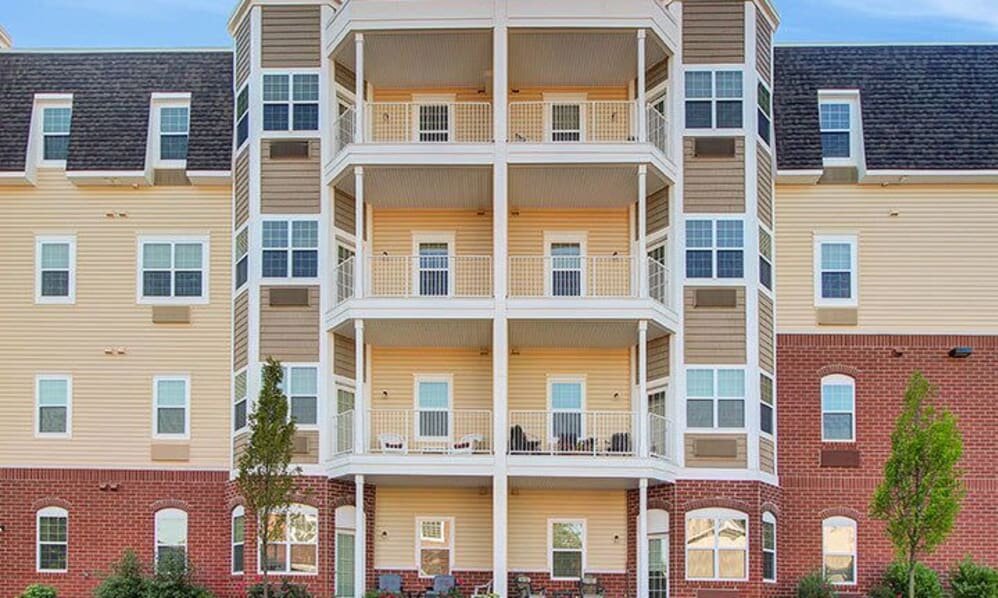
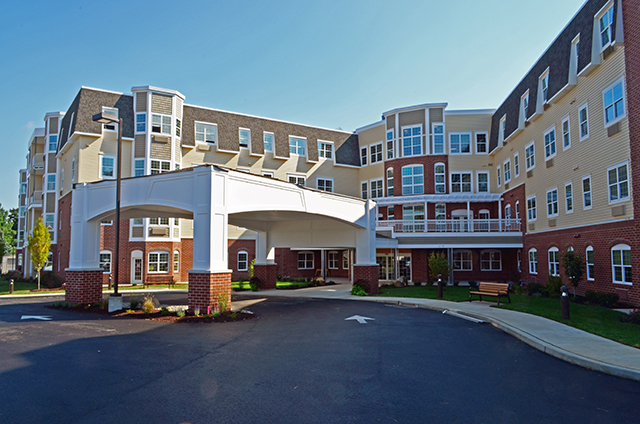
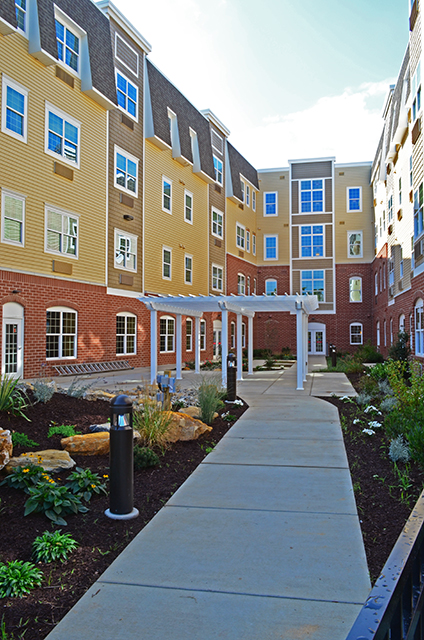
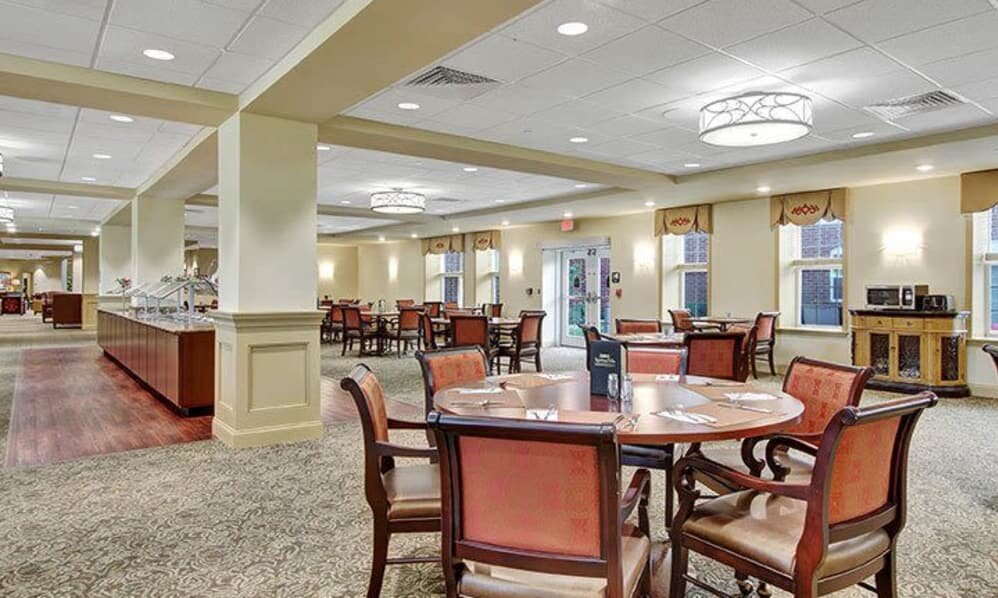
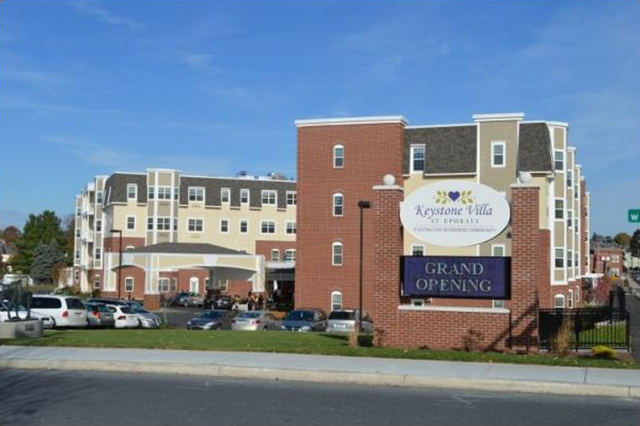
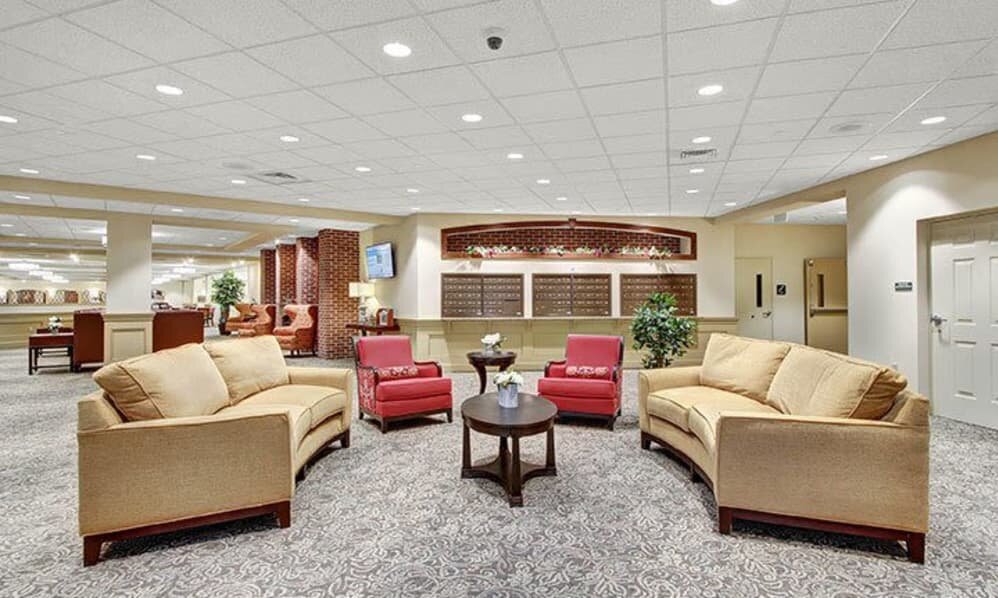
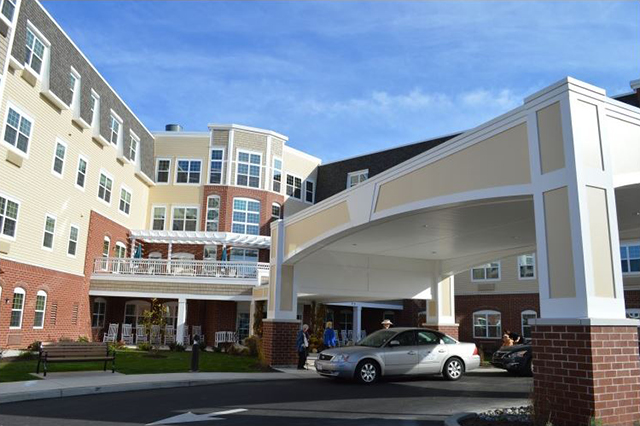
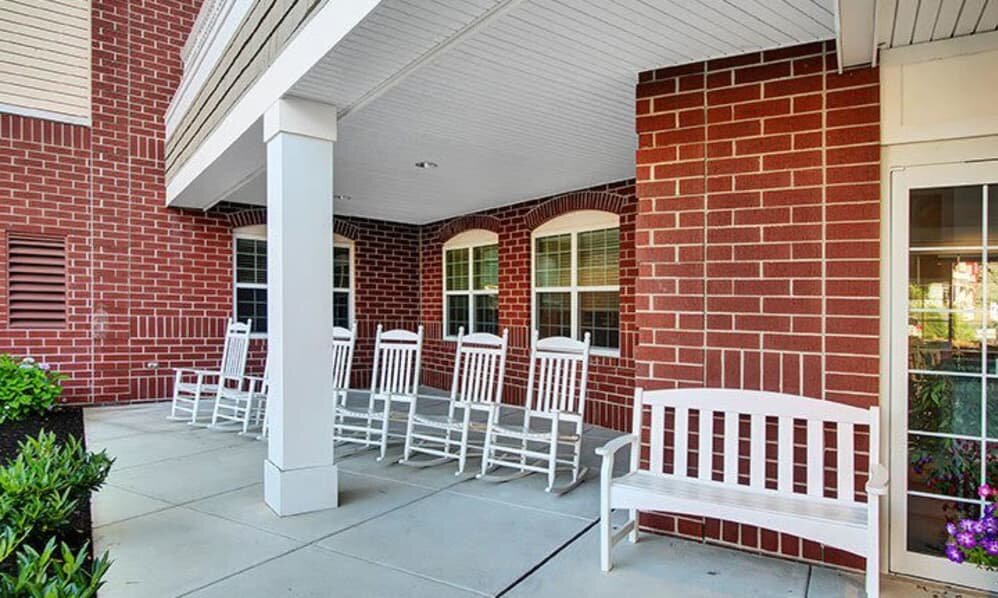
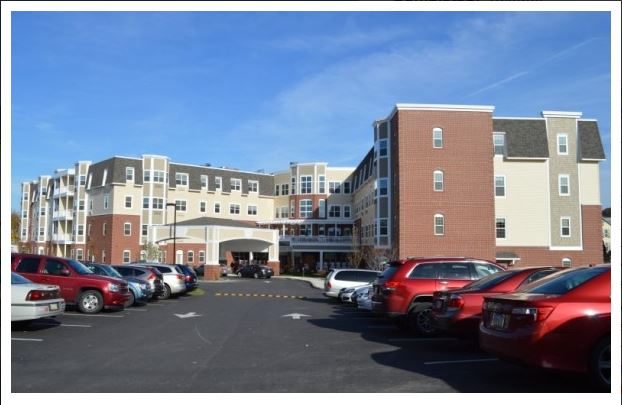
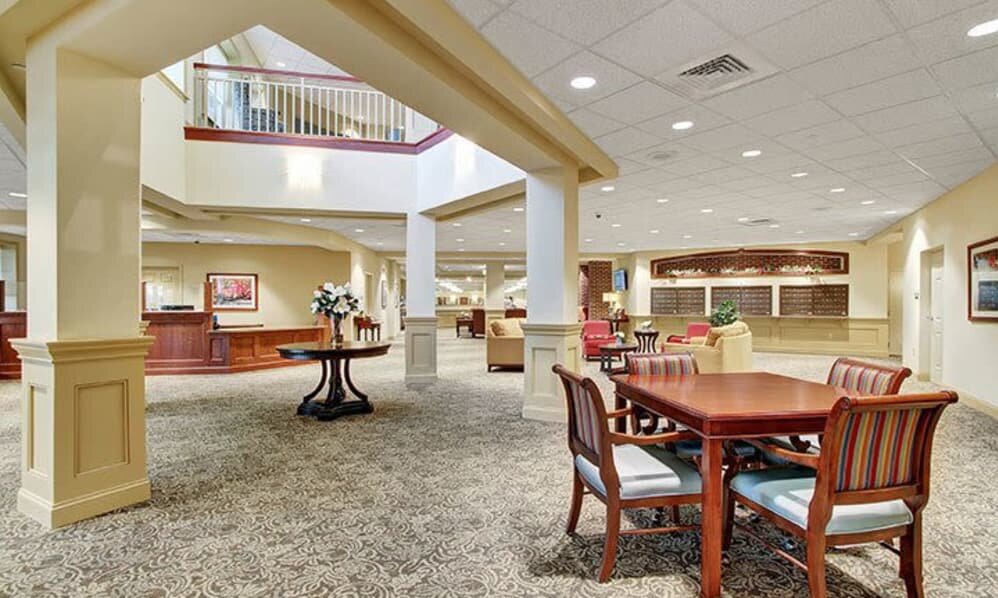
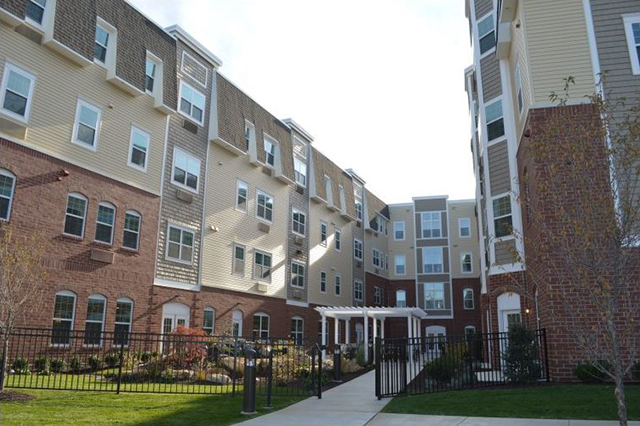
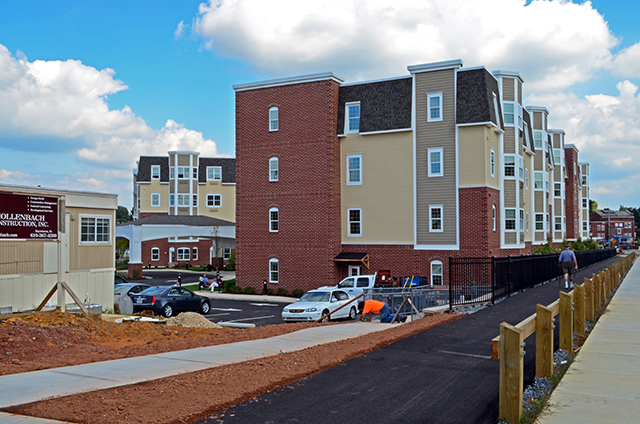
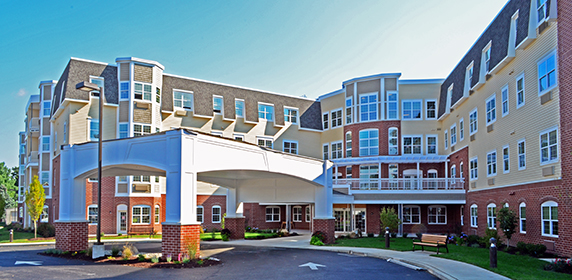
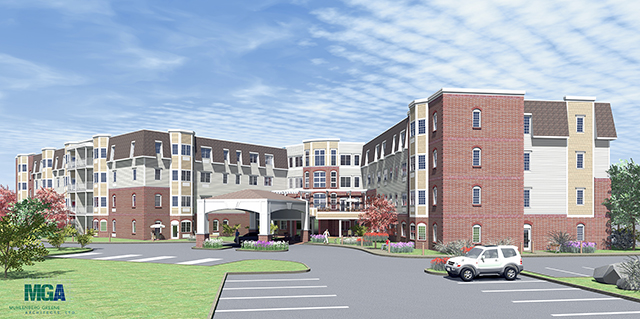
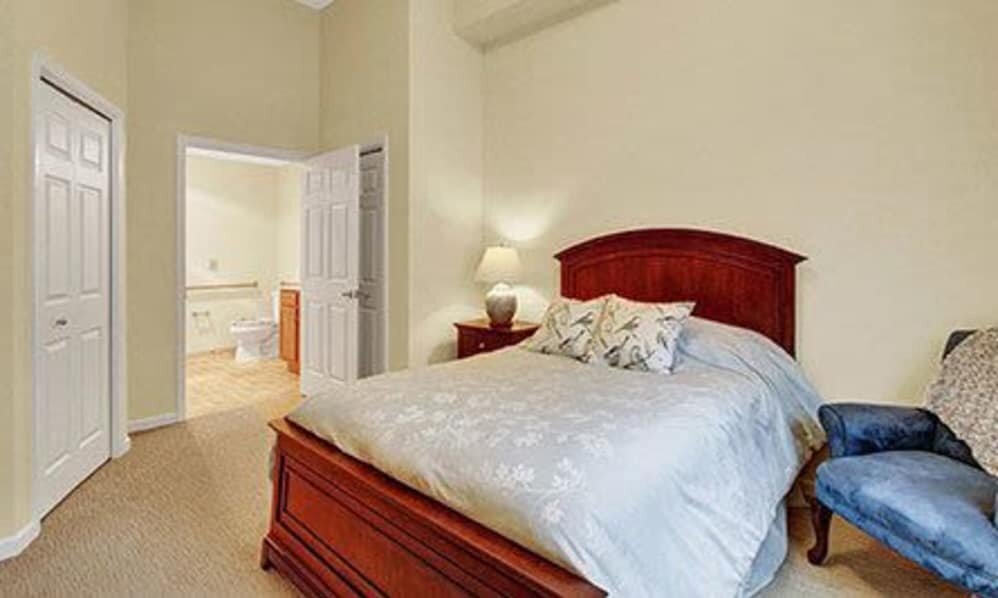
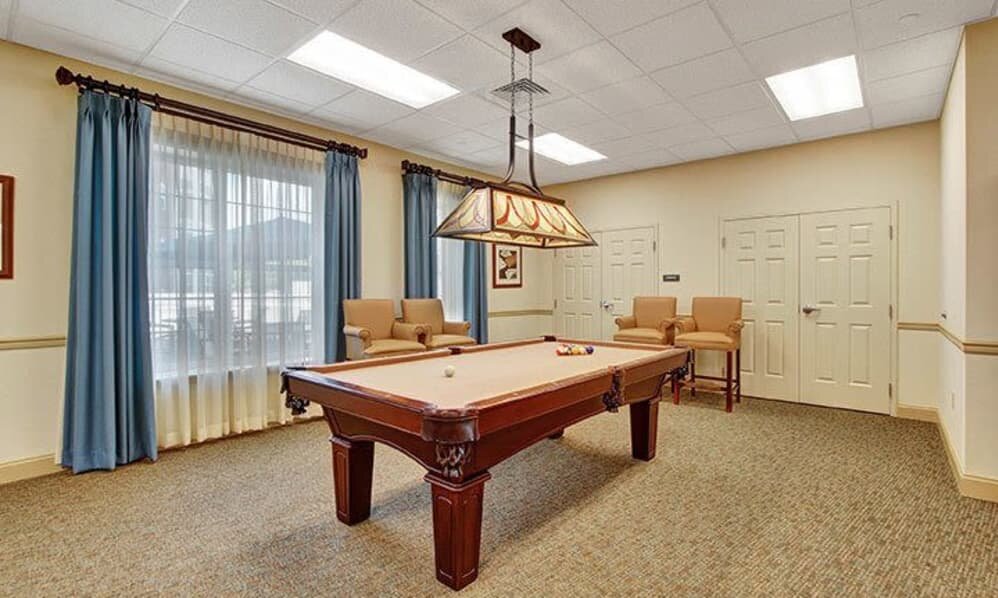
An innovative new retirement community in Ephrata, Pennsylvania. The design-build project, led by Hollenbach Construction, is part of the Keystone Villa Retirement Communities. Keystone Villa is a Berks County-based retirement community with locations in Fleetwood and Douglassville.
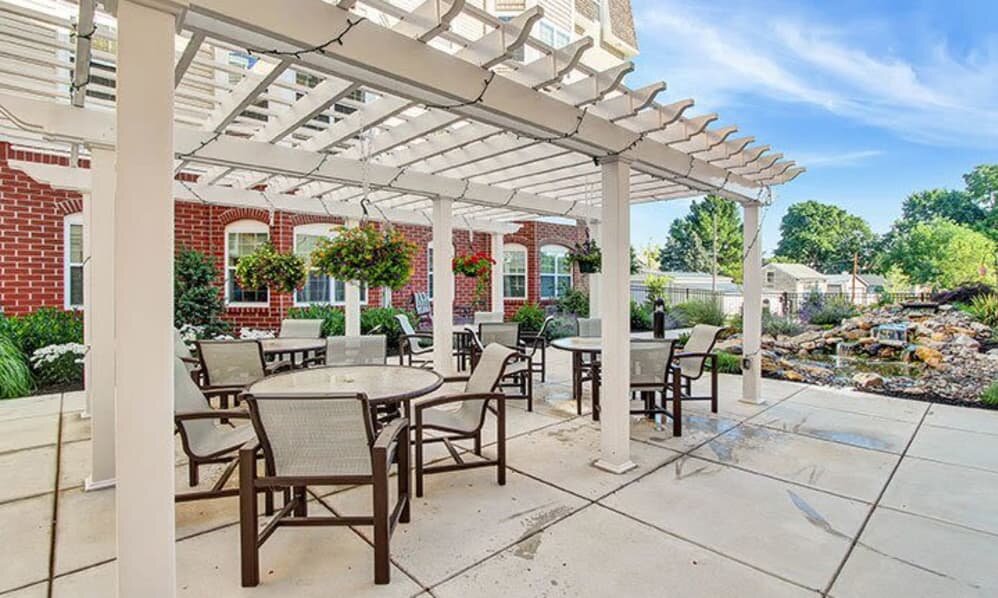
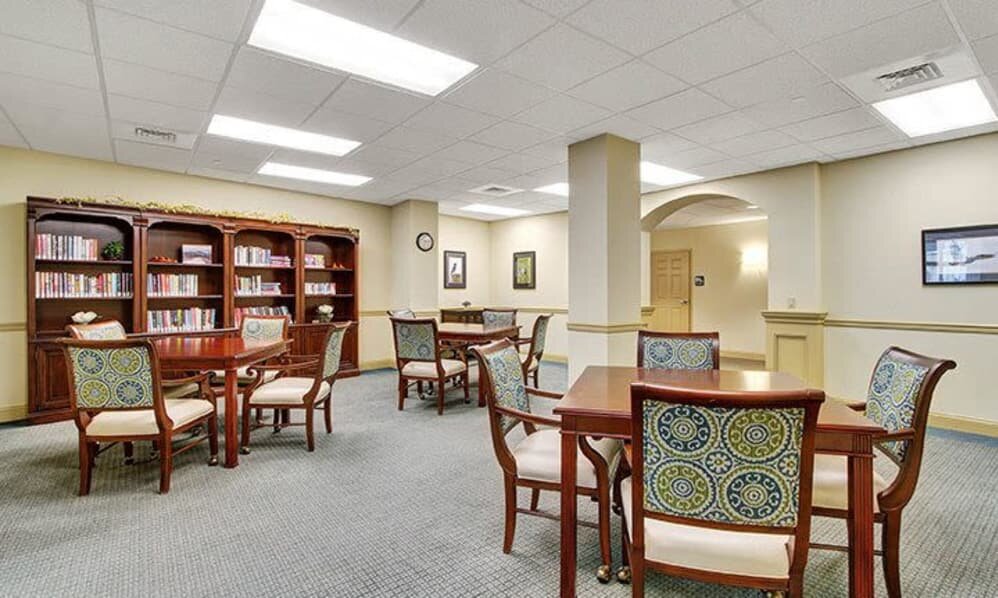
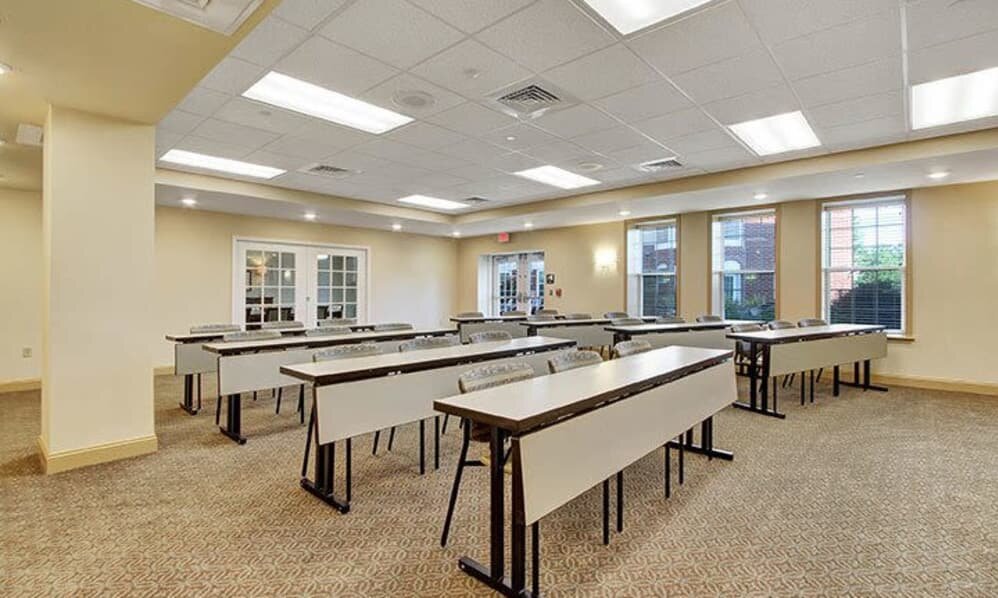
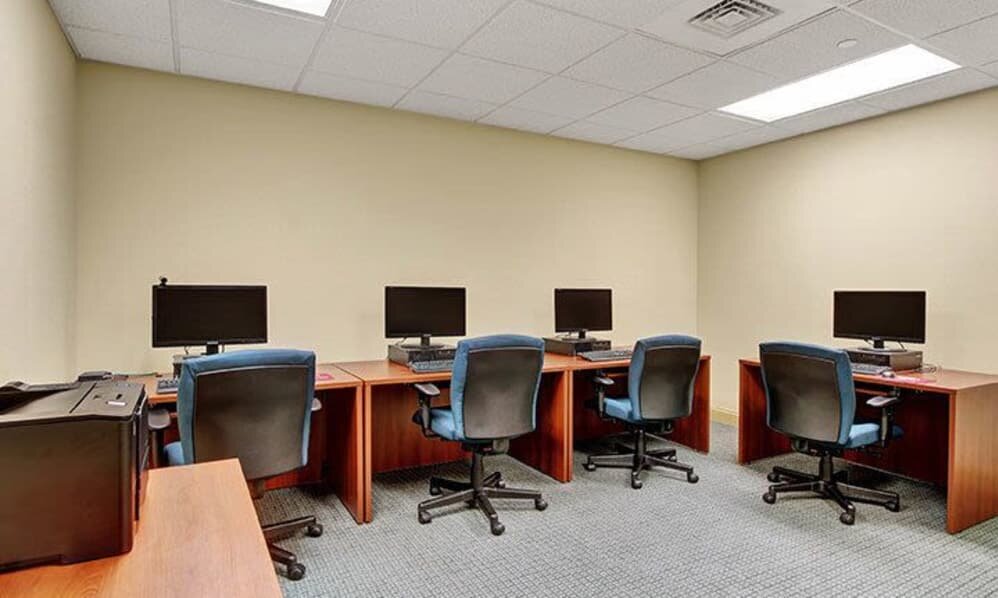
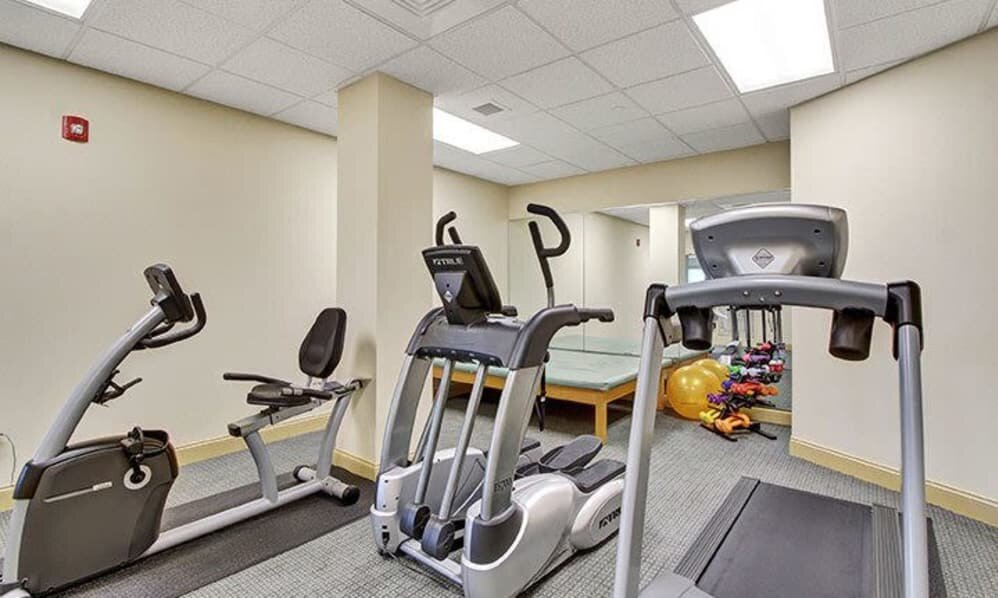
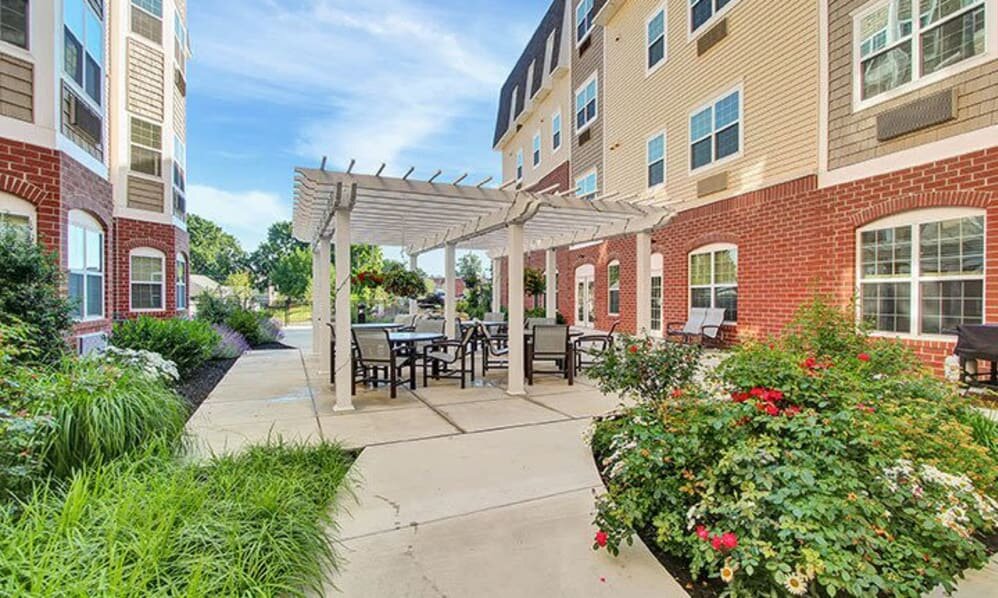
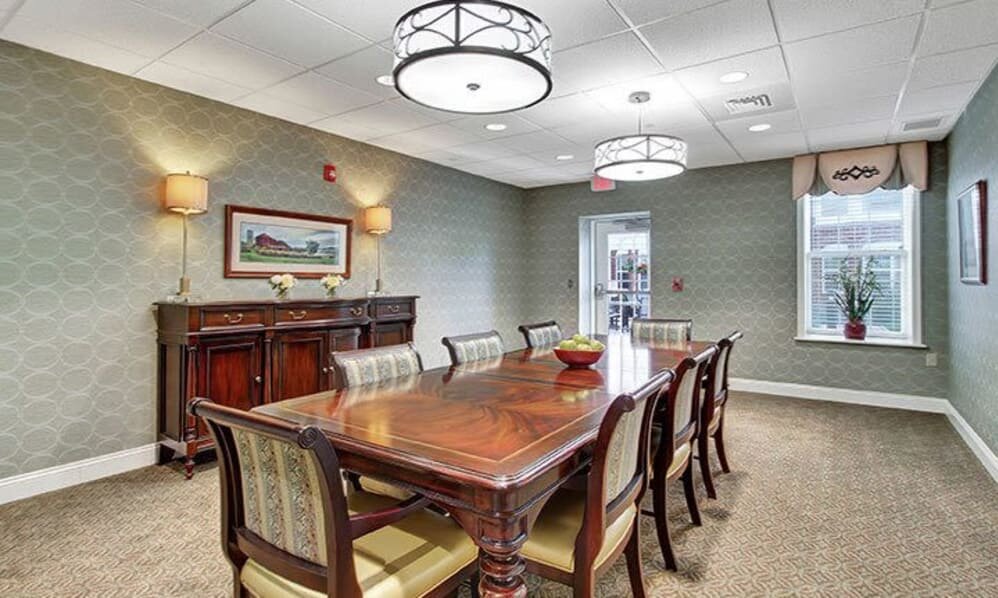
The Ephrata location is designed around one of the former Artworks at Doneckers buildings and involved the demolition of several ancillary buildings of an old shoe factory, as well as the renovation of a 35,000-square-foot mill building. This wing of the original building was incorporated into the construction of the two new wings, and they comprise the new 139-unit apartment building. Amenities include a second-floor outdoor terrace, multiple activity centers, a fitness center, an outdoor courtyard, a beauty salon, and a library. Living unit options include independent living, personal care, and memory care.

Ranch Home gets a Suite Addition
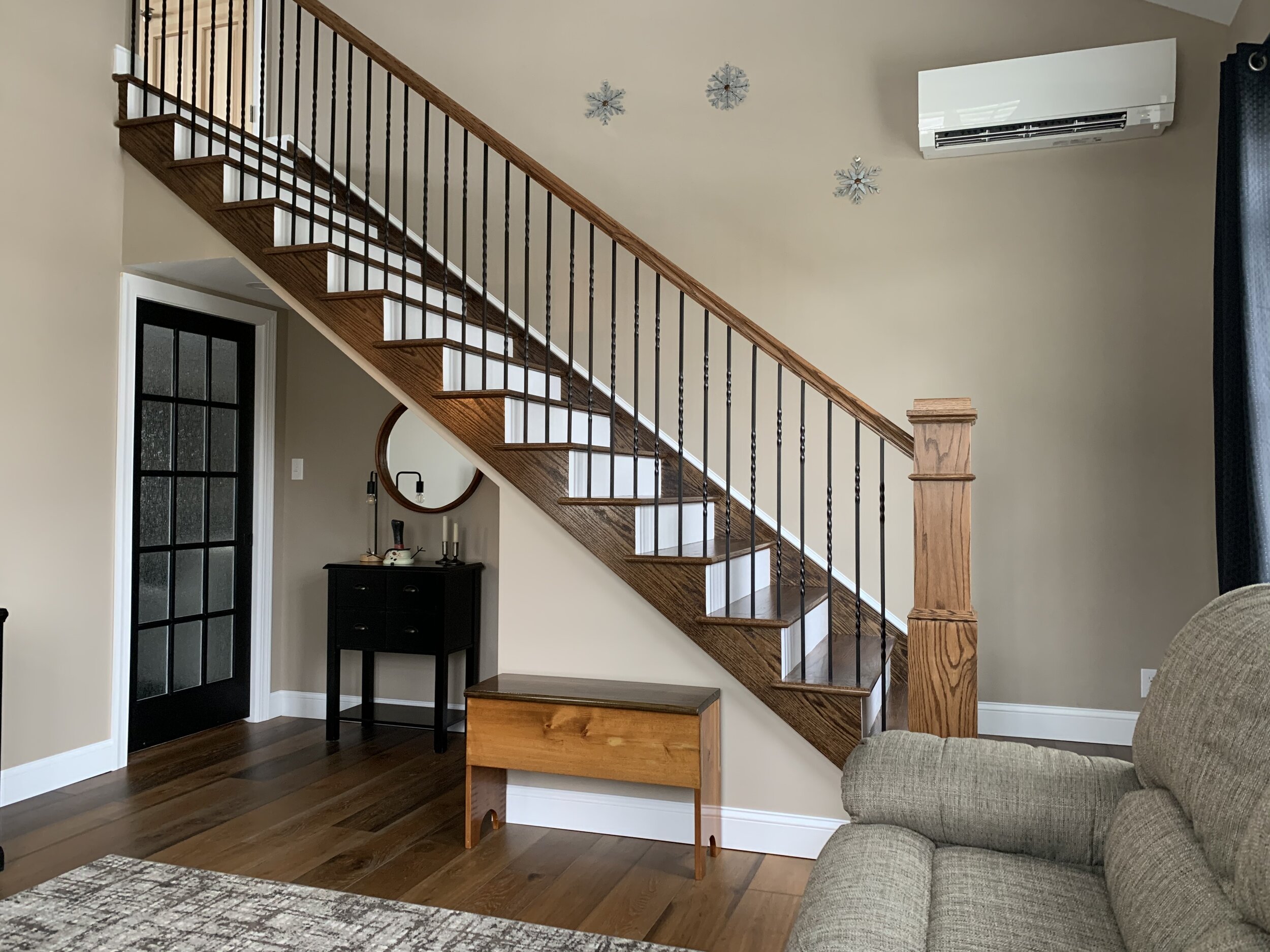
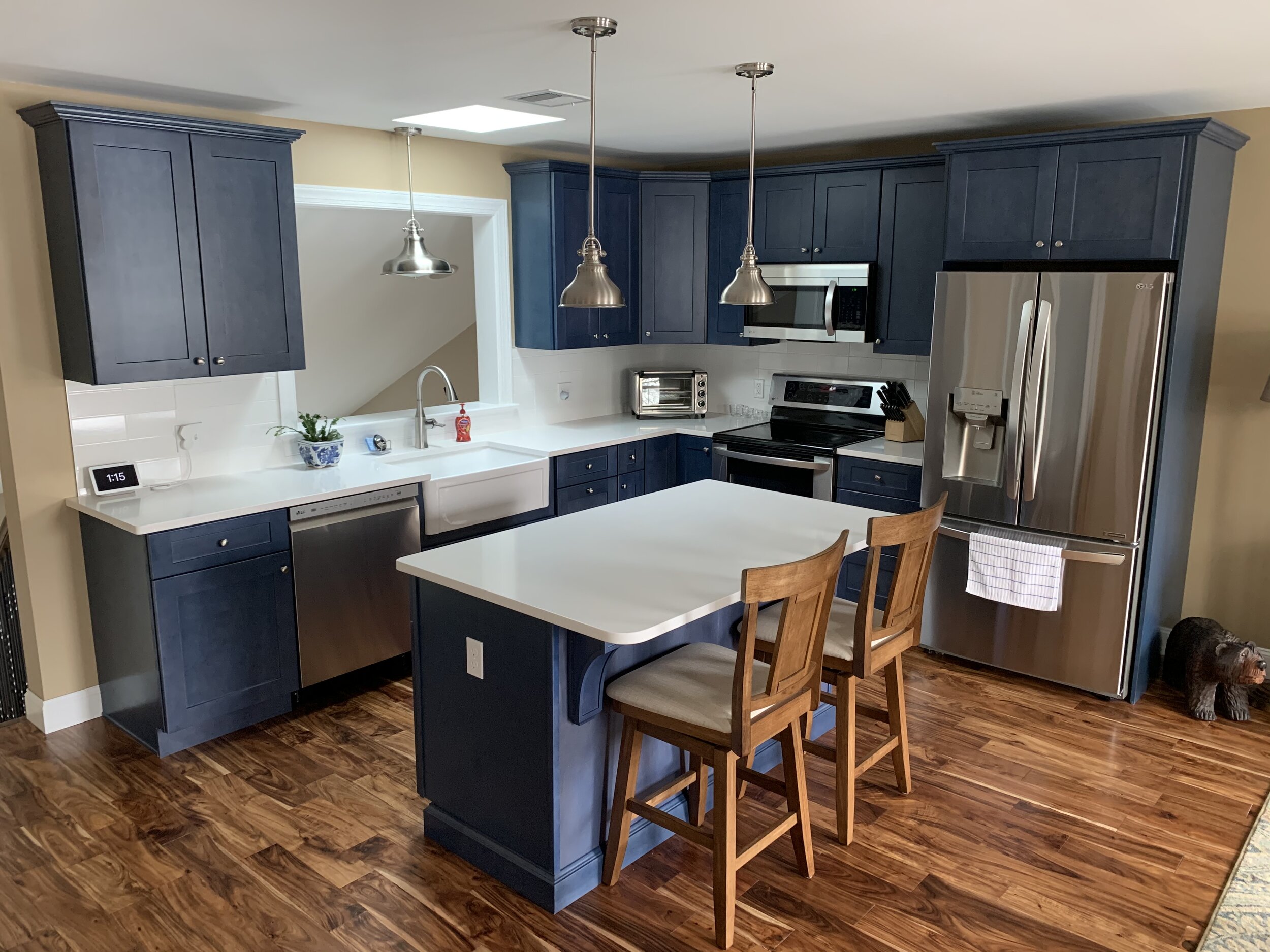
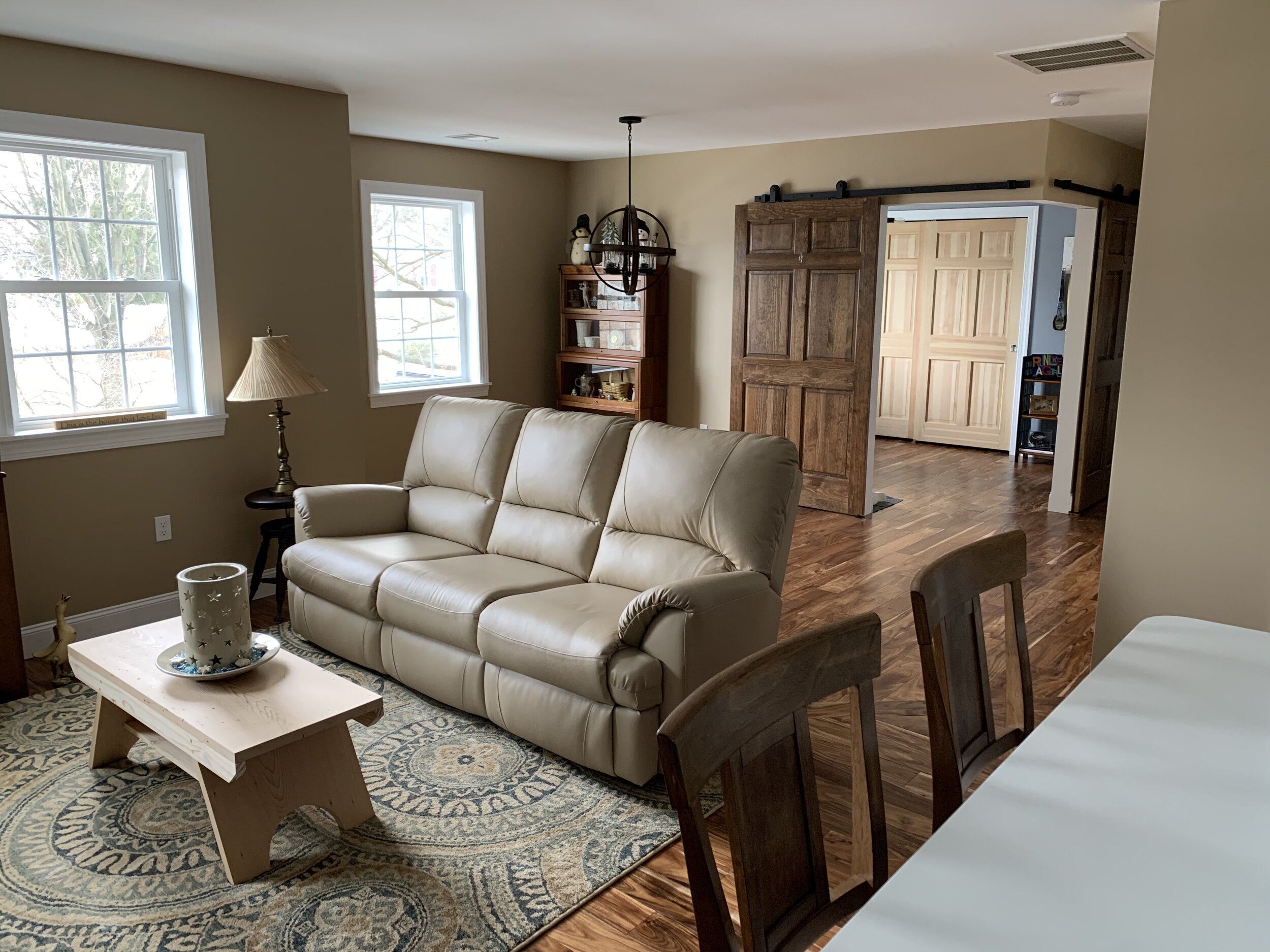
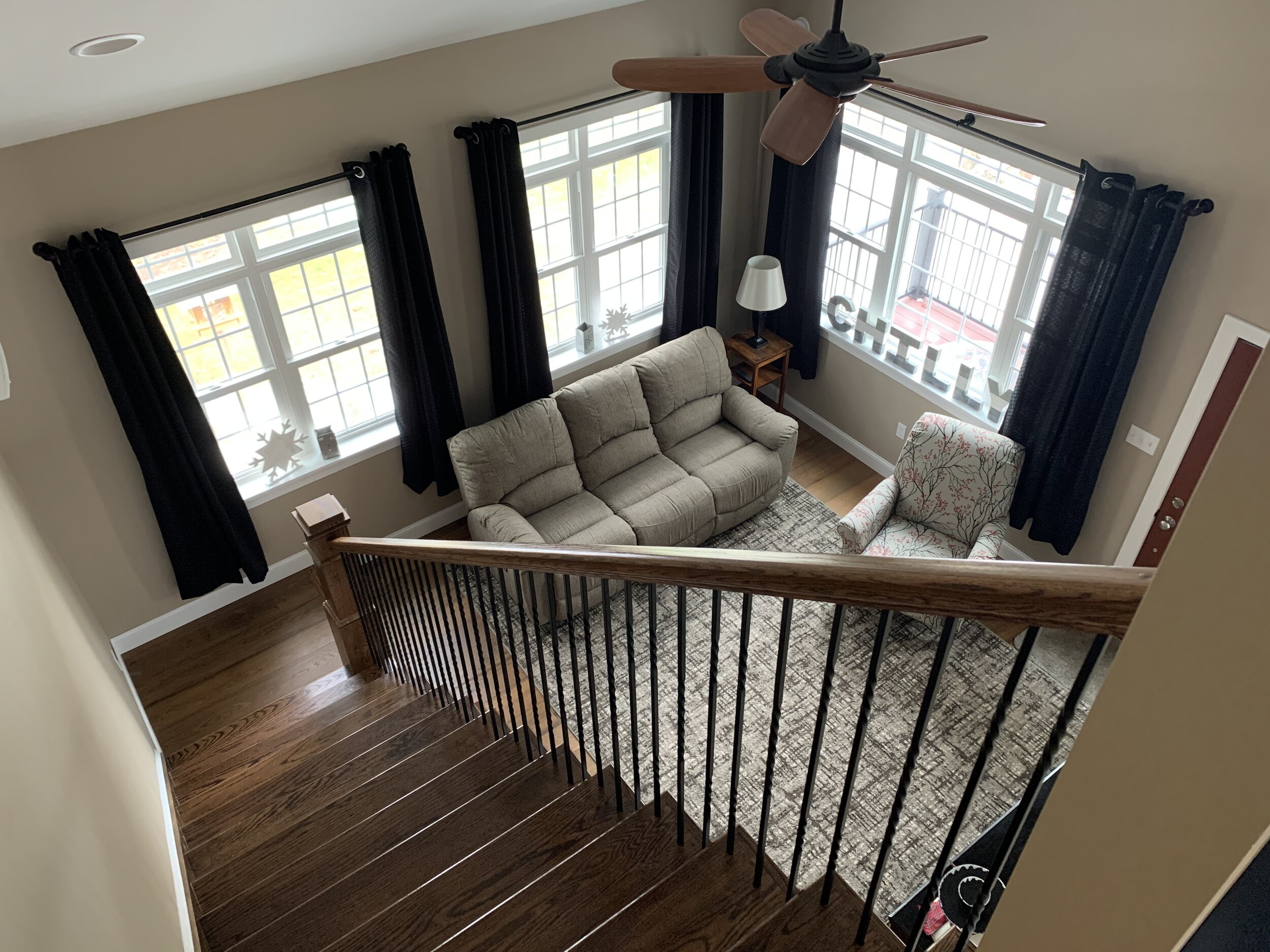
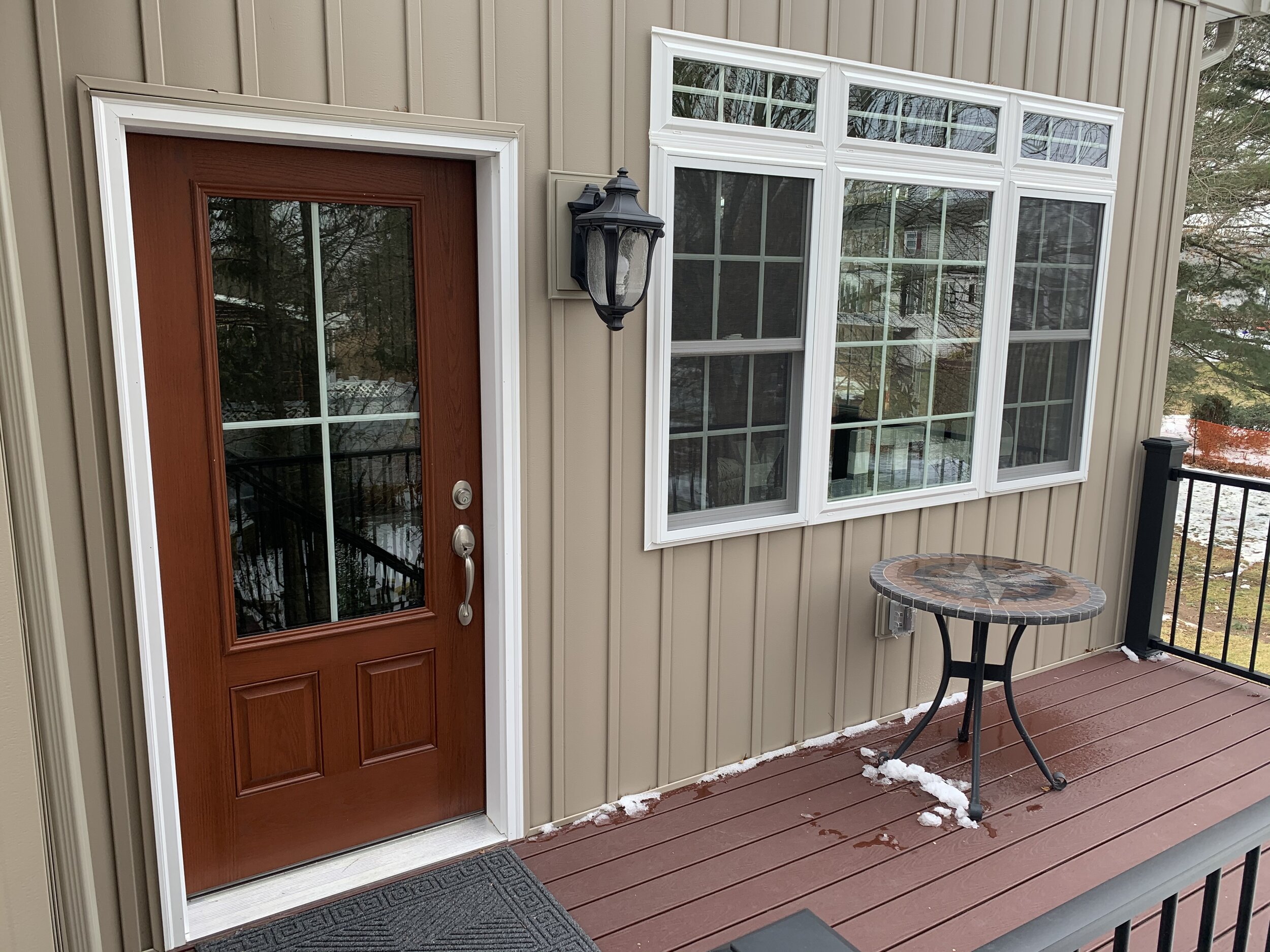
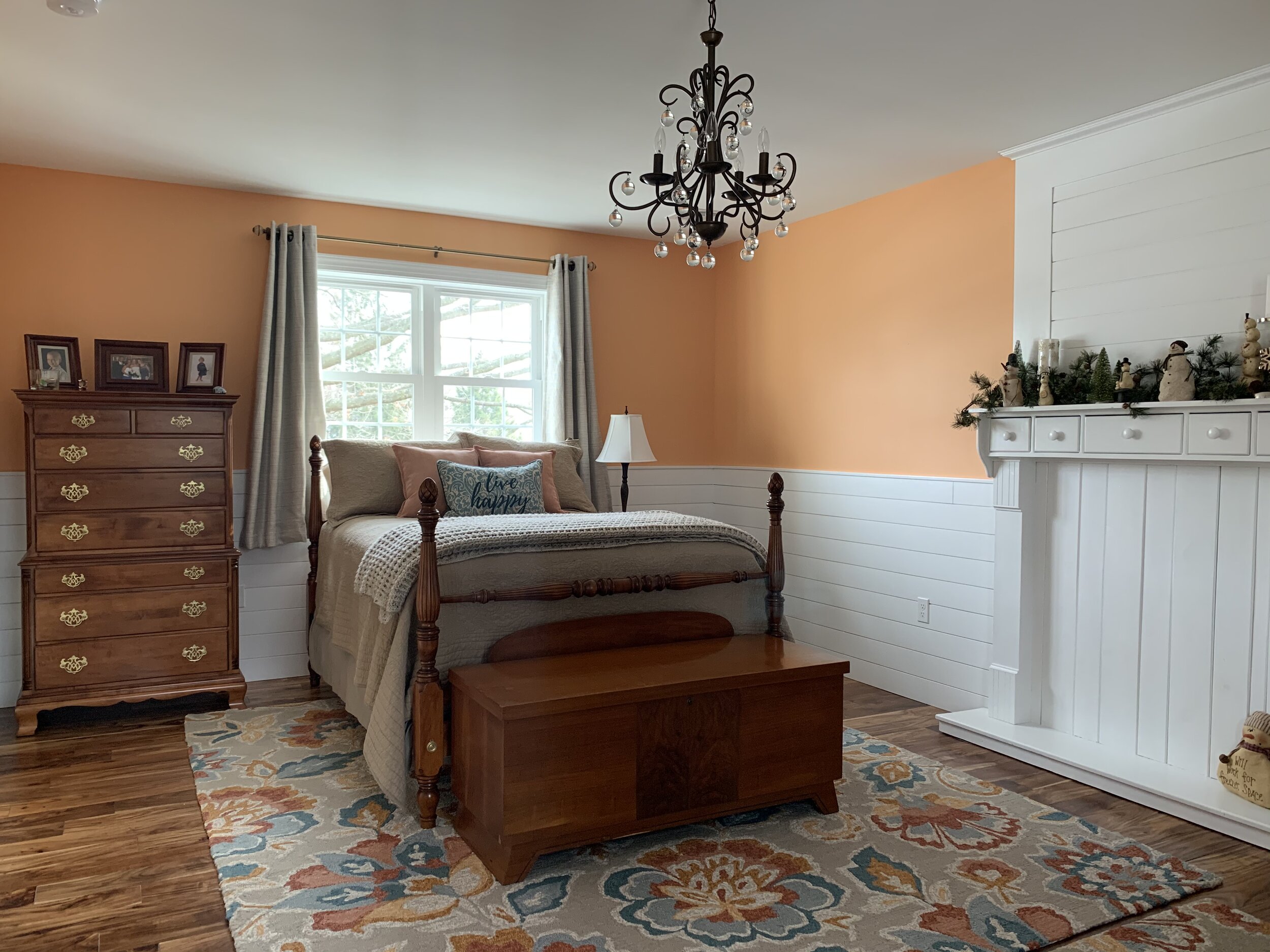
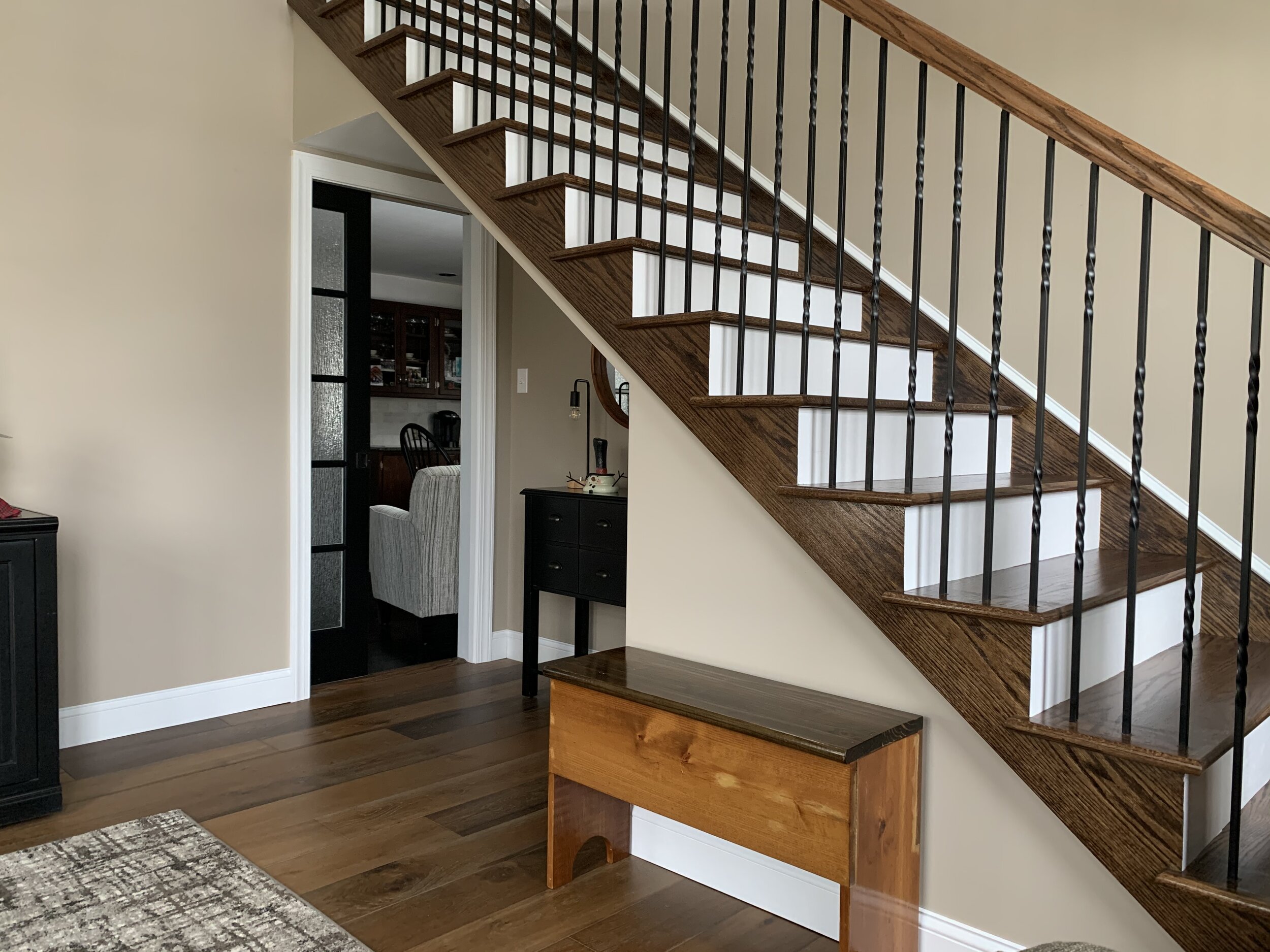
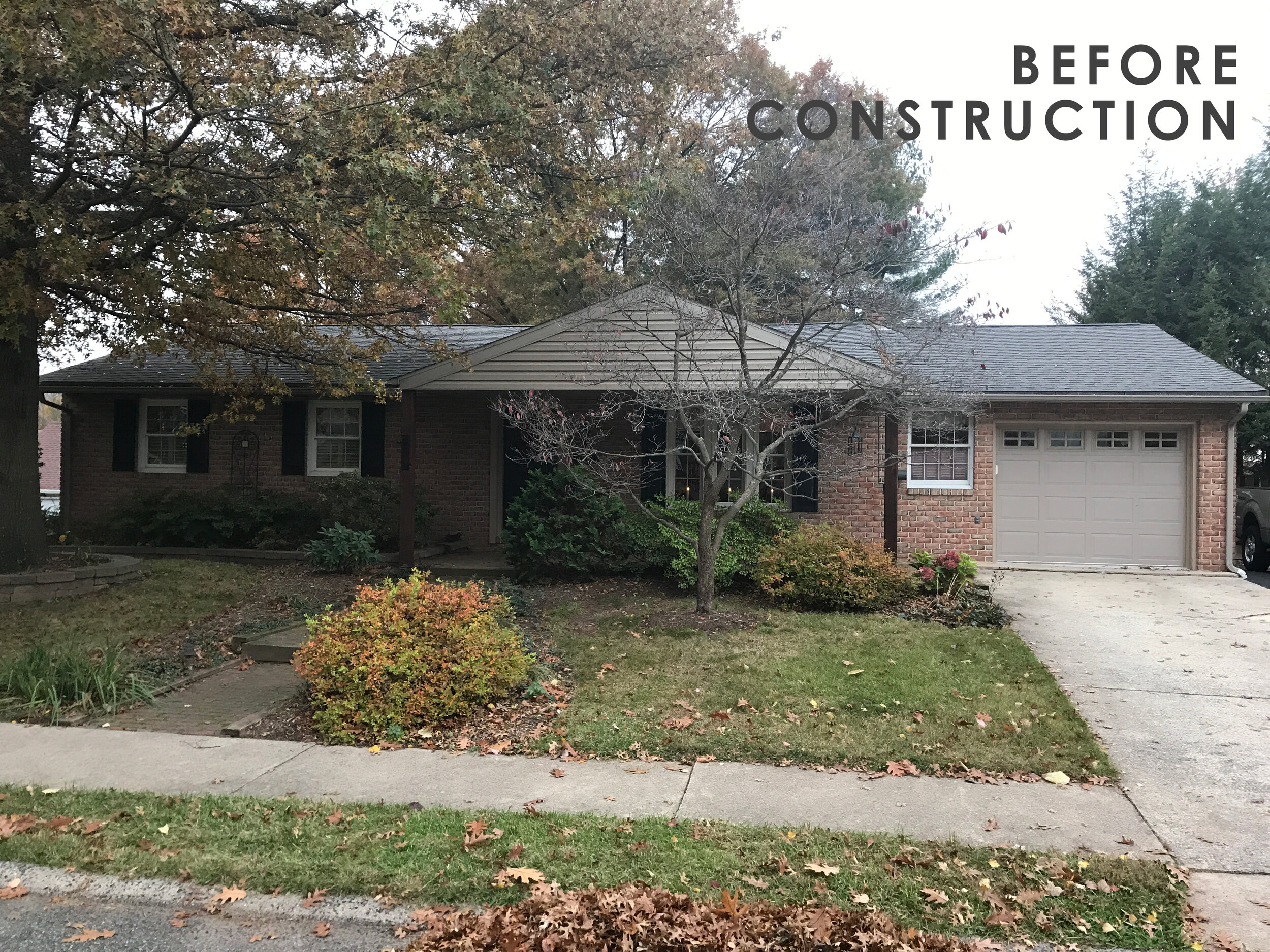
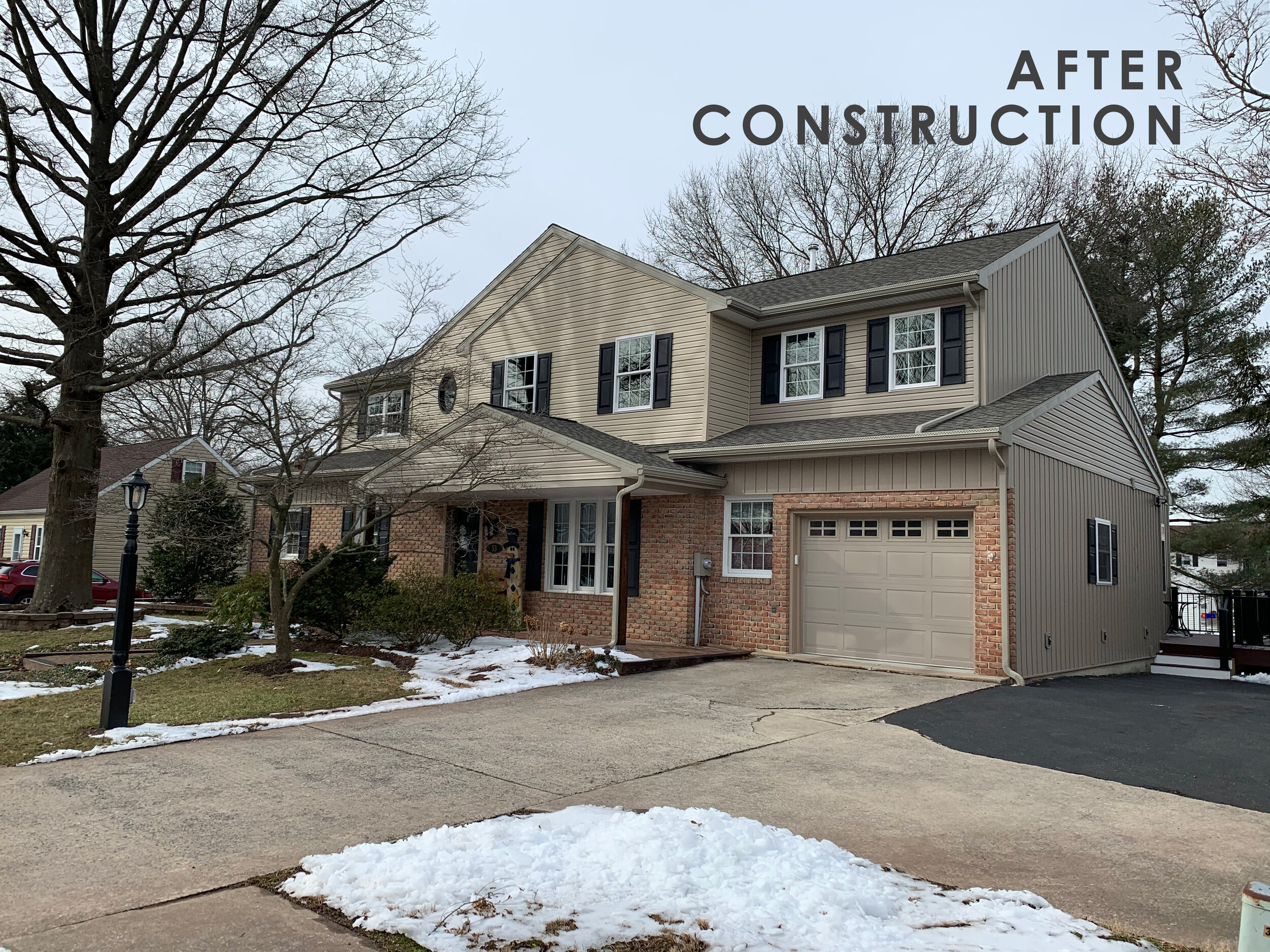
A Mother-Daughter suite addition to an existing ranch home in Boyertown, PA with the primary design goal to create an addition that feels like a separate home. The project was designed independently of the existing residence, connected to allow easy interior circulation between the aging parents and adult child’s spaces. Budget constraints and zoning limitations excluded expanding the building footprint on the site. Our vertical addition addressed this concern.
To create the effect of a distinct home, we designed a Welcoming Room entrance and elevated deck at the rear of the building. A stairway following the vaulted ceiling of the 1st-floor addition leads to a FULL second-floor, 2-bedroom, 1-bath dwelling complete with a full kitchen and laundry.
Congregation Gets a New Facility
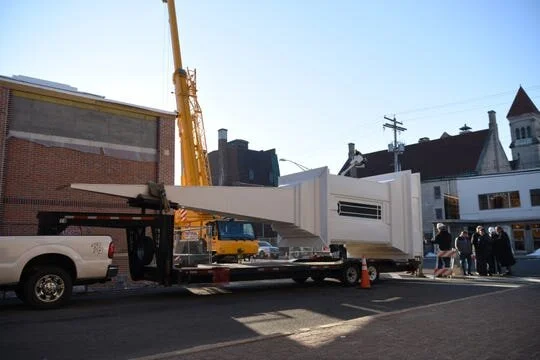
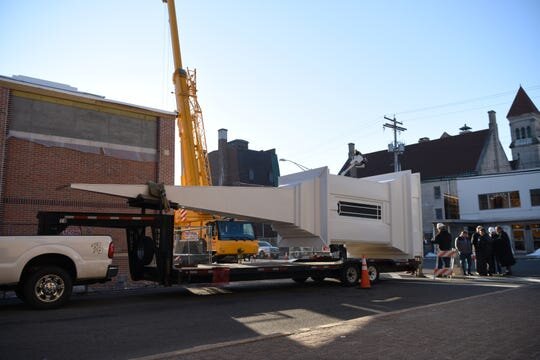
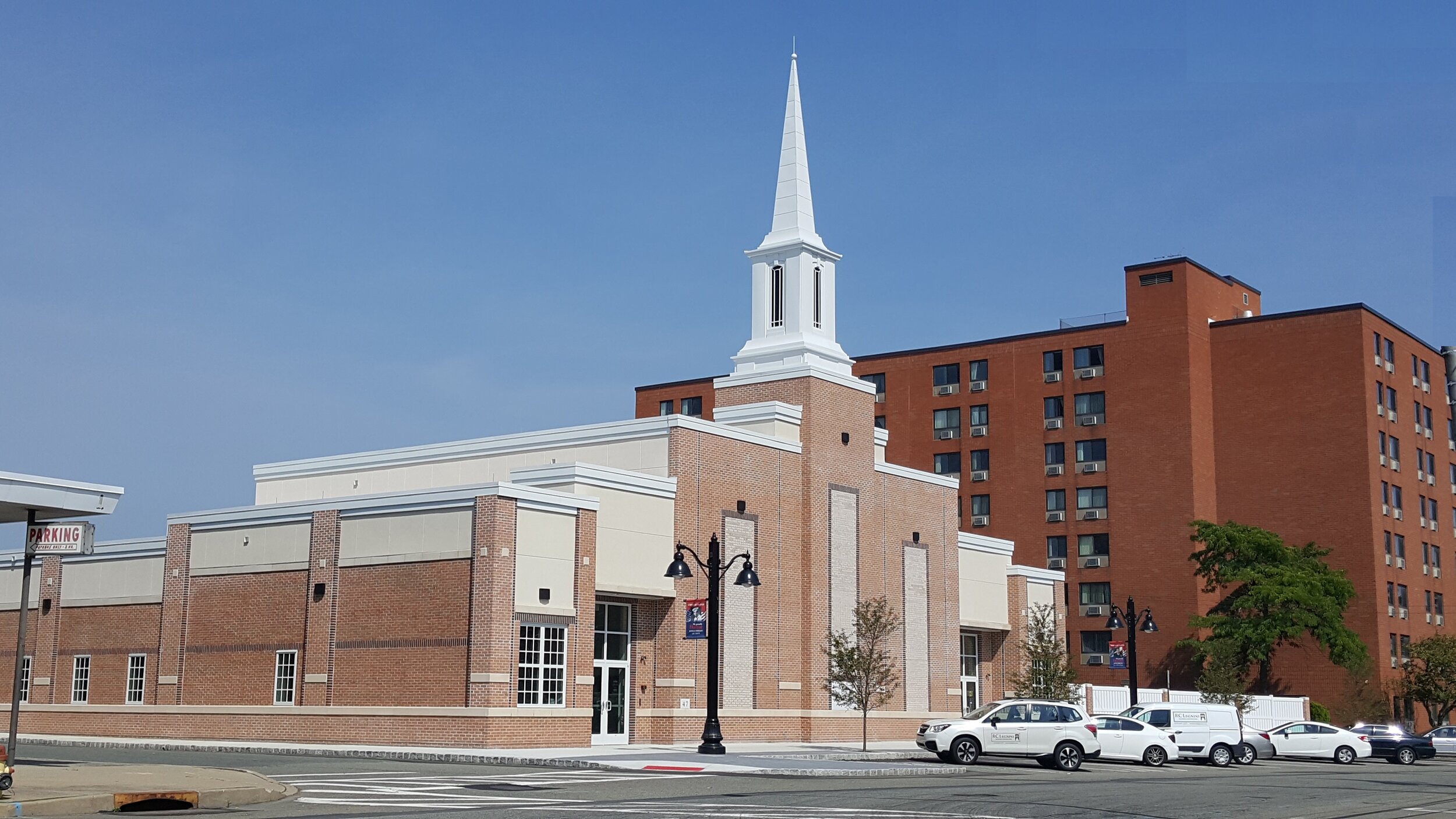
A former J.C. Penney department store, built in the 1950s, was adapted to accommodate a growing congregation in New Jersey. Located on the western edge of downtown Dover, the building was home to a flag factory, which had been closed for about five years.
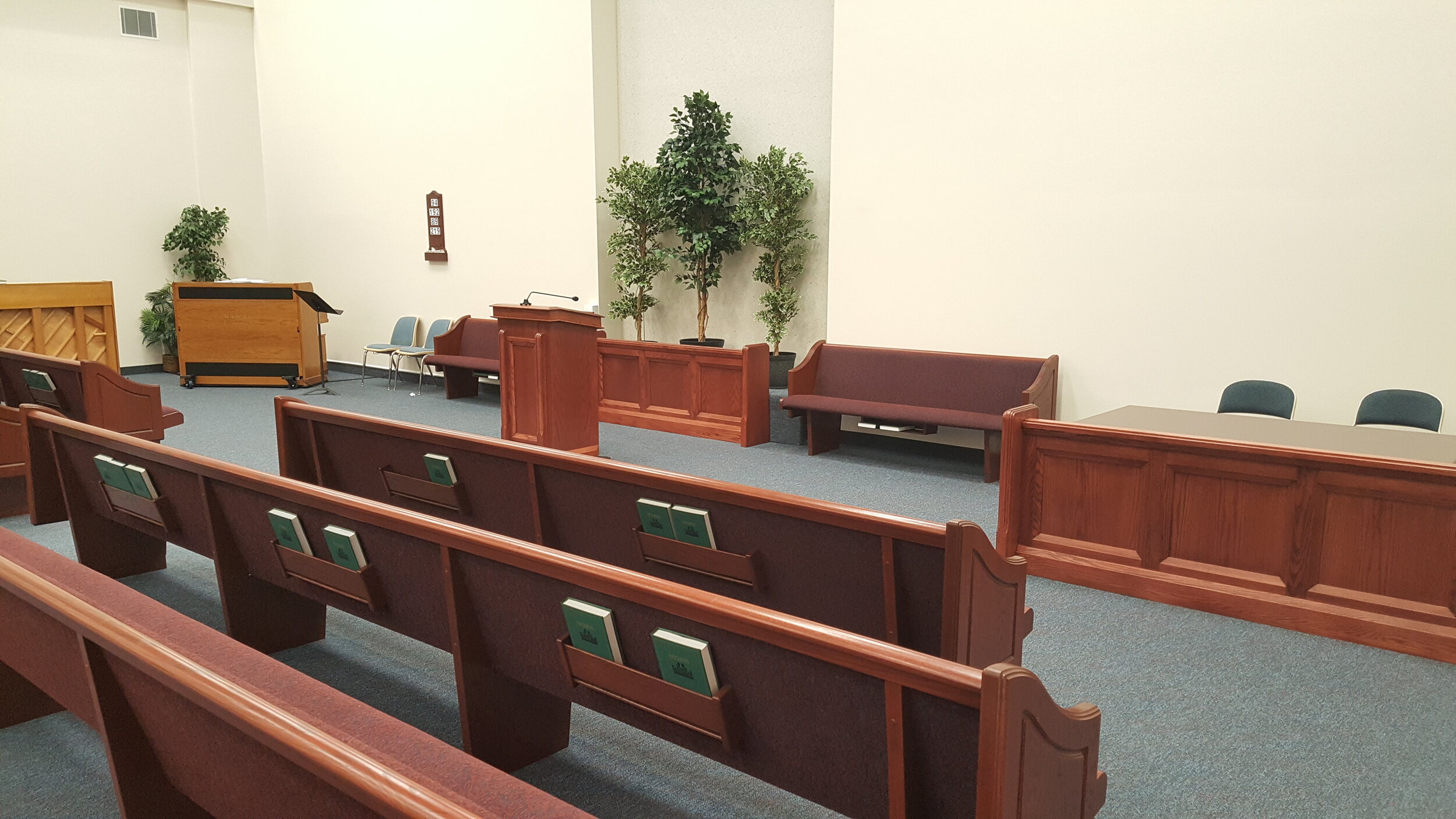
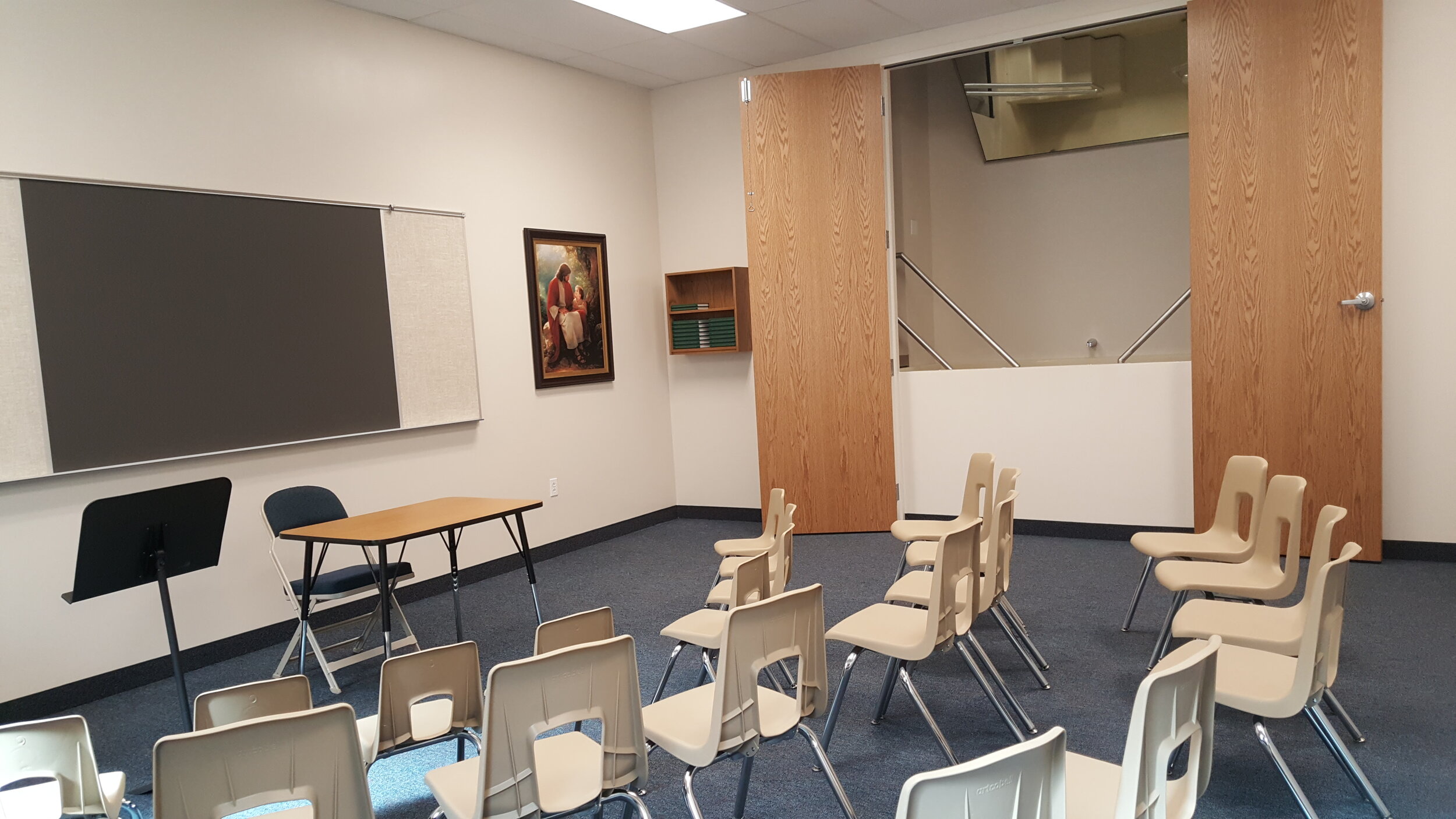
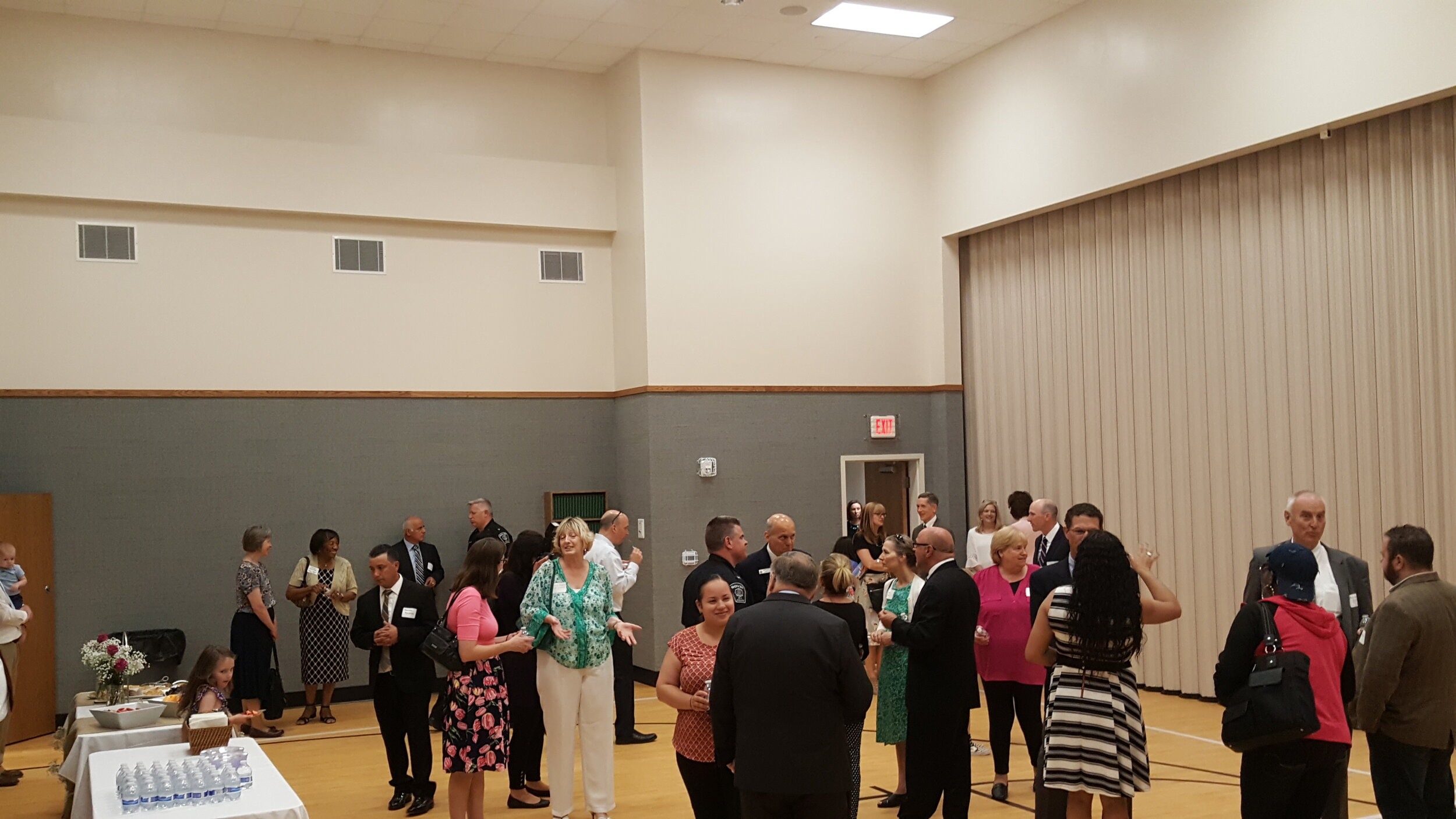
Muhlenberg Greene Architects designed a new 10,000-square-foot chapel under one 30,000-square-foot roof, combining two local congregations poised for growth. The store building was converted into a church, which required bringing it up to code, and the addition of a 40-foot steeple.
Read more about the project in this article from The Daily Record.
Read more about the project in this article from Religious Products News.
Conrad Weiser West Elementary Additions and Renovations
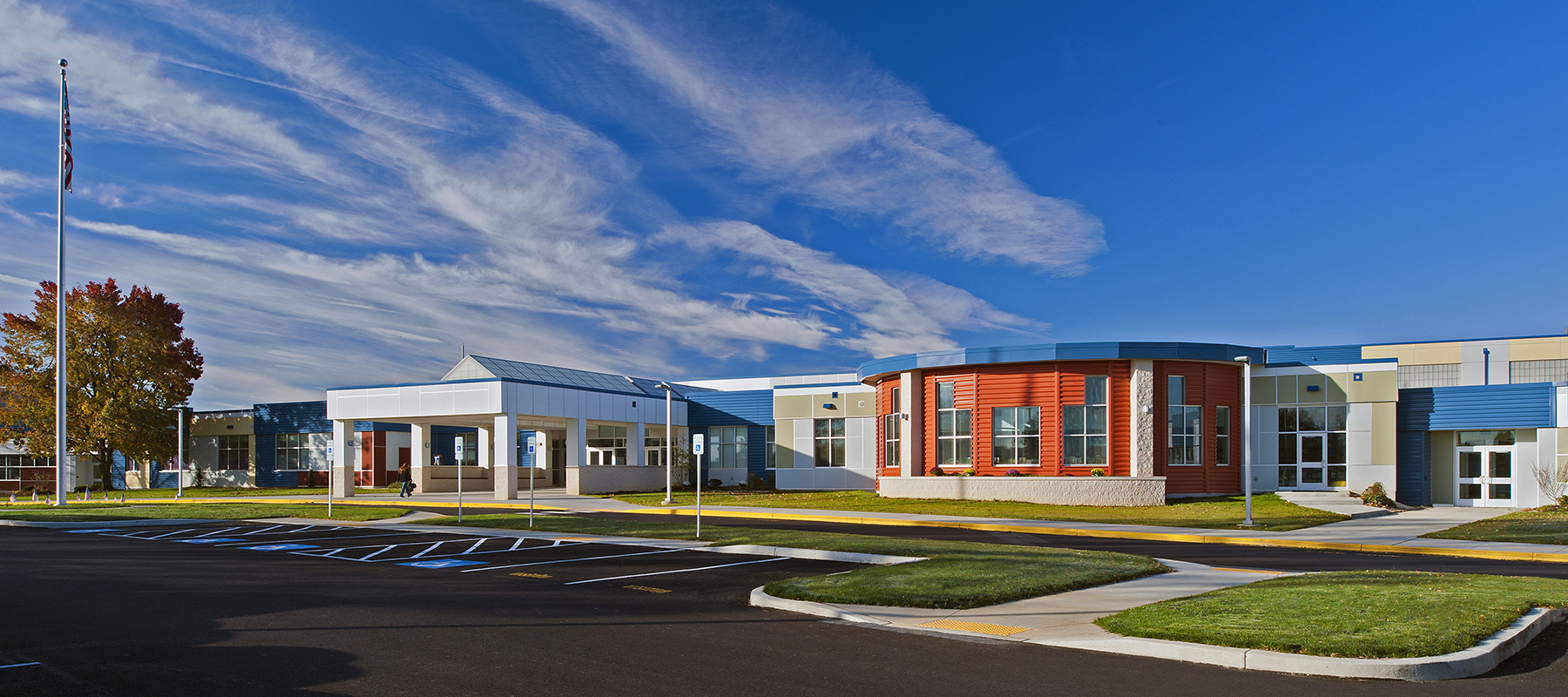
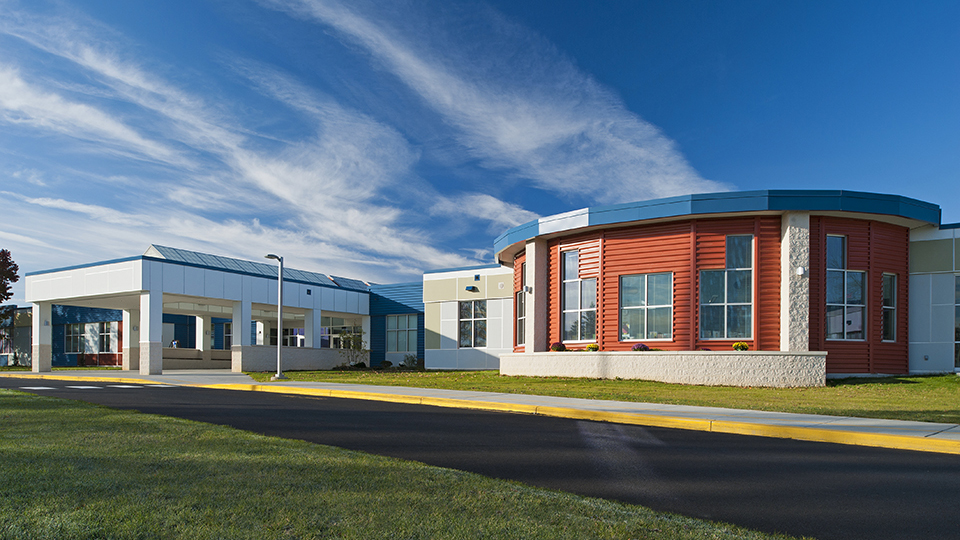
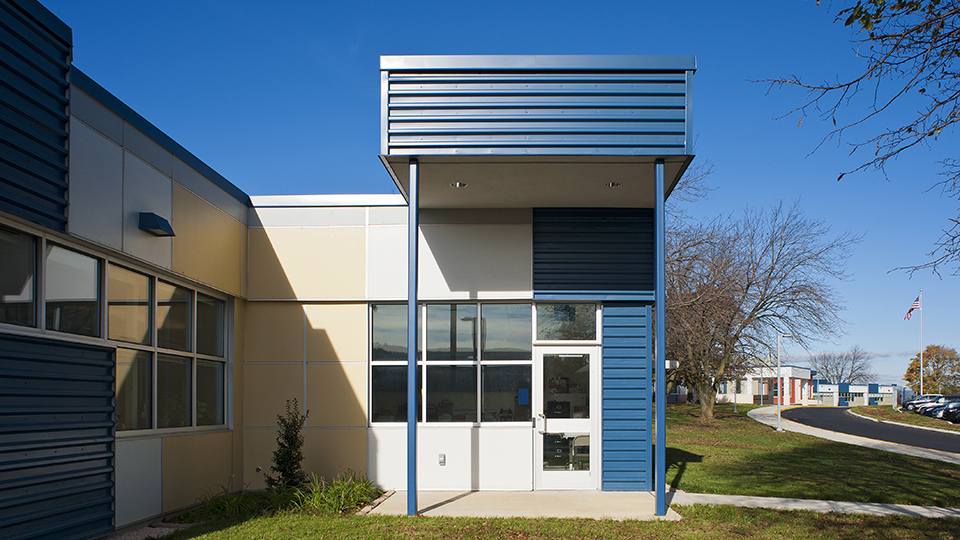
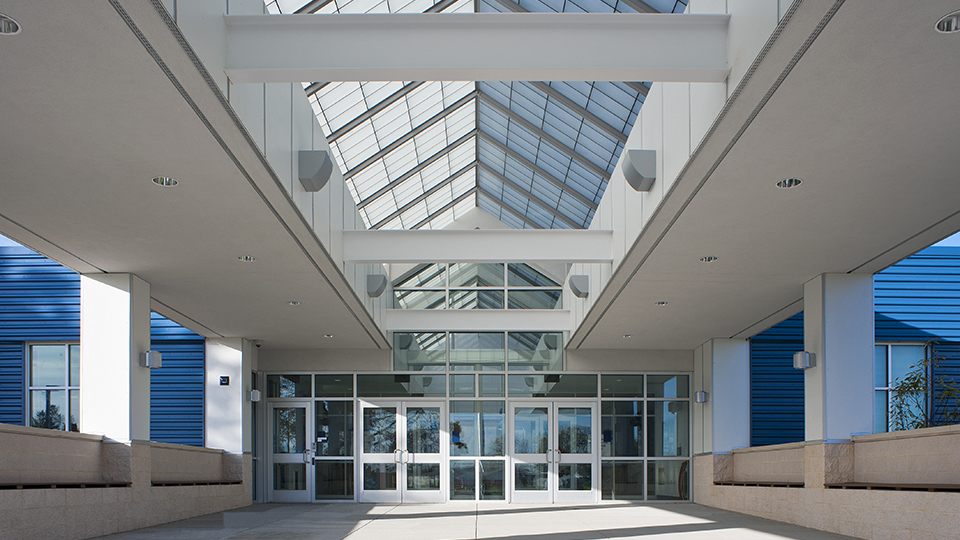
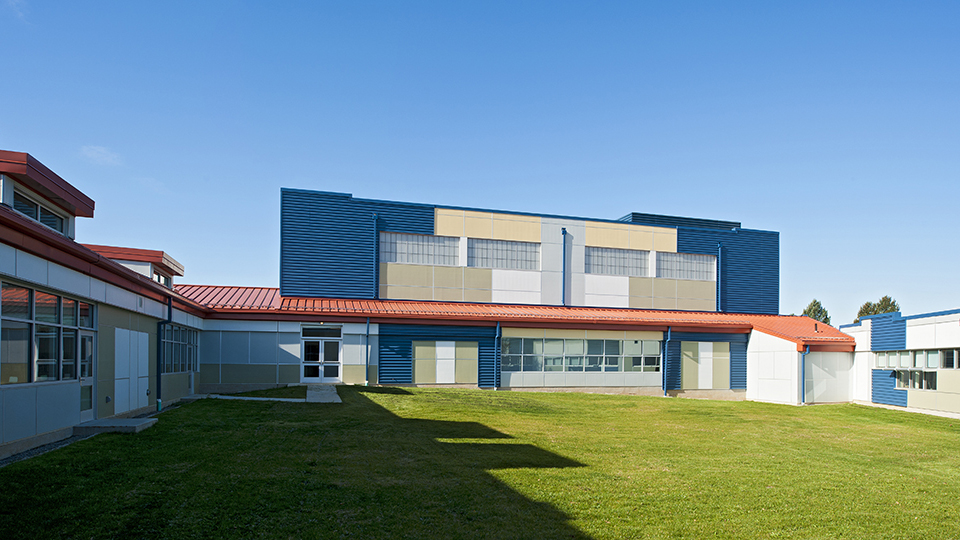
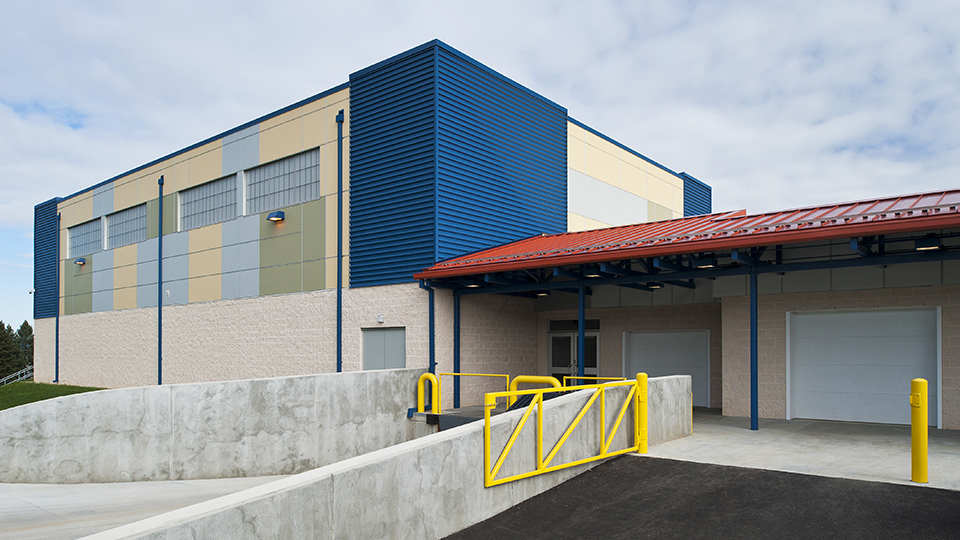
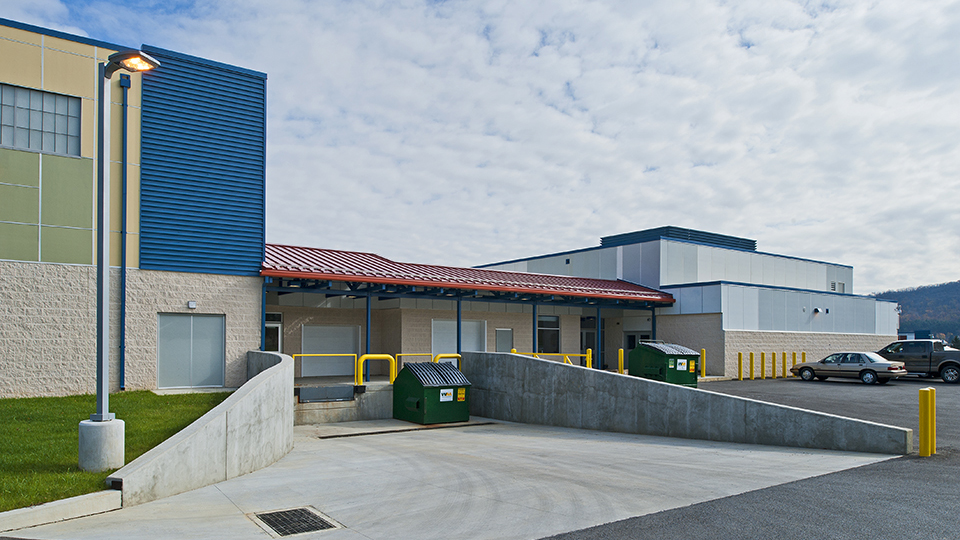
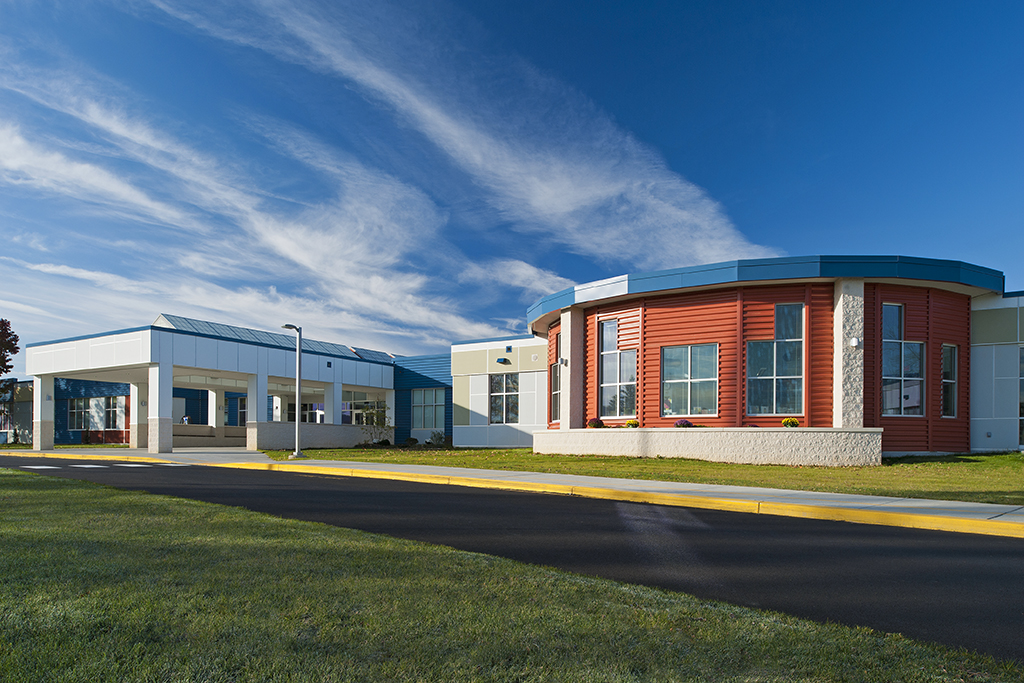
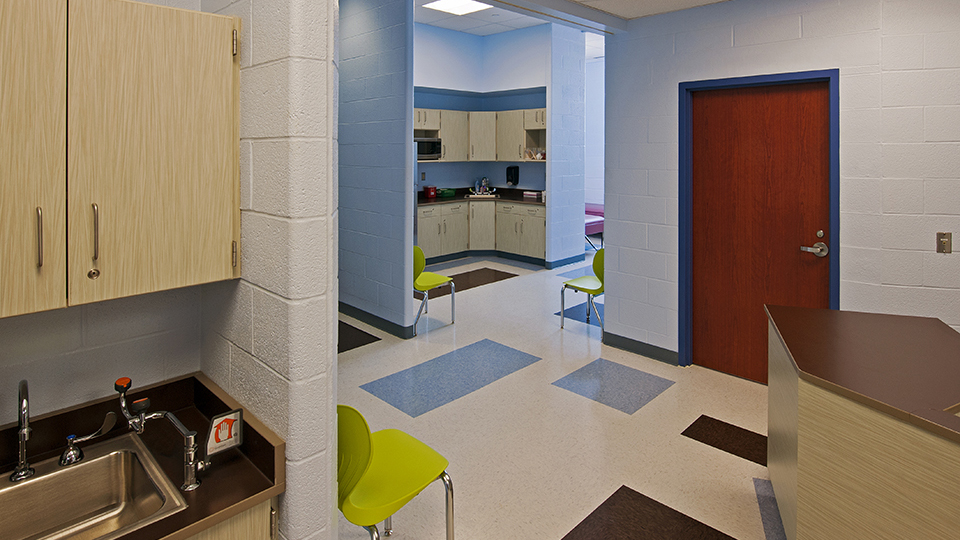
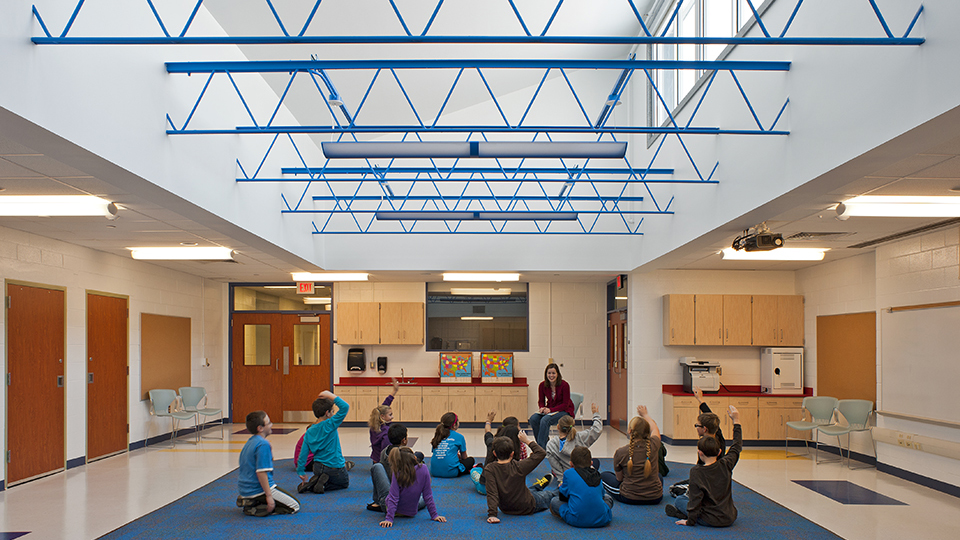
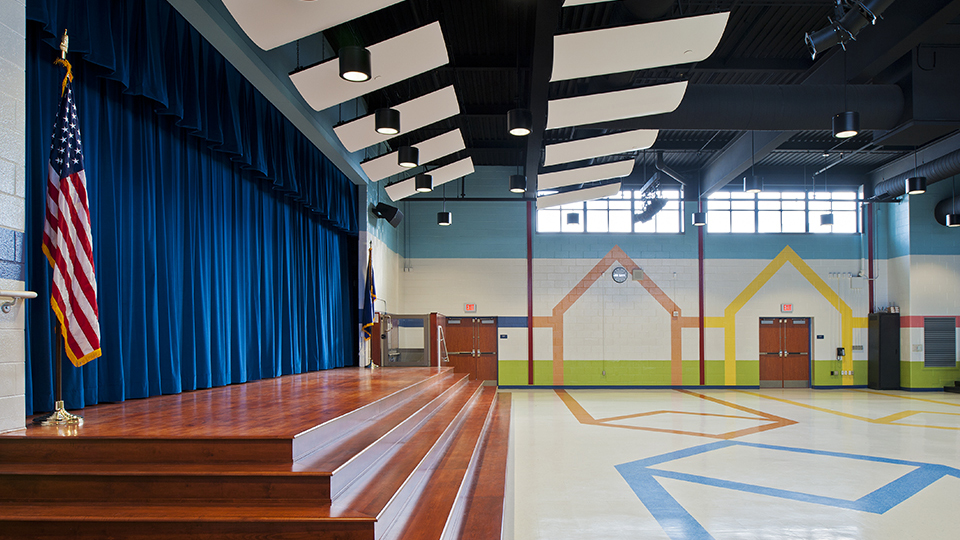
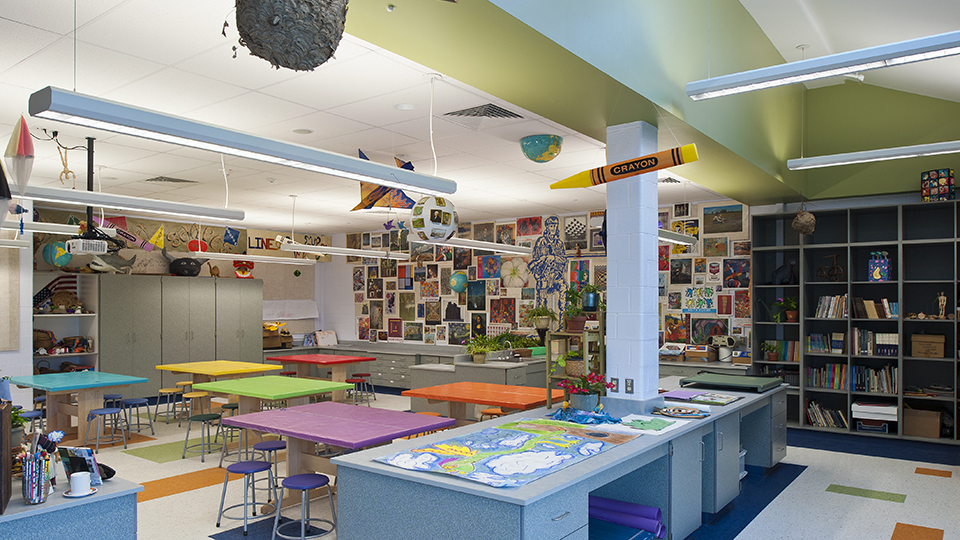
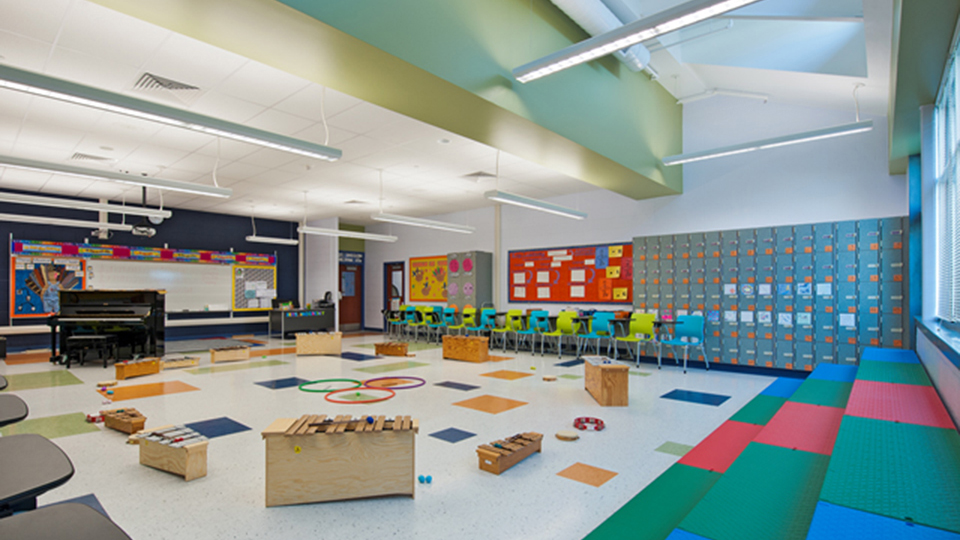
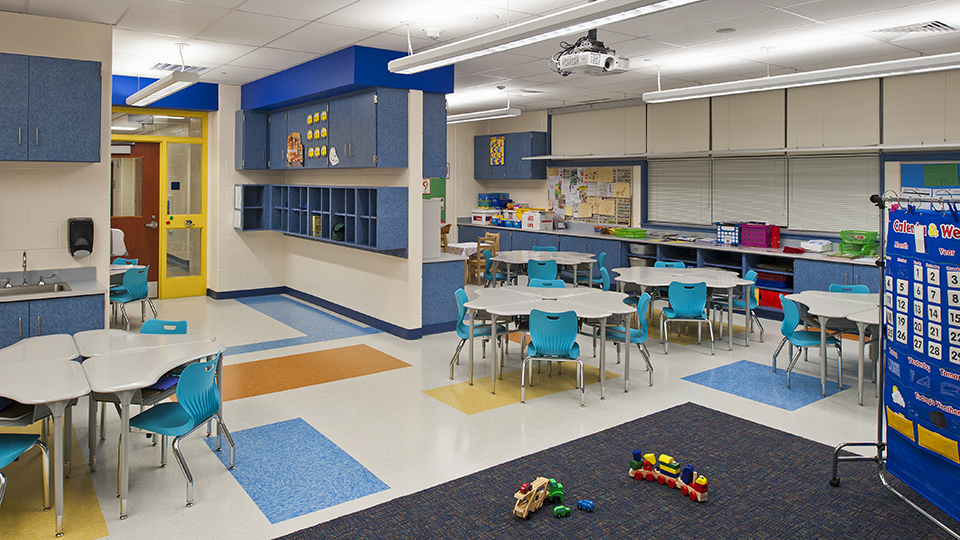
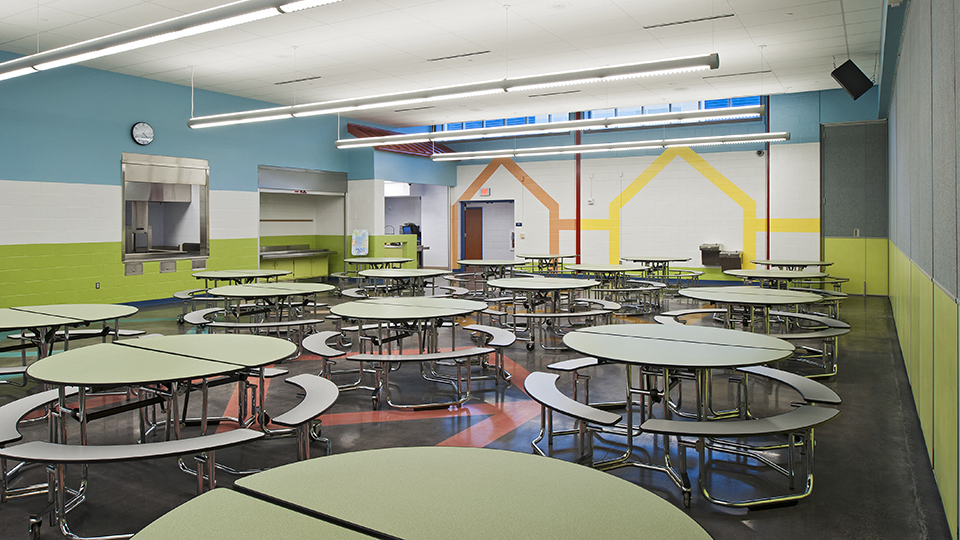
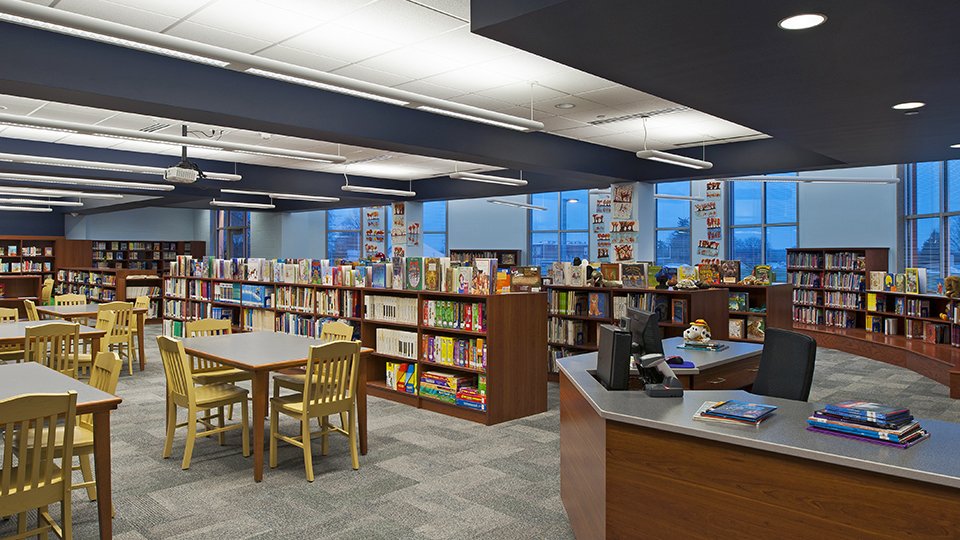
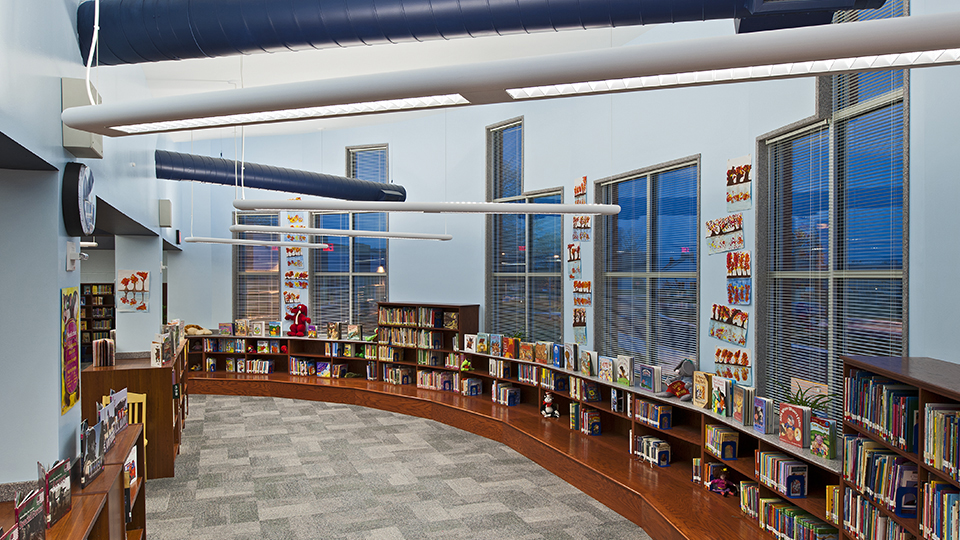
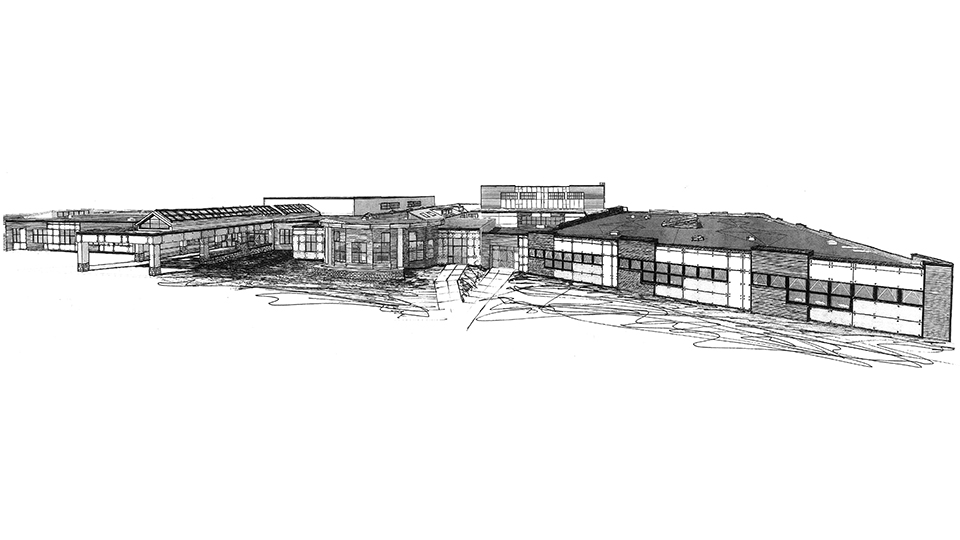
The newly expanded and renovated Conrad Weiser West Elementary School was completed in time for the 2012 school year, and thrilled students and staff alike. The original building was completely renovated, including an expanded Library and a new, full Gymnasium. The school serves grades Kindergarten through Fourth Grade, and the project achieved LEED Silver Green Building Certification. The additions and renovations were designed to address the need for additional classroom space, upgrade the 42-year-old infrastructure, address accessibility, security, and building code issues, and provide an improved environment that meets current standards for staff and students.
The design reused much of the existing building and recycled many of the materials that were removed during the project. The high-performance school building uses energy-efficient technologies for the operation and control of the mechanical systems, daylight harvesting to maximize natural light in the occupied spaces, along with energy and water-conserving plumbing fixtures.
The existing building was an all-electric facility, constructed prior to the energy crisis of the early 1970s. The new design utilizes natural gas service to reduce energy costs for heating, cooking, and hot water needs, and a new, state-of-the-art geothermal heat pump system for classroom heating and cooling. Through the use of automated building controls, the mechanical and electrical systems reduce energy use and assist the District in reducing its carbon footprint.
The new building incorporates modern systems and controls that provide a healthier interior environment, designed to support and encourage the educational program. Healthier environments are created by improved ventilation systems that effectively circulate and filter adequate air volumes through the spaces, combined with natural daylight to help stimulate the students and staff. The materials selected have been chosen to prevent the circulation of harmful chemicals and dust.
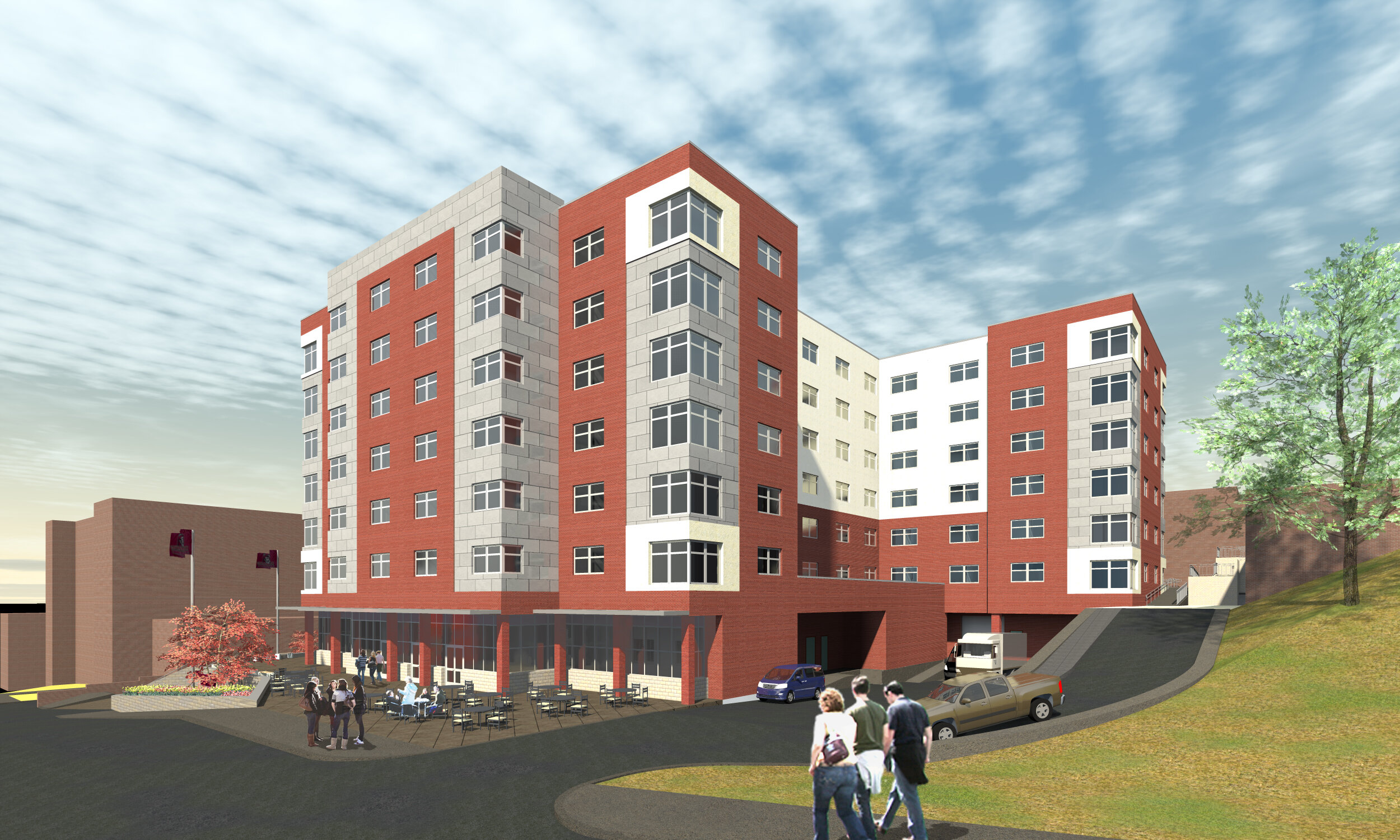
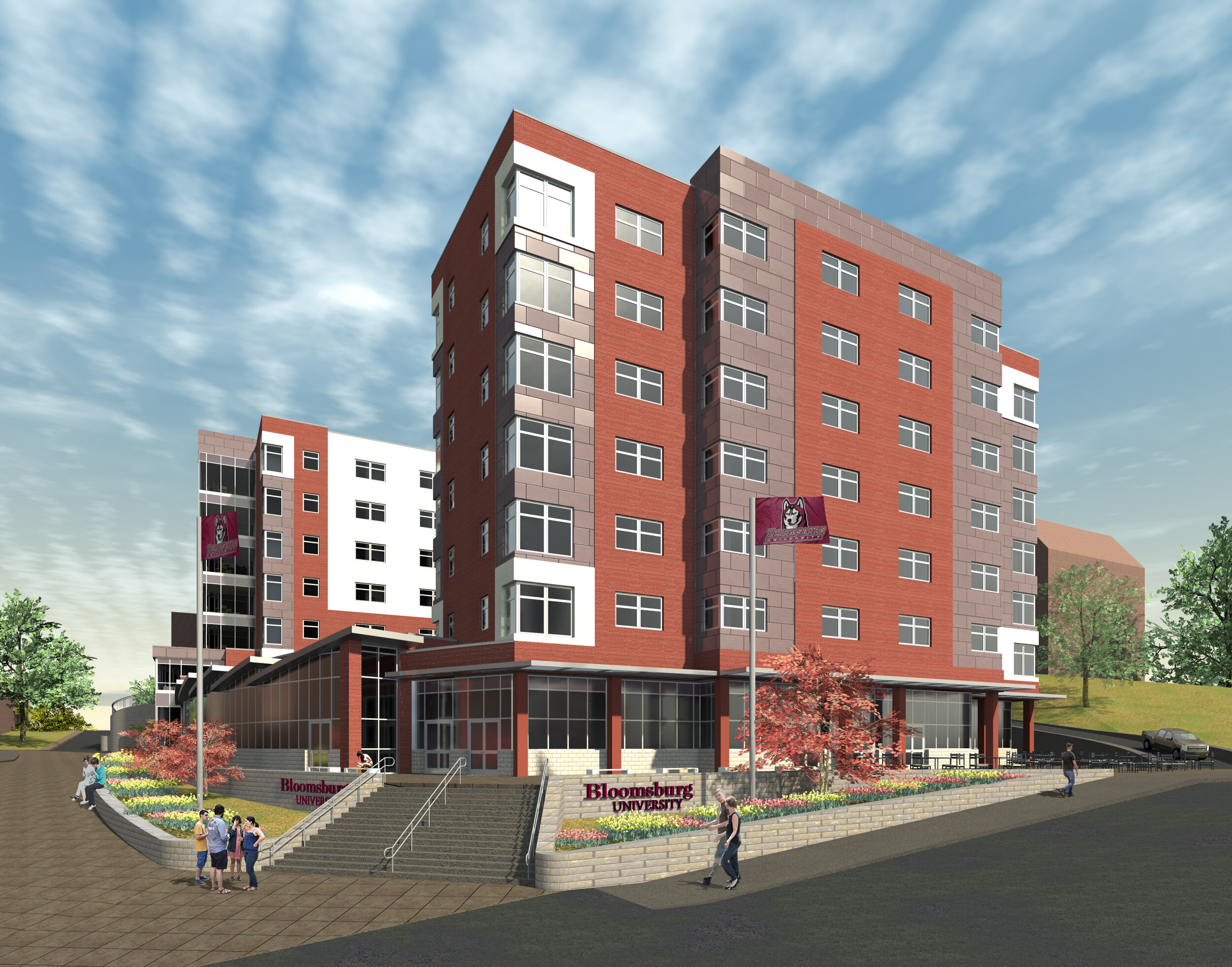
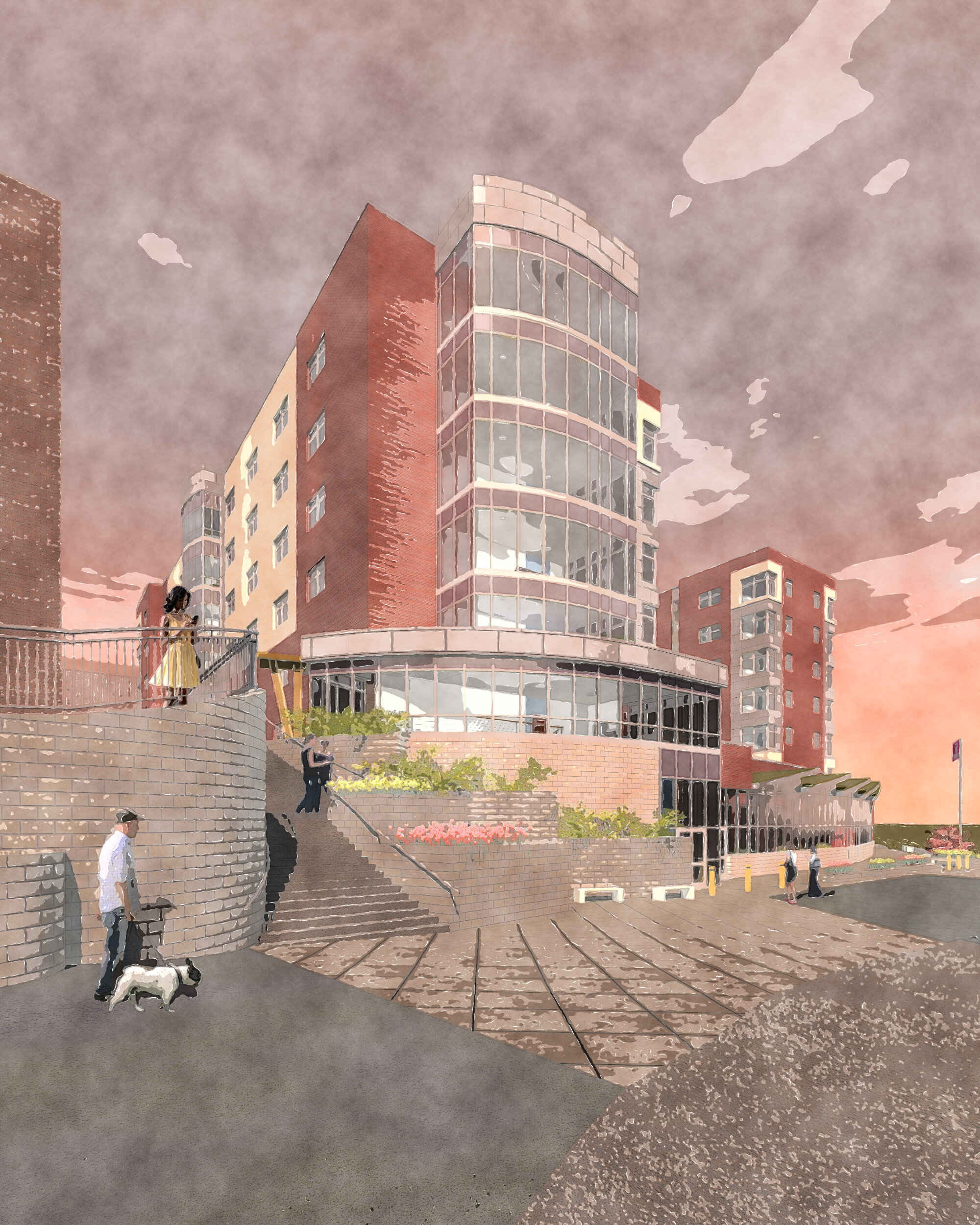
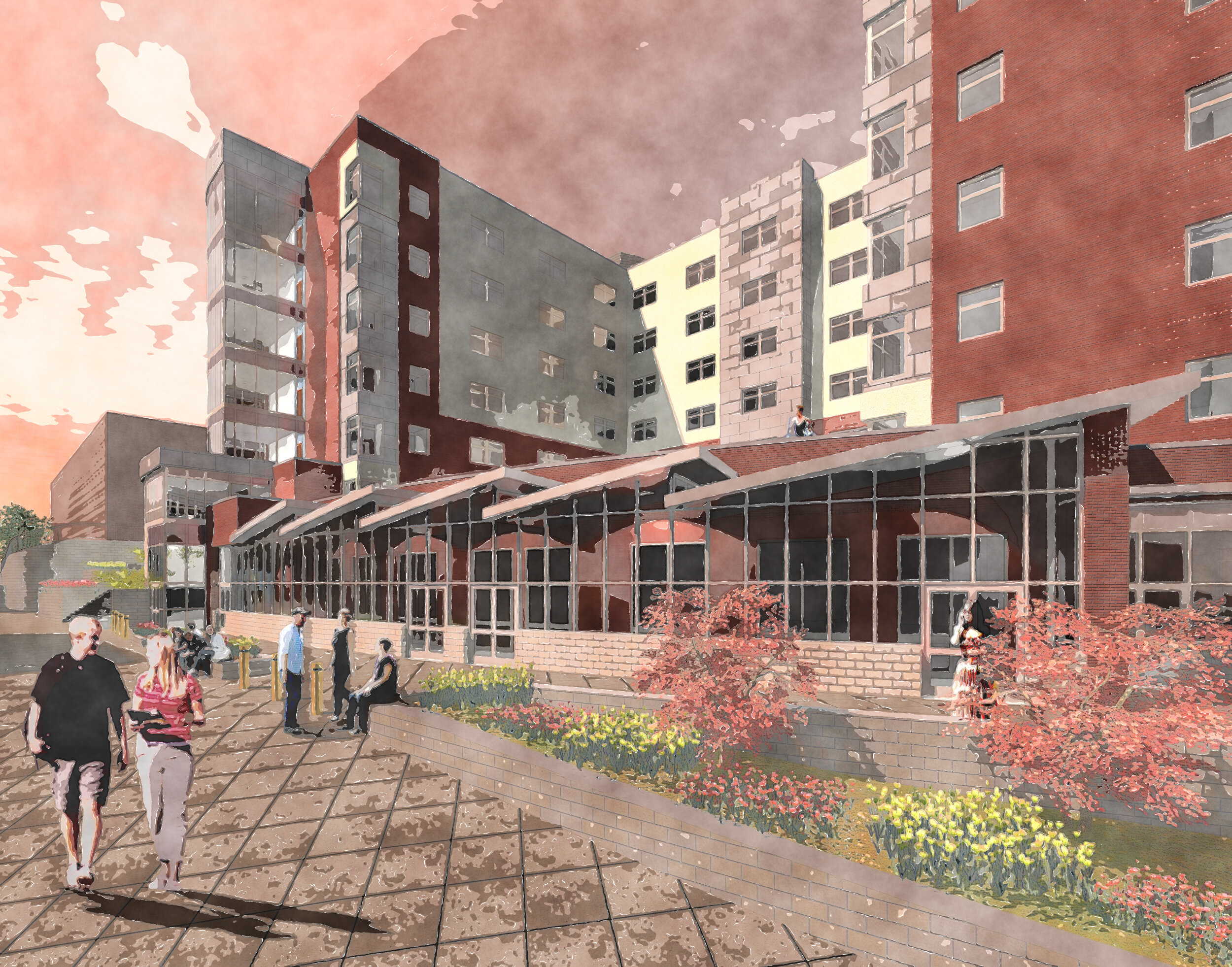
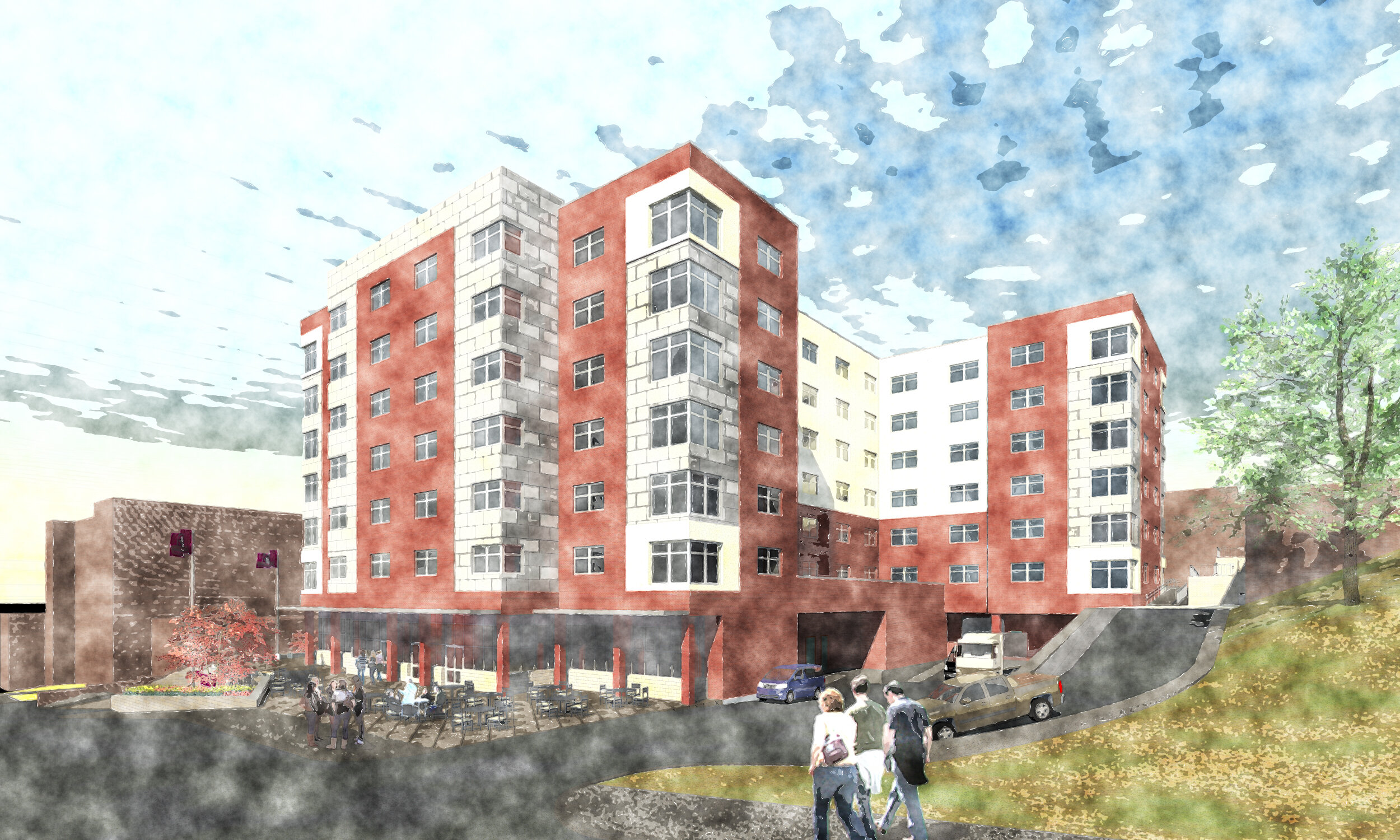
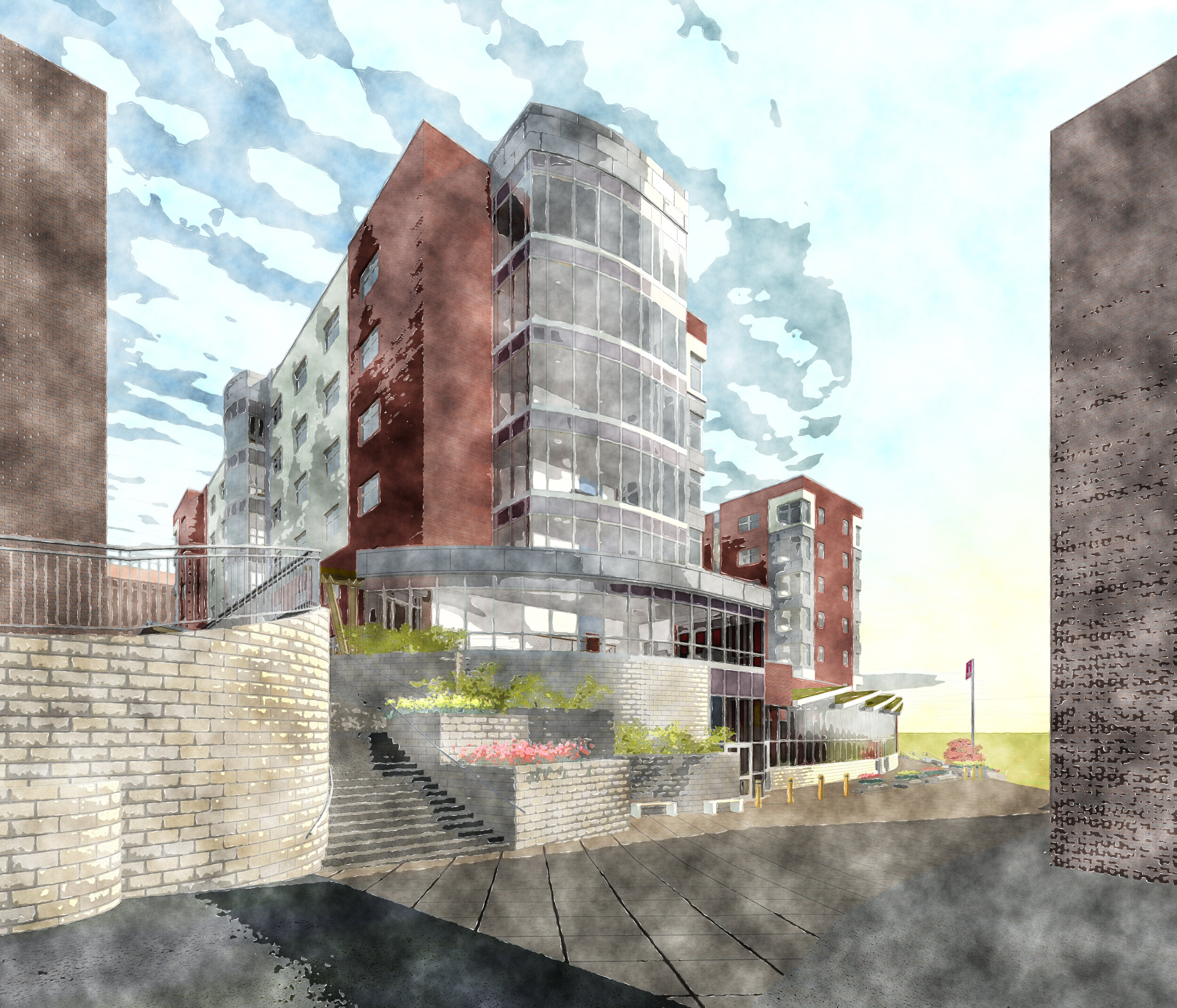
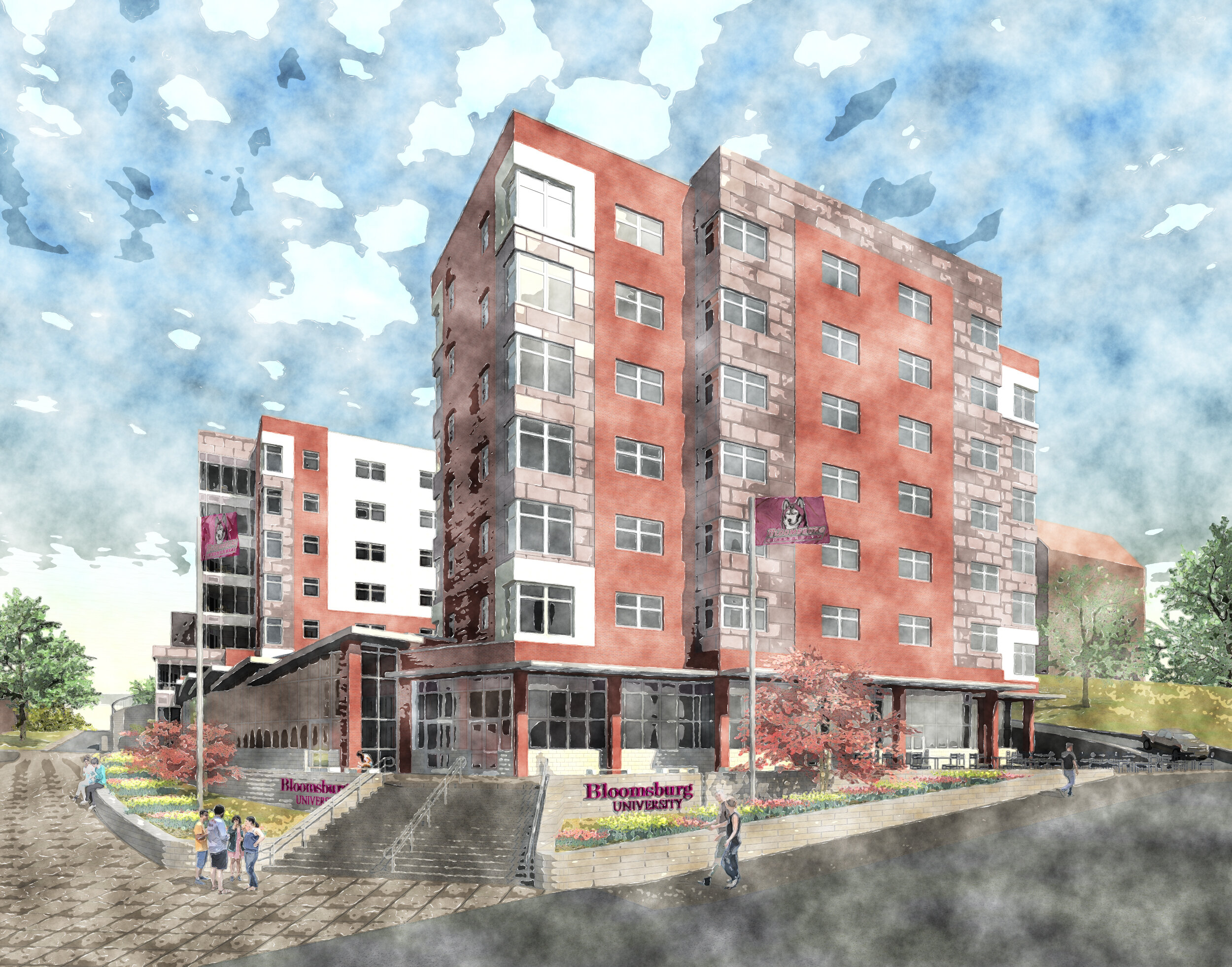
Residence Hall & Bookstore Feasibility Study
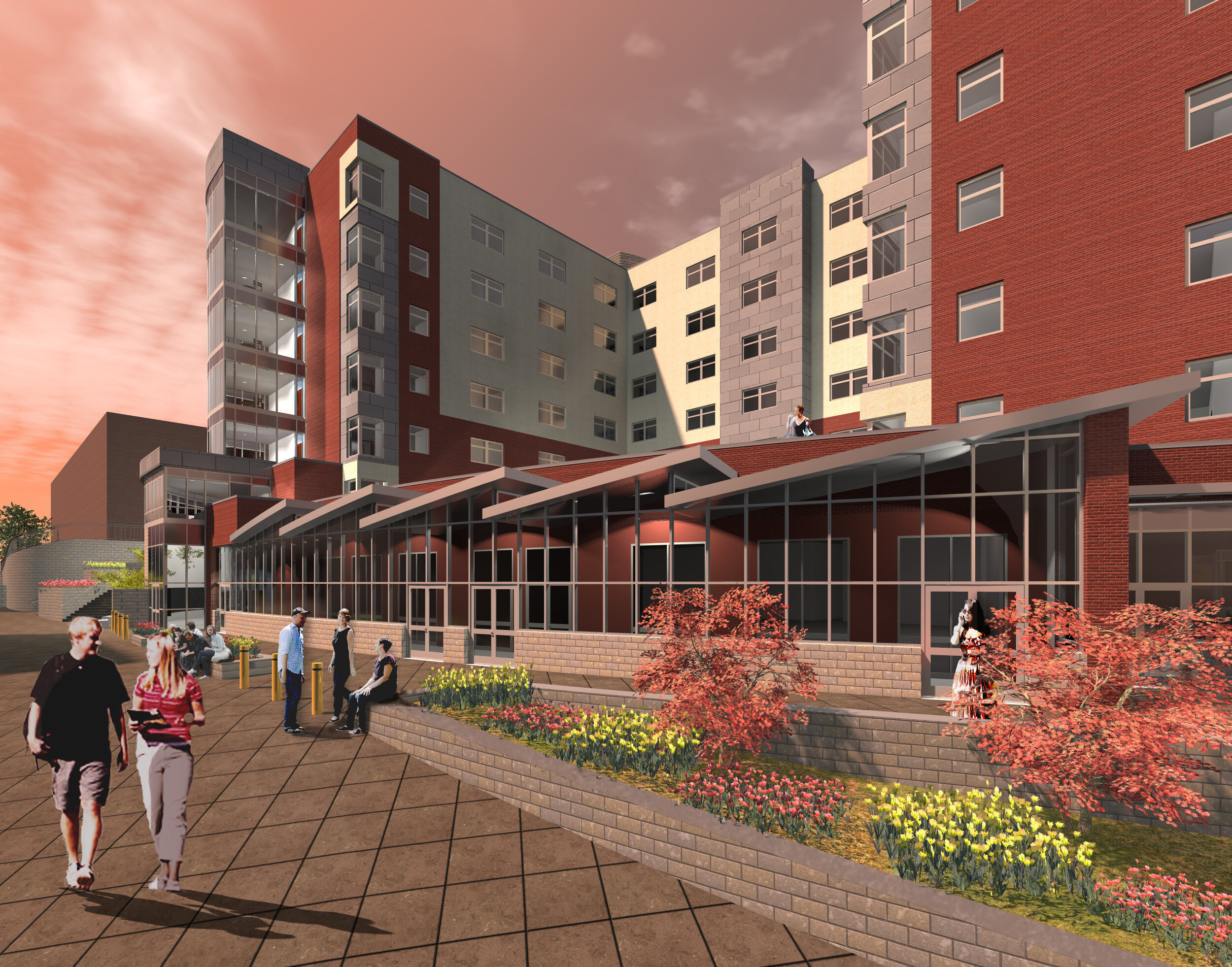
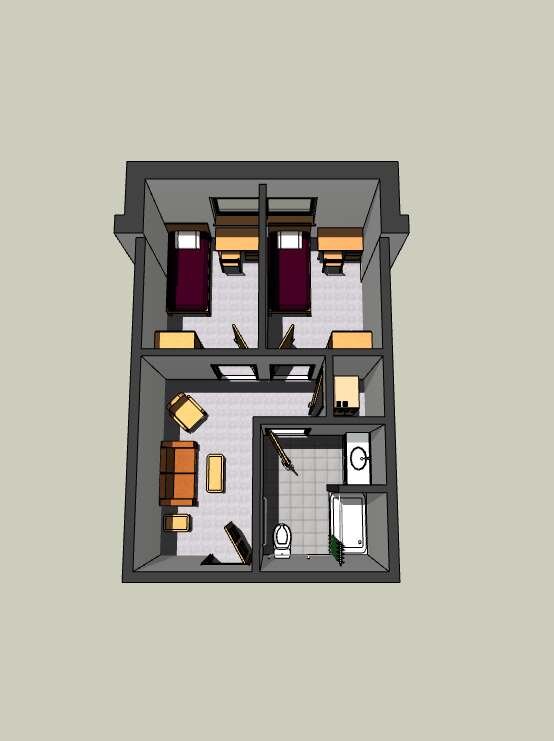
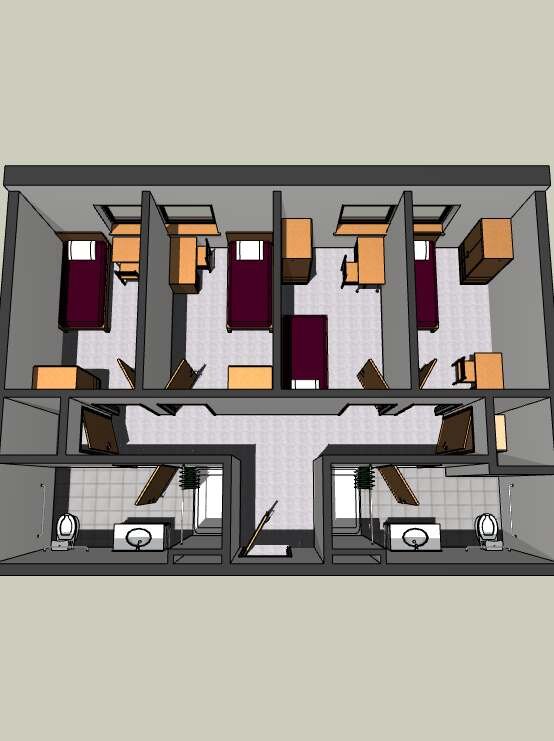
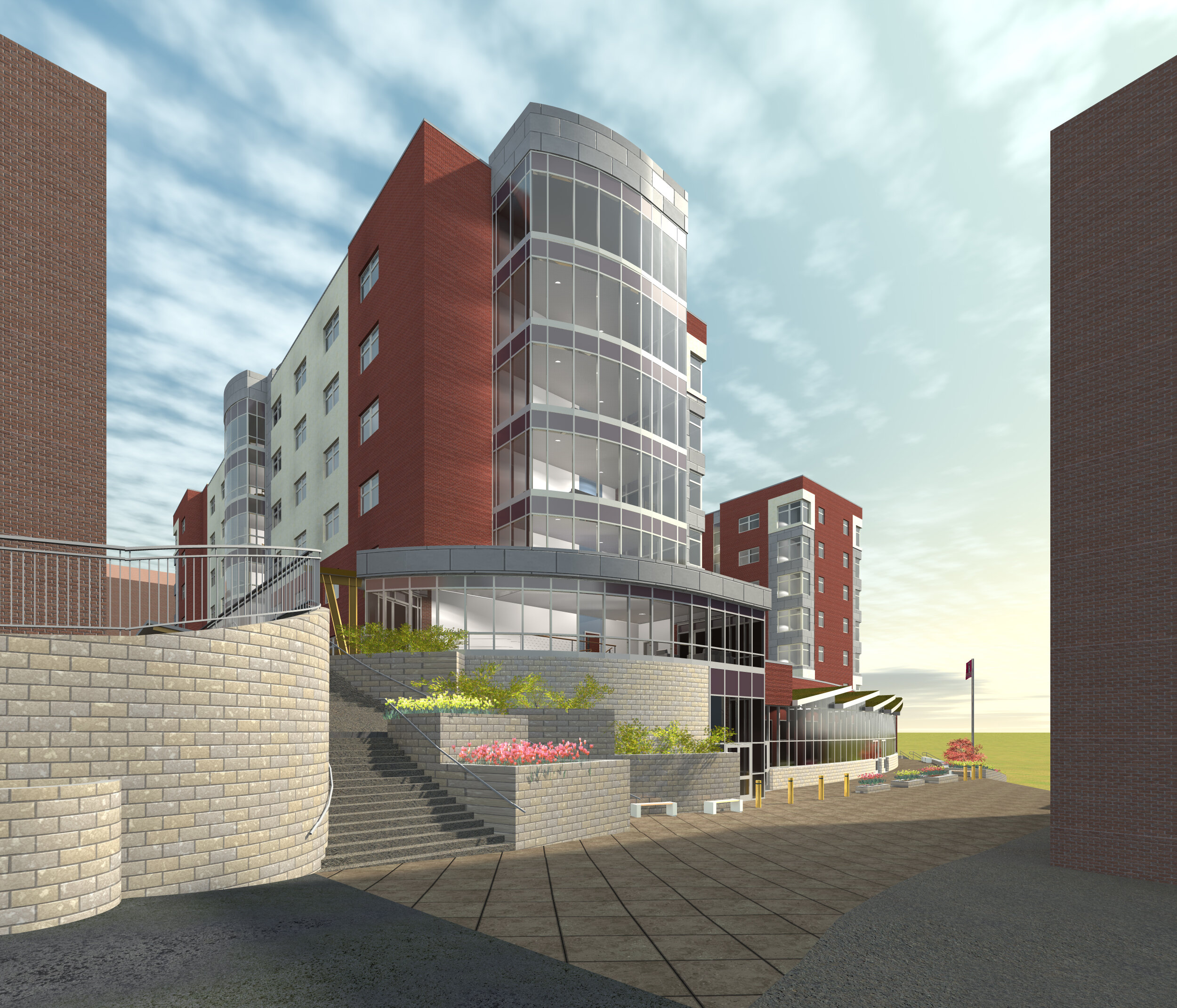
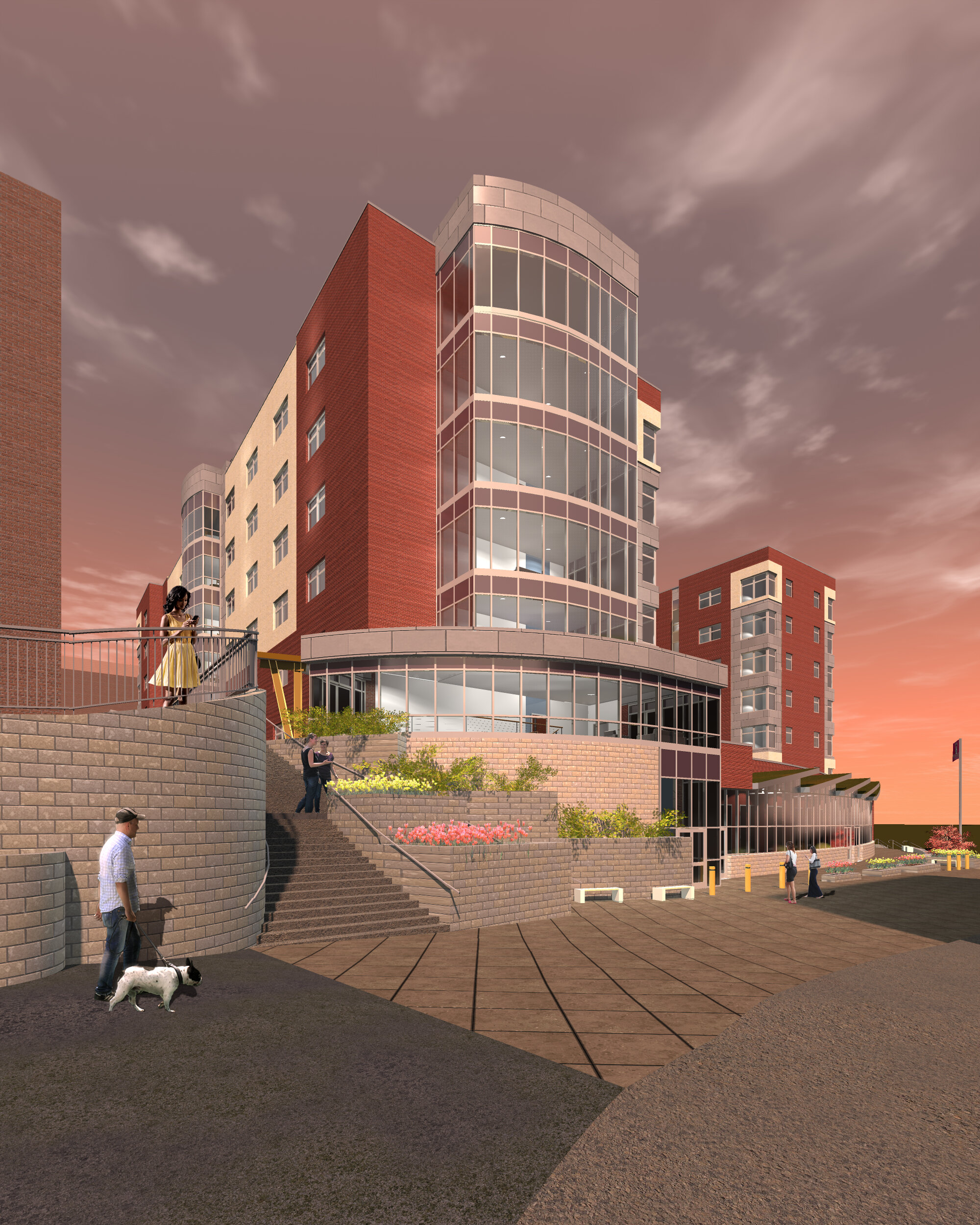
A thorough analysis of options with a detailed design investigation and concept development was generated to address this project program. Following initial discussions with University Project Leadership, interviews were conducted with stakeholders from Residence Life, the Bookstore, Mail Services, Campus Safety, and University Engineers.
Development of a Feasibility Study for a proposed mixed-use building to replace the existing student bookstore with a new one, adding a cafe-style eatery, mail room, and a multi-story student housing unit. As part of a consultant team, we developed a feasibility study and thorough analysis of options through a detailed design investigation. Analysis of site constraints, campus integration, utilities, zoning, code compliance, construction considerations, hazardous materials investigation, cost, and the schedule was generated. We also provided photo-realistic artistic renderings and sketches using Building Integrated Management (BIM) modeling software.
Accessible Pathways at Kutztown University
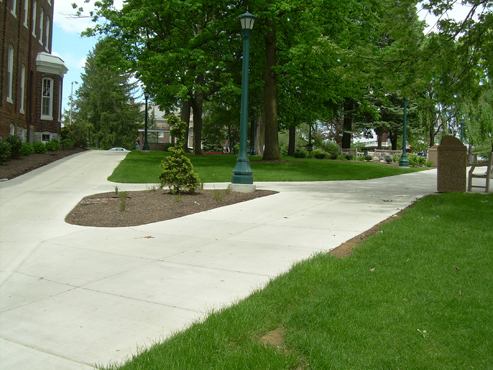
Kutztown University is committed to equal access and to providing an environment in which individuals with disabilities can fully access programs, services, activities, and facilities. University shuttles are equipped to transport students with permanent or temporary disabilities between University facilities and the local area. Each bus is equipped with a motorized lift to allow wheelchair or motorized scooter access to the service.
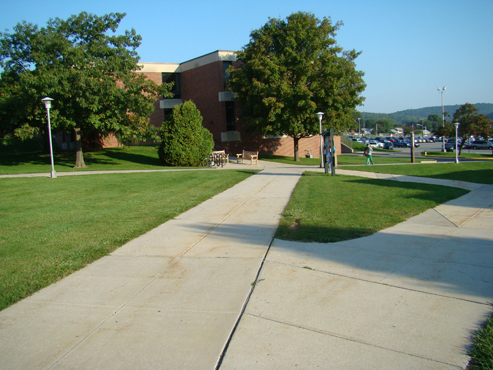
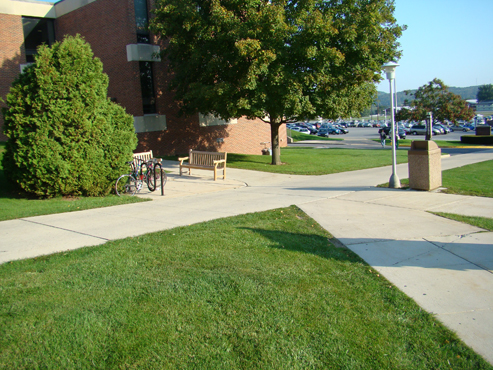
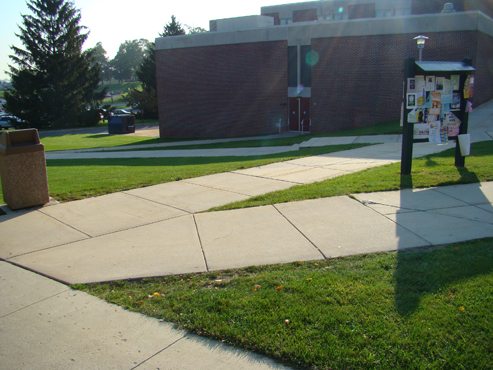
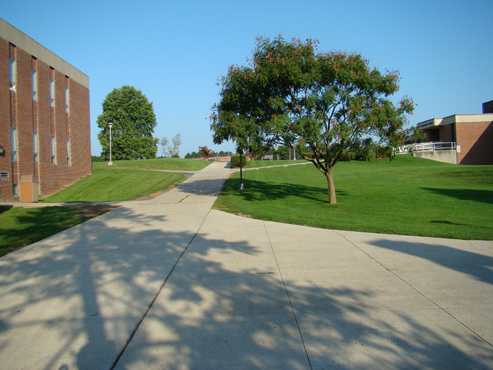
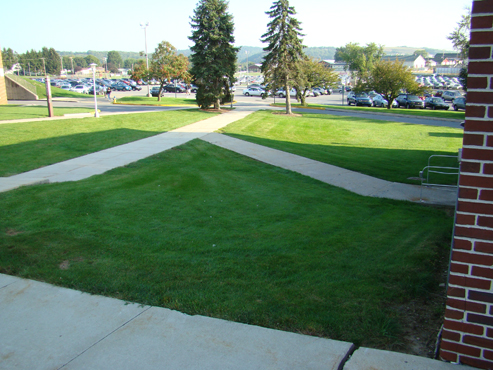
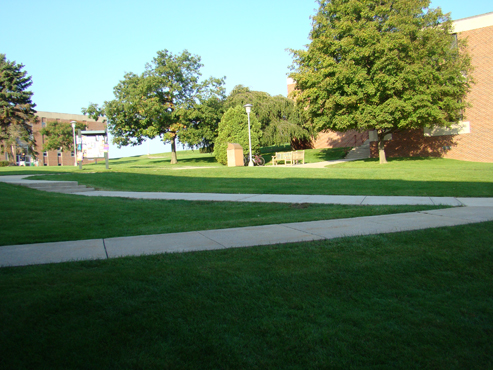
Muhlenberg Greene Architects was commissioned to provide a way to make the campus more handicap accessible by reviewing all sidewalks, ramps, and curb ramps located on campus. Due to the large number of problematic areas proposed on campus, the workload went through several phases.
The first phase consisted of curb ramp modifications, existing handrail replacement, patches of roadway and parking lots being repaved, as well as several sections of sidewalks to be repaved to correct simple slope issues or ramps designated in certain locations to allow for accessibility. The second phase was to design new pathways using fewer ramps, but rather to use existing sidewalks or to design new ones to give the most direct route possible.
Alvernia University Schuylkill Center
Alvernia University traces its roots back to 1926, when the Bernardine Sisters of the Third Order of Saint Francis established an orphanage in what’s now known as Francis Hall. The institution became a four-year liberal arts school in 1958 and two years later, received its charter from the Commonwealth of Pennsylvania.
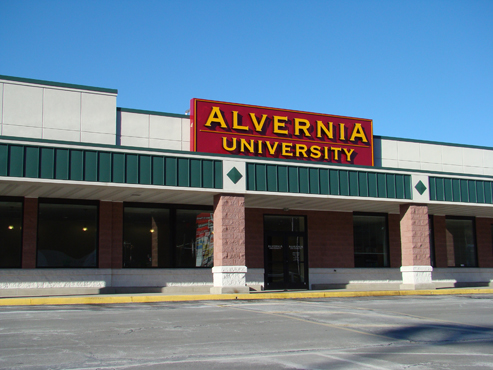
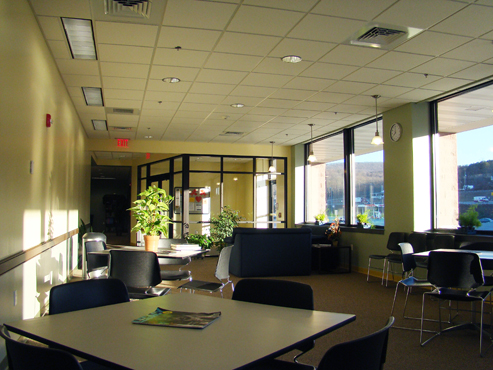
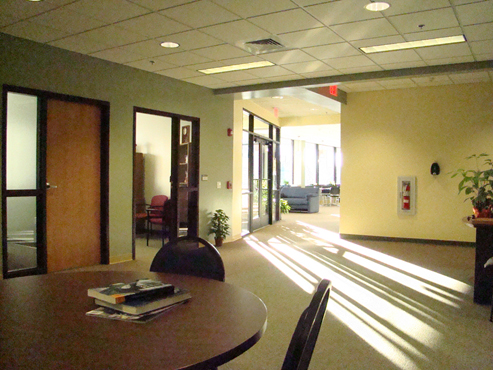
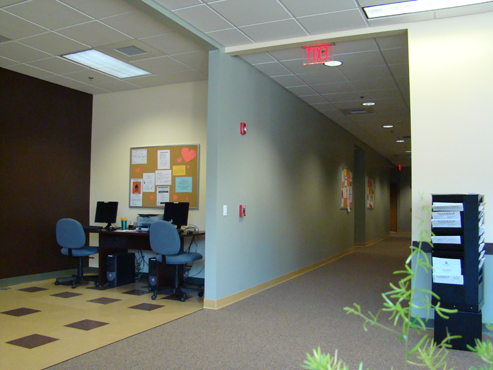
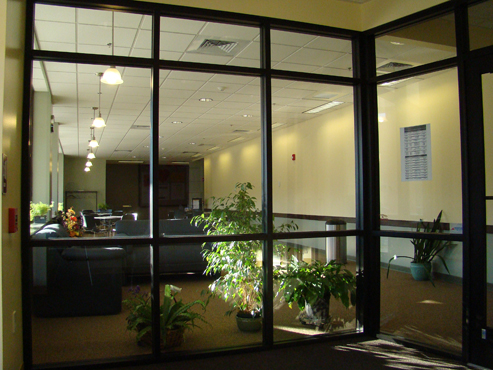
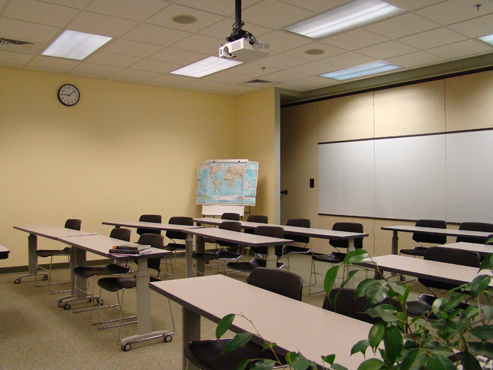
Located in Pottsville, PA, the Schuylkill Center has adult education and graduate degree programs, offering flexible scheduling with day, evening and weekend classes. Muhlenberg Greene Architects provided the planning and design services for the satellite campus, located in a former strip-mall retail space. The Project consisted of the design for the tenant fit-out of an, approximately, 10,000 sq.ft. lease area to create new classrooms, a commons area, and administrative offices. The new campus building provides much needed space for the University’s adult education programs.
Kutztown University Old Main A-Wing Elevator Addition
Built in 1864-65, Old Main is the oldest and most historic building on campus. In our early years at the close of the nineteenth century, Old Main was the sole University building, providing classroom, administrative, and living space.
Today, Old Main is a modern and vibrant educational haven, housing the university's Computer Science and Information Technology, Criminal Justice, Counseling and Student Affairs, Modern Languages, Music, Philosophy, Political Science, Psychology, Social Work and Sport Management, and Leadership Studies departments. You will also find the offices of Grants and Sponsored Projects, Housing, Dining and Residential Services, Public Safety, Social Equity, and Student Support Services, as well as the Women's Center and the LGBTQ.
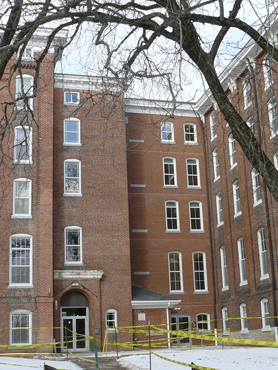
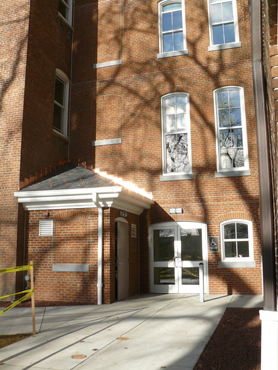
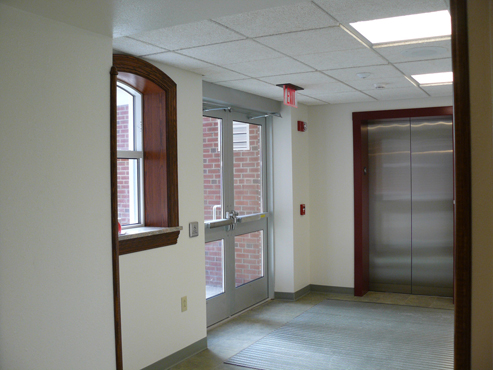
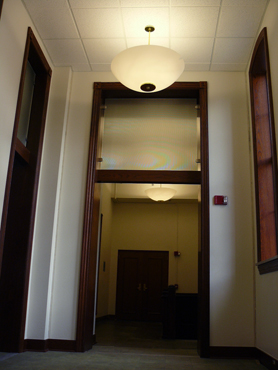
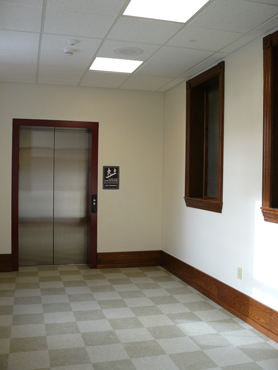
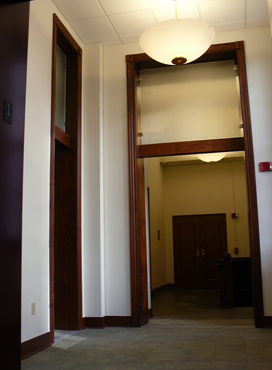
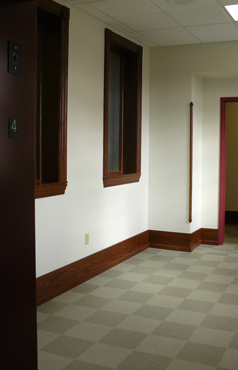
Muhlenberg Greene Architects was commissioned to design an elevator addition to the historically significant Old Main building for Kutztown University. The elevator was planned to provide accessible entry to the ‘A’ wing of the building, which was being converted from dormitory rooms to faculty offices. The new addition permits access to the offices and maintains the secure separation of the wing from the dormitory rooms remaining in the center portion of the building. The exterior design was detailed to complement the historic character and quality of Old Main. Interior finishes for the lobby at the main floor landing were designed to match the existing wood trims and moldings of the original building. Access from the elevator lobbies to the existing building was developed through the existing window opening of the original building. The addition includes a slate roof, exterior cornice moldings and trims, and brick detailing to integrate with the original structure.
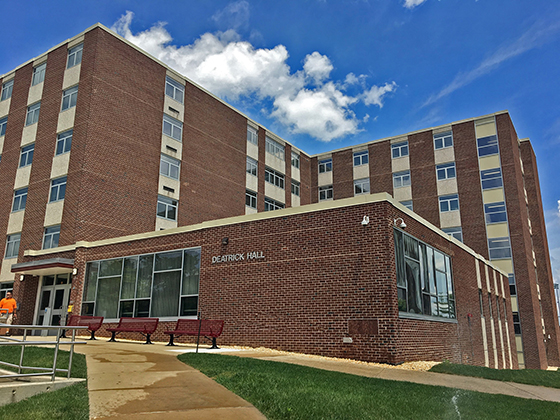
Kutztown University Deatrick Hall Renovations
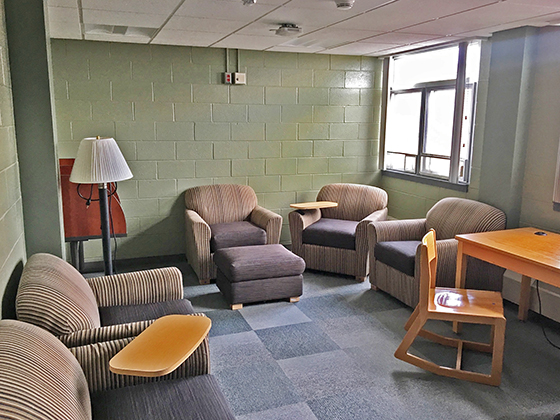
Deatrick Hall is named in memory of William Wilberforce Deatrick (1853-1925), who spent the majority of his years at Kutztown as the chair of the English department. Many of Deatrick's photographs of campus tell the story of the institution from the early 1900s. In addition to faculty meeting spaces and SMART conference rooms, a satellite office for the Center for Achievement and Success (CASA) is available for residents to use. Residents living in this hall will also enjoy laundry facilities on each floor, as well as computers available in lounges.
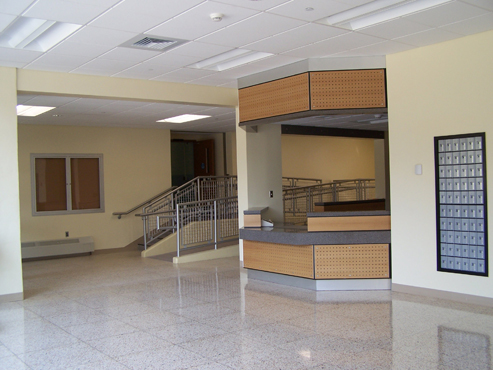
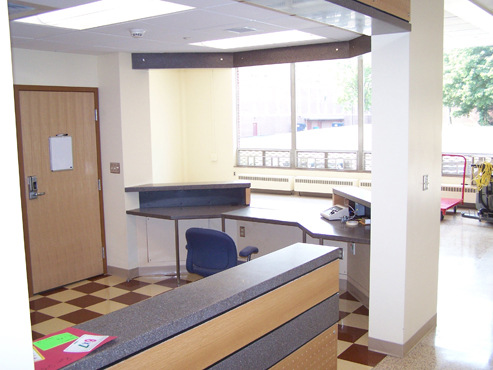
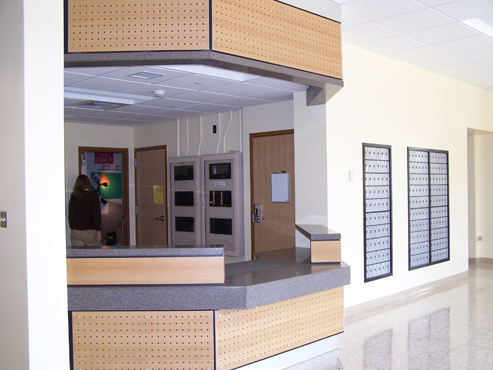
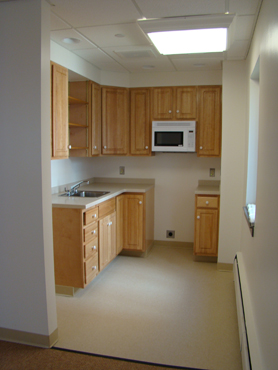
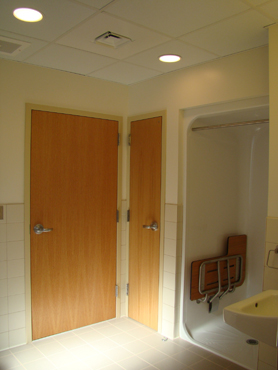
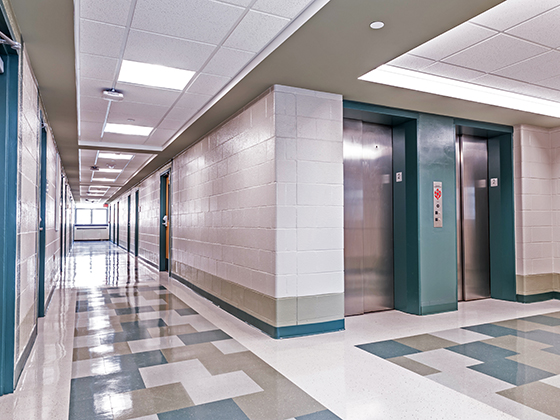
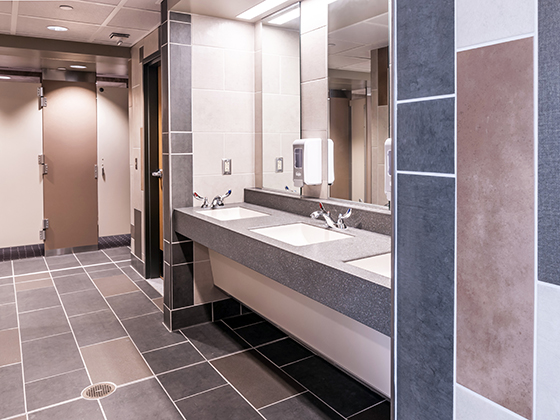
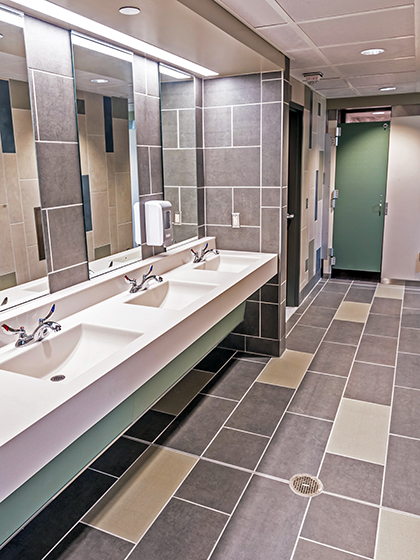
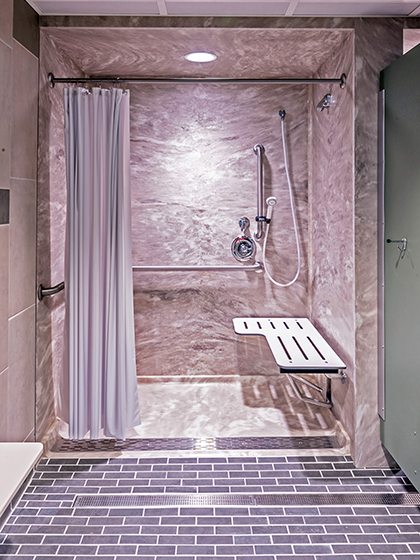
Muhlenberg Greene Architects was commissioned to renovate Kutztown University’s Deatrick Hall Dormitory. The alterations included mechanical and electrical upgrades to the building, interior alterations to provide a new lobby layout, renovations to the laundry room, improvements to the dorm rooms, major renovation of the resident director’s quarters, and upgrades to finishes, doors, and hardware throughout the building.
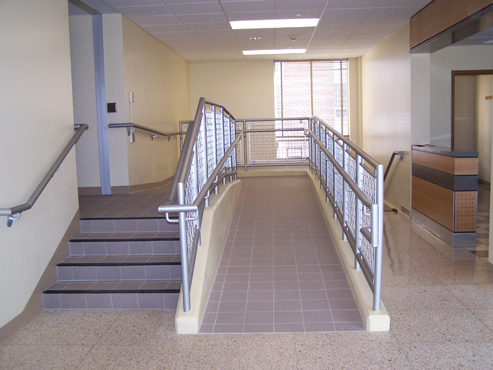
Exterior improvements included the replacement of all entrances, installation of new windows around the building, stair tower window walls, partial roof replacement, and a new ramp at front entrance to provide accessibility for the building.
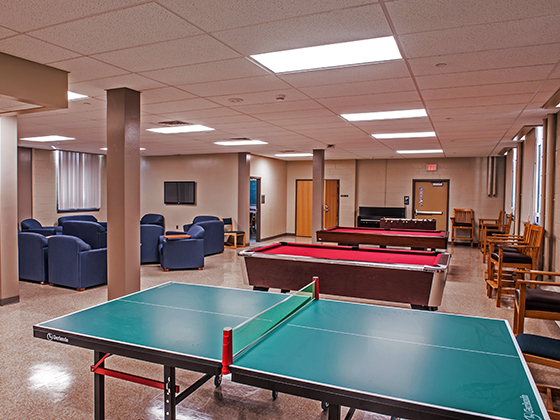
Rohrbach Library at Kutztown University
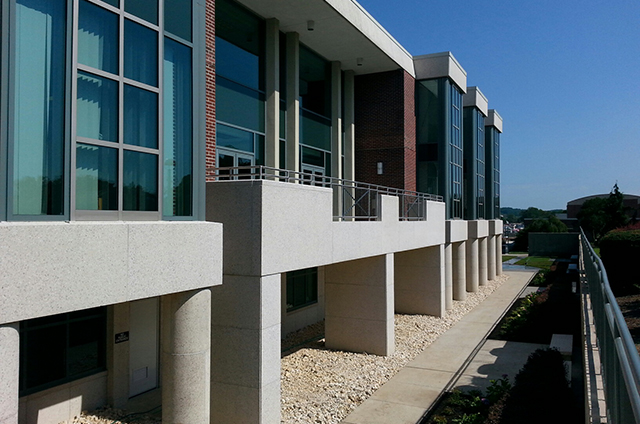
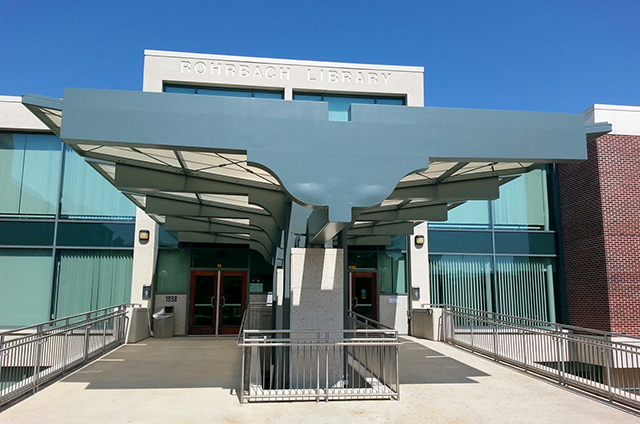
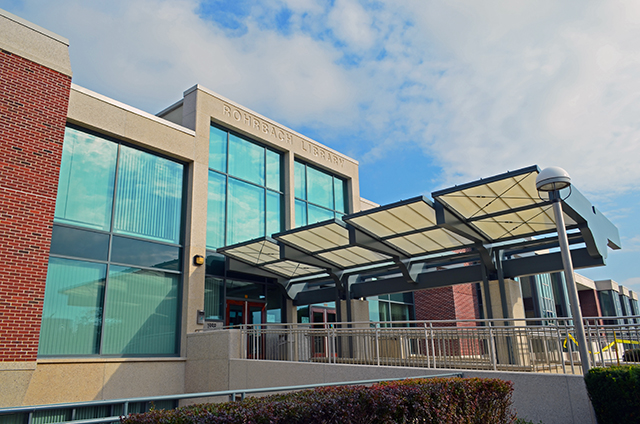
Kutztown University’s Rohrbach Library provides a dynamic, intellectual environment dedicated to providing library and information services to meet the information needs of the university's community, both local and distant. The library aspires to be a vital campus partner providing innovative solutions in the pursuit of greater knowledge, through teaching, research, and learning by providing resources, services, and technologies in a welcoming environment that encourages collaboration and creativity.
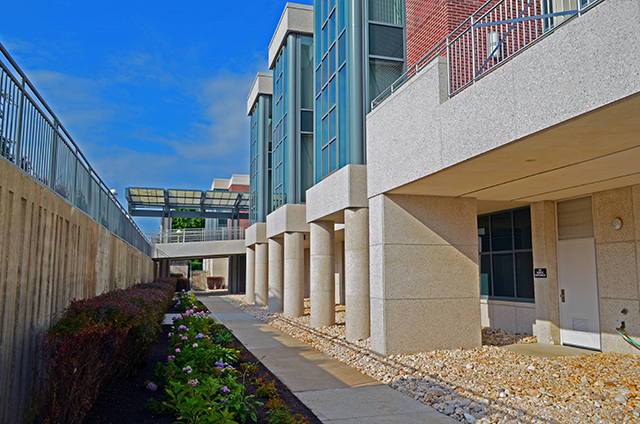
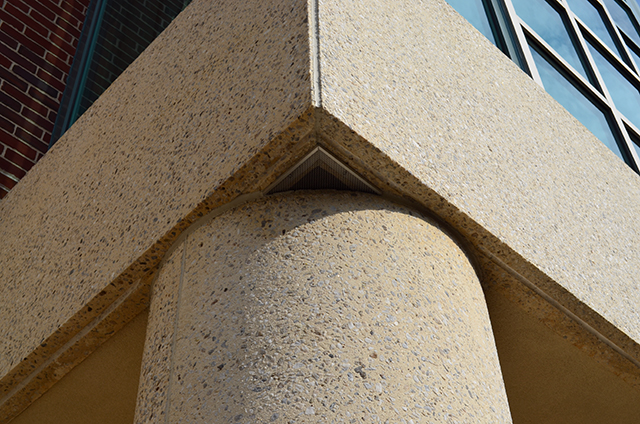
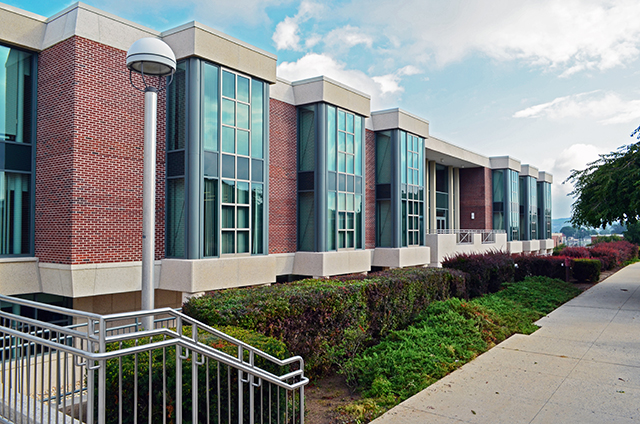
Muhlenberg Greene Architects was commissioned to renovate Kutztown University’s Rohrbach Library. The renovation involved brick restoration and repairs to a masonry wall to correct thru-wall flashing problems and correct water infiltration issues. Cleaning and re-pointing of the exterior gave the building a new, clean image. Interior repairs to the damaged finishes completed the renovation.
Muhlenberg Elementary Center Addition and Renovation
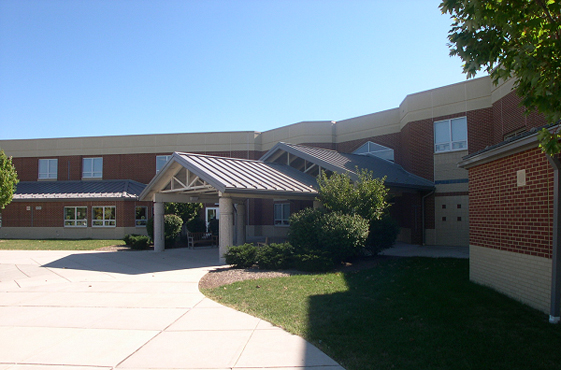
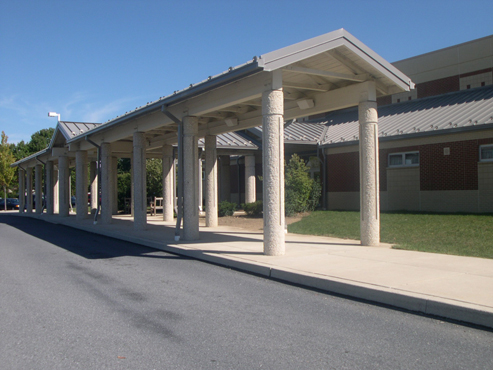
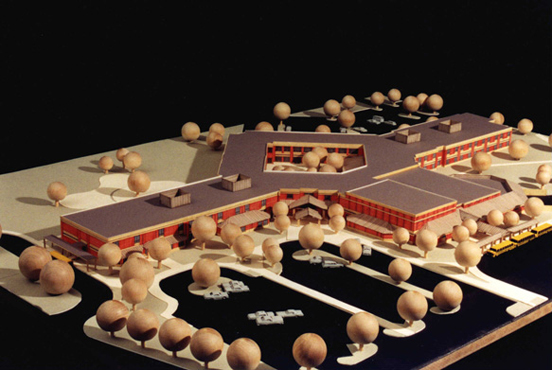
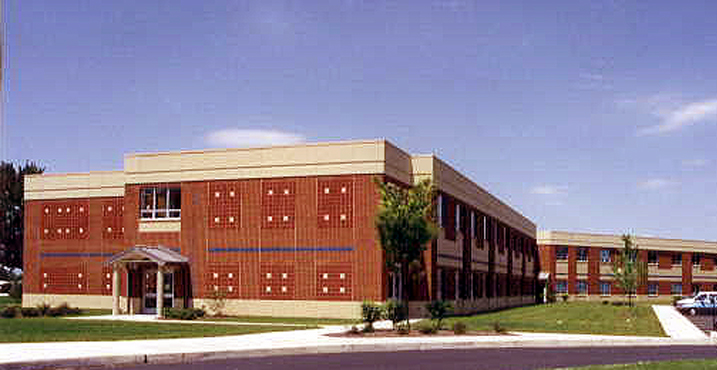
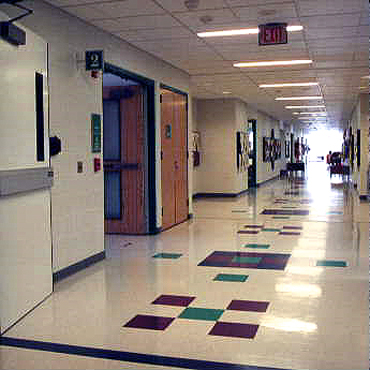
Muhlenberg Greene Architects provided the planning and design services for the Muhlenberg School District’s Elementary Center building. The facility was developed as a centralized replacement for the undersized and outdated Primary and Intermediate School facilities that were located on the District Campus. The design of the new facility, planned to accommodate 1350 students in grades K-5, evolved as an Addition and Renovation to the existing Primary School Building.
The new Elementary Center, which incorporates the two-story classroom wing of the existing Primary School, was designed around a central courtyard that established a strong interior focal point for the students; and allowed the addition to be constructed while the existing facility remained in service. The angular geometry of the resulting central core provided a natural visual break that greatly reduced the perceived size of the building, resulting in a smaller scale presence on the site.
Rural Opportunities of Reading Building Renovations
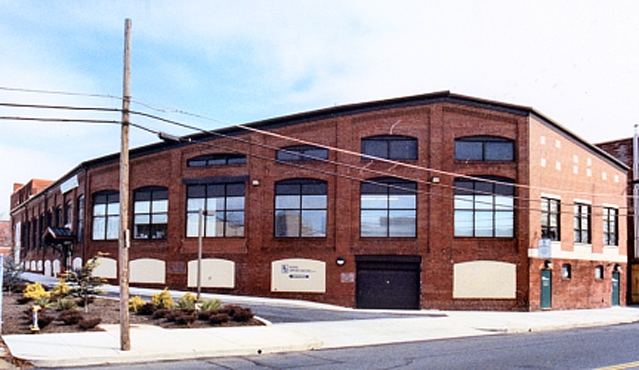
Rural Opportunities Inc. Pennsylvania Division is a licensed daycare provider serving the Reading area. A private, non-profit charitable purposes multi-state organization, they provide a number of services including housing, housing development and rehab, community and small business development, employment and training, health and safety,and advocacy services to migrant and seasonal farm workers, and other disadvantaged individuals and families and communities since it was founded in 1969.
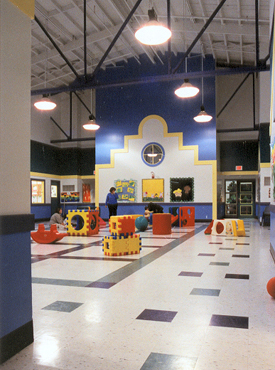
The Project consisted of renovations to a vacant brick one-story plus basement building located at 121 South Second Street, Reading, PA. The design incorporated the separation of corporate/ training spaces with a daycare environment for persons attending training and assistance classes or working within the program.
Project responsibilities for this renovation and rehabilitation project included the architectural planning and design, as well as the mechanical, electrical, plumbing, and sprinkler engineering. This project was funded through Federal financing sources and incorporated the Davis-Bacon Prevailing Act and other Federal project guidelines into the project specifications.
Conrad Weiser Middle School Renovations
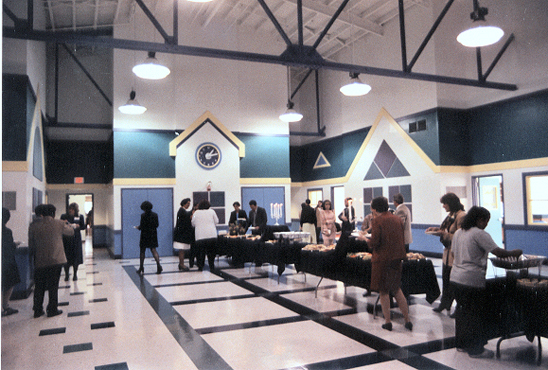
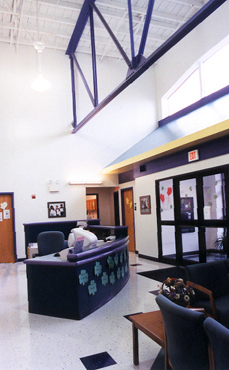
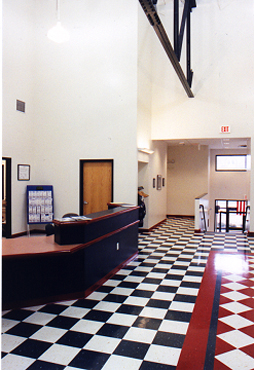
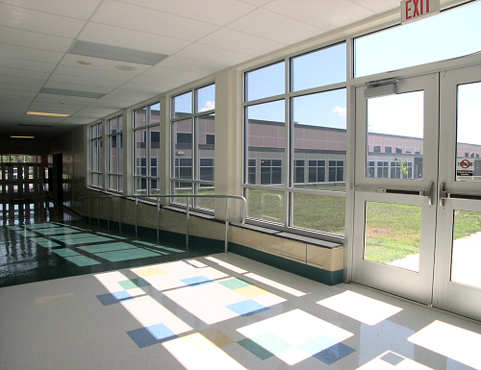
Conrad Weiser Middle School is a public middle school in Heidelberg Township. The school is a federally designated Title I school. This project involved the renovation of an existing 199,000 square foot school. Design issues focused on reorganization and altering the former high school to function as a middle school facility.
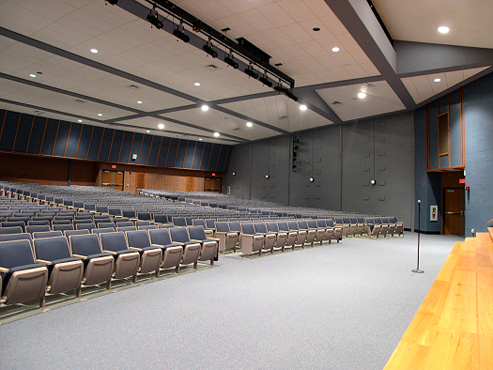
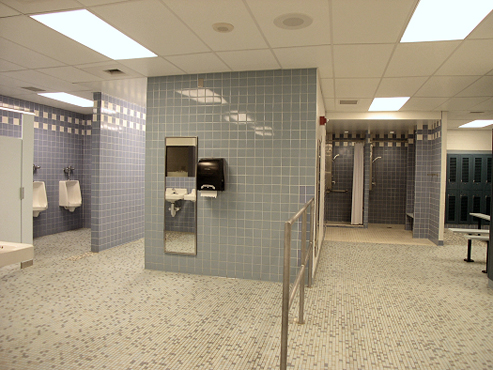
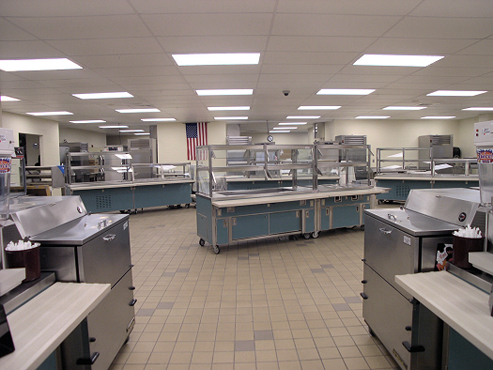
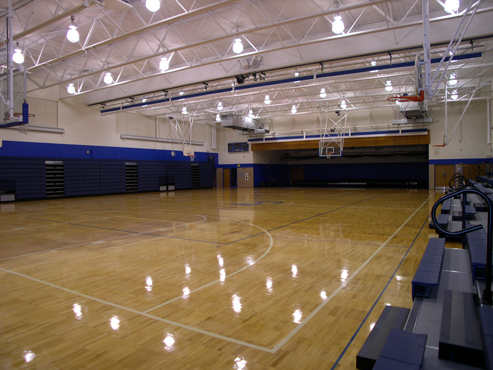
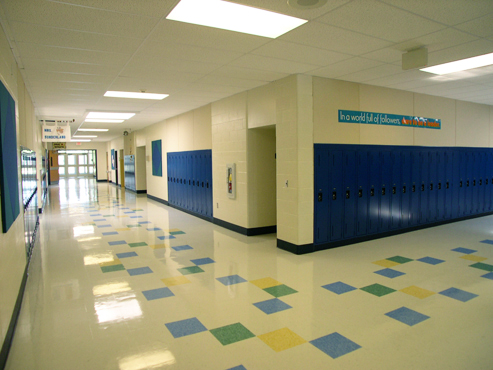
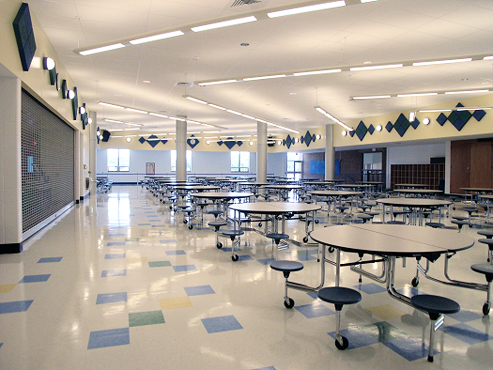
The alterations include a total mechanical and electrical upgrade to the building, asbestos abatement, selective demolition, interior alterations to provide new classroom layouts, renovations to the auditorium and stage, improvements to the gymnasium and locker rooms, major renovation of the main office, guidance suite, and nurse’s suite, upgrade of the food service, and general upgrade to finishes, doors, and hardware throughout the building.
Reading Muhlenberg Career and Technology Center Additions and Renovations
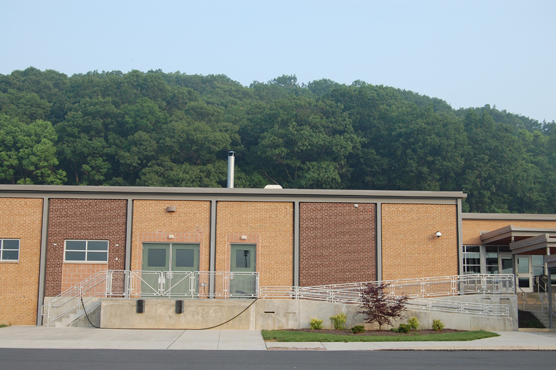
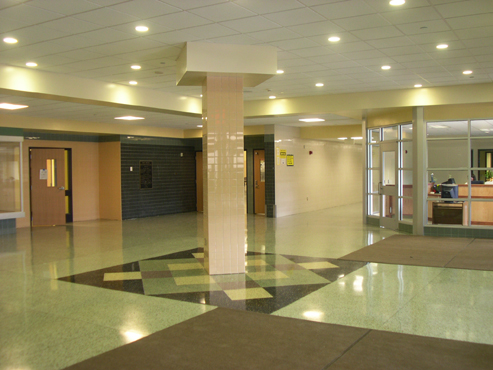
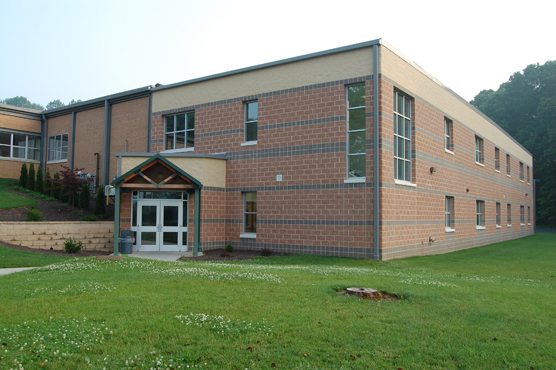
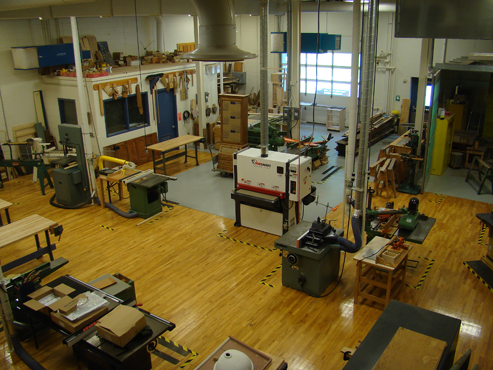
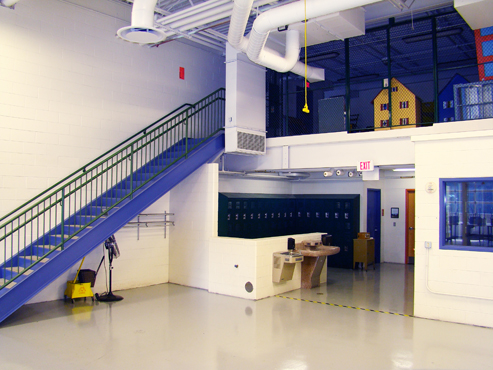
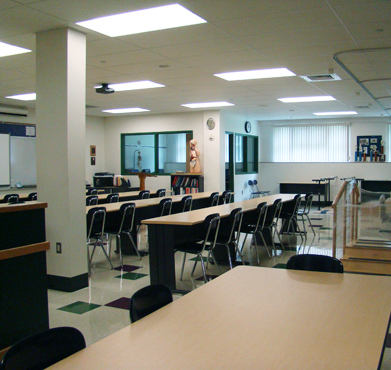
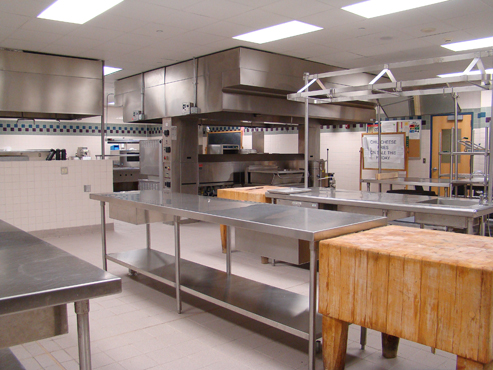
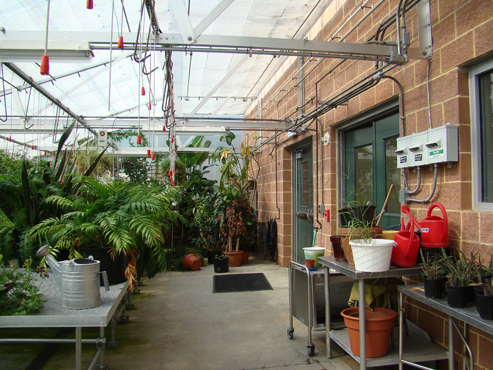
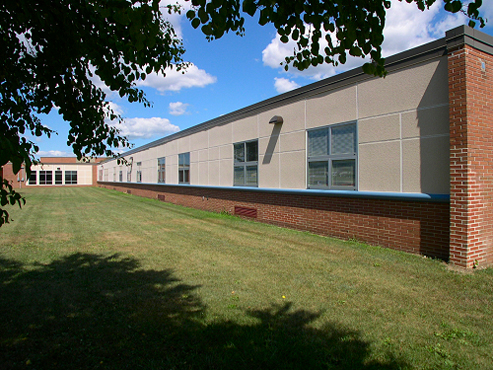
Reading Muhlenberg Career & Technology Center (RMCTC) provides career and technical education programming to prepare secondary and adult students for life after school. RMCTC completed a renovation and expansion project, increasing the size of the building by 33 percent. The facilities are modern, and the equipment is state-of-the-art. With this expansion, students are now able to enroll in one of 31 career and technical education programs.
The improvements to the existing Vocational Technical School were designed to upgrade the existing structure and systems, and to provide additional program areas to meet the increasing needs of the Reading School District and the Muhlenberg School District (Joint Operators of this Career Technical Center).
The project included the construction of a new automotive trades building, and a 2-story classroom addition to provide four new program areas. Additions were constructed at other areas of the building to provide expanded space for the building trades programs and for culinary and baking programs. These additions are 1-story structures. The physical layout of the existing building and program locations were altered to provide additional area to the programs that require it, and reduce program spaces that have a decreasing demand. Renovations to the Administrative office area, guidance suite, and business office for the existing building, including comprehensive upgrades of the mechanical and electrical systems, were completed.